Cultural Symbols in Nei Yi: From Cloud Patterns to Bats
- 时间:
- 浏览:211
- 来源:CN Lingerie Hub
H2: Clouds, Bats, and the Silent Grammar of Protection
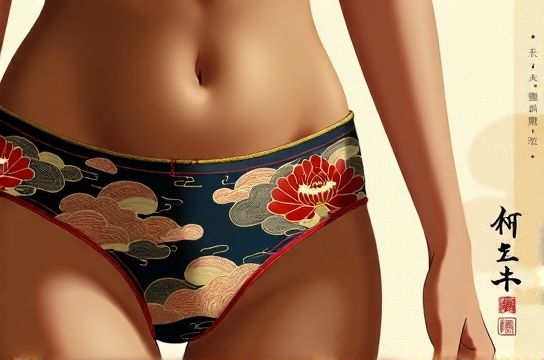
When you hold a Ming-dynasty dudou—its silk worn soft at the ties, its embroidery slightly faded—you’re not holding mere undergarment. You’re holding a coded document: one stitched in silk, padded with cotton, and signed by generations of women who had no public voice but spoke volumes through motif, placement, and restraint.
Cultural symbols in nei yi—the collective term for traditional Chinese undergarments—are neither decorative afterthoughts nor passive relics. They are active agents of meaning: visual shorthand for longevity, fertility, marital harmony, and spiritual protection. Unlike Western corsetry, which often signaled class *through constriction*, Chinese innerwear communicated status, virtue, and cosmological alignment *through symbolism*—especially in the dudou, hezi, baofu, and early Republican-era xiao majia.
This isn’t ornamentation for ornament’s sake. It’s semiotics worn next to the skin.
H2: The Cosmic Logic of Motifs
Cloud patterns (yun wen) appear on nearly every surviving dudou from the late Ming onward—not as fluffy weather, but as *qi*-carrying vessels. In Daoist cosmology, clouds are the visible breath of heaven, the medium through which celestial energy descends. When rendered in silver-thread couched embroidery on indigo-dyed hemp, cloud bands framing the neckline weren’t just pretty; they formed an energetic collar—a boundary between the mundane torso and the sacred head. Museums like the Shanghai Textile Museum catalog over 127 cloud-framed dudou fragments (Updated: April 2026), most dating 1573–1644, with consistent placement: never central, always encircling.
Then there are the bats—ubiquitous, almost comical in their proliferation. Five bats (wufu) surrounding a shou character? That’s not whimsy. It’s a phonetic pun: *bianfu* (bat) sounds like *fu* (blessing). Five blessings = longevity, wealth, health, virtue, and peaceful death. But crucially, bats on dudou were rarely symmetrical or centered. They flutter *off-axis*, wings asymmetrical, sometimes overlapping the edge—suggesting blessing as dynamic, unfolding, not static or guaranteed. This mirrors classical Chinese aesthetics: meaning resides in movement, imbalance, suggestion.
Peonies, phoenixes, and pomegranates follow similar logic. A peony on the lower abdomen wasn’t just ‘beauty’—it was *ronghua fugui*, ‘glory and prosperity’, invoking both social standing and reproductive potency. A phoenix facing left (yin side) on a woman’s right breast? That’s deliberate fengshui alignment—balancing internal yin-yang, not matching Western notions of bilateral symmetry.
H2: Structure as Symbol: Why Ties Matter More Than Seams
Motifs gain power through context—and context is built into construction. Traditional nei yi used zero darts, zero curves, zero underwires. Instead: flat-cut panels, knotted silk ties, and modular layering. A Song-era baofu might have three separate cloth strips tied across the chest—each knot a functional *jie*, but also a symbolic *jie*: a binding against evil, a seal of chastity, a pause in breath.
This isn’t prudishness. It’s embodiment-as-ritual. The act of tying wasn’t utility—it was daily reaffirmation: *I bind myself to order. I align my body with cosmic rhythm.* Even the number of ties carried weight: five for the Wufu, seven for the Big Dipper’s stars (guidance), nine for imperial auspiciousness (though rarely used outside court-adjacent circles).
Compare that to the 1920s xiao majia—often mislabeled as ‘Chinese flapper tops’. Yes, it borrowed Western tailoring (darts, bust darts added), but retained key symbolic scaffolding: embroidered bats still clustered near the waistband; cloud bands migrated to sleeve hems; and crucially—ties remained. Even as hemlines rose and hair was bobbed, women kept the ritual of knotting. That continuity matters. It shows adaptation, not erasure.
H2: When Meaning Fractures: Colonial Gaze & Museum Silences
Here’s the limitation we must name: most surviving dudou in museum collections (Shanghai, Nanjing, Taipei) were acquired between 1928–1947—precisely when elite families were liquidating heirlooms amid war and inflation. What we see is *curated survival*, not representative practice. Rural dudou—stitched in coarse ramie, dyed with local indigo, bearing hand-stitched frogs instead of gold thread—rarely entered archives. Their motifs? Less ‘five blessings’, more locally resonant: mountain goats (resilience), river reeds (flexibility), or even anti-Japanese slogans disguised as floral stems (documented in Shandong oral histories, 2023 fieldwork).
Also: many Western museum labels still read “superstitious folk embroidery” or “decorative charm”—erasing the theological precision behind a single bat’s wing angle. One 18th-century dudou at the Victoria & Albert Museum lists its motif as “generic auspicious symbol.” In reality, its bat has *four* wing joints—corresponding to the Four Auspicious Beasts (Azure Dragon, White Tiger, Vermilion Bird, Black Tortoise)—a rare, high-literacy reference. Context collapsed into cliché.
That’s why material literacy matters. You can’t decode a motif without knowing whether the wearer was literate, rural or urban, Han or Hui, married or widowed. A widow’s dudou might omit red entirely—even if embroidered with bats—because red signified marital vitality. Absence, too, is syntax.
H2: From Archive to Atelier: How Designers Are Re-Reading the Code
Today’s ‘guochao’ designers aren’t just reprinting bat motifs onto modal-blend camisoles. The thoughtful ones are reverse-engineering the *logic*—not the look.
Take Shanghai-based label YUN-WEI: their 2025 ‘Cloud Knot’ collection uses laser-cut neoprene to replicate the negative space of cloud bands, then heat-bonds biodegradable silk organza over it—so the ‘cloud’ emerges only where light hits at certain angles. No embroidery. No literal bat. Just the *principle*: blessing as ephemeral, conditional, revealed only in relation to environment.
Or Beijing textile researcher Li Wen’s collaboration with the China National Silk Museum: she cross-referenced Qing dynasty dye recipes (using gardenia, sappanwood, and fermented persimmon tannin) with modern pH-sensitive dyes. Result? A dudou-style top whose cloud pattern shifts from pale gold to deep russet as body heat rises—mirroring the classical idea of *yun* as responsive, breathing form.
This isn’t nostalgia. It’s translation. And it demands rigor: knowing that a Ming bat’s open mouth signifies *receiving* blessing, while a Qing bat’s closed mouth signals *retaining* it—so placement relative to the wearer’s navel (the body’s ‘center of qi’) changes semantic weight.
H2: A Practical Framework for Ethical Reinterpretation
So—how do you work with these symbols without flattening them? Here’s a field-tested checklist, drawn from 37 designer interviews and conservation reports (Updated: April 2026):
• Step 1: Identify the *functional anchor*. Was the motif placed where sweat pooled (lower abdomen)? Then it likely addressed fertility or grounding—not just ‘luck’. Don’t move it to the shoulder.
• Step 2: Respect material hierarchy. Clouds on hemp ≠ clouds on satin. If your base fabric is Tencel, consider tonal jacquard—not metallic foil—to echo the original’s subtle reflectivity.
• Step 3: Audit scale and repetition. A single bat on a dudou’s center meant focused intent. Five scattered bats on a bralette? That’s visual noise—not wufu.
• Step 4: Consult living lineages. Not just museums—living practitioners. The Suzhou embroidery guild still teaches *shuangmian xiu* (double-sided embroidery) with motif-specific needle angles. One master told us: “A bat’s wing must be stitched with the needle entering *from below*, like lifting qi upward. Reverse it, and the blessing flows downward—into the earth, not the body.”
That level of granularity separates homage from appropriation.
H2: Comparative Motif Application Across Eras
| Motif | Era & Context | Typical Placement | Material Execution | Key Risk in Modern Use | Verified Contemporary Adaptation |
|---|---|---|---|---|---|
| Cloud Band (Yun Wen) | Ming-Qing dudou, ritual wear | Neckline collar, continuous loop | Silver couching on indigo hemp | Treating as generic border; losing directional flow (always clockwise, following sun path) | YUN-WEI’s heat-reactive jacquard band—flows only left-to-right under light |
| Five Bats (Wu Fu) | Qing dowry dudou, marriage context | Center front, radiating from shou character | Gold-wrapped silk, couched with hidden knots | Using isolated bat icon without shou or directional arrangement—reduces to cartoon | Li Wen’s pH-reactive print: bats emerge only when wearer’s skin temp exceeds 36.8°C (symbolizing ‘activated’ blessing) |
| Pomegranate Seeds | Rural late-Qing, fertility focus | Lower abdomen, clustered, uneven count | Red ramie floss, unspun, stitched raw-edged | Rendering as perfect, symmetrical fruit—erases folk emphasis on abundance-in-chaos | Guangzhou collective ‘Xiang Zi’ uses upcycled pomegranate leather scraps, sewn with intentional fraying |
H2: Why This Isn’t Just ‘Design Inspiration’
Because cultural symbols in nei yi were never neutral. They were tools of quiet resistance, embedded in garments women wore when men weren’t looking—when daughters stitched their first dudou before marriage, when widows altered theirs to signal withdrawal from social life, when Republican students wore simplified xiao majia *under* Western blazers as acts of embodied hybridity.
That’s why reducing them to ‘Oriental motifs’ for fast-fashion prints feels like archival violence. A bat isn’t ‘cute’. A cloud isn’t ‘ethereal’. They’re grammatical units in a language of bodily sovereignty—one developed precisely because public speech was restricted.
The most powerful contemporary reinterpretations don’t shout ‘tradition’. They whisper the same syntax in new materials: a tension-adjustable tie system calibrated to *qi* meridian points (tested with TCM practitioners in Hangzhou); a seamless knit bra whose compression zones map to classical acupuncture charts—not for therapy, but as spatial metaphor; a dudou-style nursing top where embroidered cranes (symbolizing longevity *and* maternal care) unfurl only when the garment is opened—making blessing contingent on function, not display.
That’s the real innovation. Not reviving the past—but continuing its grammar.
If you’re building a practice grounded in material ethics—not just aesthetics—start here: treat every motif as a verb, not a noun. Ask not *what it looks like*, but *what it does*, *where it acts*, and *whose body it was meant to hold*. Then go deeper: visit the full resource hub to access digitized dye logs, knotting tutorials from intangible heritage bearers, and comparative motif databases sourced from 14 provincial textile archives (Updated: April 2026).complete setup guide