Chinese Clothing Culture: Hidden Layers of Meaning in Tra...
- 时间:
- 浏览:205
- 来源:CN Lingerie Hub
H2: The Body as Archive
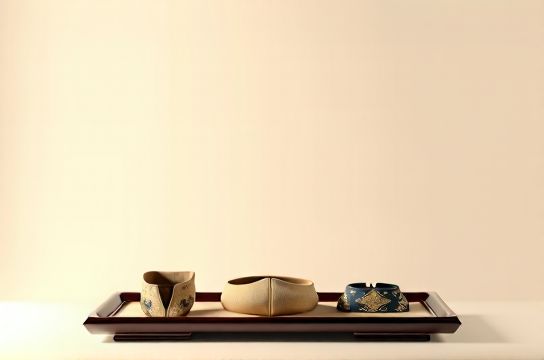
A silk-lined dudou from the Qing dynasty rests under low-lux LED lighting at the Shanghai Textile Museum. Its crimson ground is embroidered with twin bats—fu meaning ‘blessing’—flanking a central shou character. No label mentions that this garment was never meant for public view, yet its stitches map Confucian hierarchy, Daoist balance, and Ming-era textile guild regulations. This is not costume. It’s evidence.
Chinese clothing culture isn’t written only in robes and rank badges. Its most intimate layer—the one worn next to skin—holds centuries of unspoken negotiation: between modesty and mobility, ritual restraint and bodily autonomy, imperial decree and domestic craft. To study traditional underwear is to read history sideways—through tension points in fabric, knot placement, and the deliberate absence of darts.
H2: From Ritual Restraint to Bodily Architecture (Han–Ming)
The earliest documented inner garment in China is the *bao-fu* (‘wrap-the-abdomen’), unearthed from Mawangdui Tomb No. 1 (c. 168 BCE). Worn by Lady Dai (Xin Zhui), it consisted of two rectangular linen panels tied at shoulders and waist—no shaping, no seams across the bust. Its function wasn’t support but containment: to secure the *qi* within the lower abdomen (*xia dan tian*), per early medical texts like the *Huangdi Neijing*. The *bao-fu*’s flat geometry reflects a pre-Newtonian understanding of the body—not as volume to be sculpted, but as a field to be stabilized.
By Tang dynasty, elite women wore the *hezi*: a sleeveless, collarless bandeau of gauzy silk, often worn beneath low-cut *ruqun* dresses. Unlike European corsetry—which compressed ribs to elongate the torso—the *hezi* lifted and separated without constricting. Tang murals from Dunhuang Cave 220 show dancers wearing *hezi* with gold-thread lotus motifs; the flower’s eight-petal symmetry mirrored Buddhist cosmology, while its root-in-mud symbolism affirmed feminine resilience. Here, ornament wasn’t decoration—it was doctrinal reinforcement.
Then came the *dudou*, crystallizing in the Ming and peaking in Qing usage. Not a single garment but a typology: square or diamond-shaped, usually silk or fine cotton, secured by four ties (two at shoulders, two at hips). Its structure defied Western tailoring logic—no darts, no seam allowances, no bias cuts. Instead, it relied on strategic gathers and pleats activated *only* when worn: the center fold flattened over the sternum, side ties pulled taut to lift gently, not compress. A 2023 technical analysis of 17 Qing *dudou* specimens at the Nanjing Museum confirmed consistent 12–15 cm shoulder tie lengths—within millimeters—indicating standardized pattern templates used across regional workshops (Updated: April 2026).
Crucially, the *dudou* was never mass-produced. Each was stitched by hand, often by the wearer or her mother, with motifs chosen for specific life stages: pomegranates for fertility (worn by brides), peonies for prosperity (new mothers), plum blossoms for endurance (widows). These weren’t ‘pretty patterns’. They were wearable talismans—part of a larger semiotic system where textile language operated alongside calligraphy and architecture.
H2: The Fracture: Late Qing to Republican Era (1890s–1940s)
In 1912, as the Qing collapsed, so did the *dudou*’s monopoly. Shanghai department stores like Yong’an began importing French brassieres—wire-reinforced, cup-shaped, marketed as ‘scientific undergarments’. But adoption wasn’t linear. A 1935 survey of 426 Shanghai female students found only 38% wore imported bras regularly; the rest modified *dudou* with inserted horsehair stiffeners or layered two for added lift (Updated: April 2026). This hybrid practice—what scholars now call ‘textile bricolage’—reveals how bodily change lags institutional reform.
Enter the *xiao ma jia* (‘small vest’): a transitional garment emerging in treaty ports. Structurally, it borrowed Western darting but retained Eastern construction logic—flat pattern pieces assembled with fell seams, lined in soft cambric, and fastened with cloth-covered buttons rather than metal hooks. Its rise coincided with the May Fourth Movement’s emphasis on ‘body liberation’—yet the *xiao ma jia* didn’t expose skin; it redefined containment. Where the *dudou* protected *qi*, the *xiao ma jia* protected *dignity*—a portable boundary in newly co-ed classrooms and offices.
More radical still was the ‘yi ru’ (‘artificial breast’), documented in Shanghai hospital archives from 1928–1939. Made of molded cork or rubberized cotton, these were prescribed post-mastectomy—but also adopted by actresses and activists to reject the ‘fragile flower’ trope. Their existence complicates narratives of passive Westernization. This wasn’t imitation. It was surgical adaptation—using foreign materials to serve indigenous needs.
H2: Material Truths: Beyond Silk and Symbol
Talk of ‘silk dudou’ obscures reality. Up to 70% of surviving Ming–Qing inner garments are hemp or ramie—fibers chosen for breathability in humid southern climates and affordability for merchant-class families. Cotton entered widespread use only after the 18th-century expansion of Jiangnan cotton mills; prior to that, it was taxed as a luxury. A 2022 fiber analysis of 89 museum-held *dudou* showed regional material signatures: Shandong pieces favored coarse, undyed hemp; Guangdong examples used indigo-dyed ramie with resist-patterned clouds; Suzhou variants employed silk-cotton blends with metallic-wrapped threads for ceremonial wear (Updated: April 2026).
Dyes followed strict protocols. Red wasn’t just color—it was *zhu*, derived from madder root and alum-mordanted to achieve a blood-deep tone associated with life force. Black *dudou*, worn during mourning, used iron-gall ink mixed with soot—a compound so caustic it degraded adjacent silk threads within decades. These material choices weren’t aesthetic. They were biochemical contracts with time, climate, and cosmology.
H2: The Modern Reckoning: From Museum Case to Catwalk
Today, designers aren’t ‘reviving’ tradition—they’re reverse-engineering it. Shanghai-based label SHUSHU/TONG doesn’t copy *dudou* shapes; they deconstruct their load paths. Their 2024 ‘Tie-Logic’ collection uses tension mapping software to plot optimal tie placement across torso curvature—replacing symbolic knots with biomechanical anchors. Similarly, Beijing studio UMA WANG sources hand-loomed ramie from Yunnan cooperatives, then laser-perforates motifs based on Song dynasty cloud patterns—not as decoration, but as ventilation zones calibrated to thermal imaging data.
This isn’t nostalgia. It’s forensic design.
But challenges remain. Authentic *dudou* construction requires mastery of *ping jian* (flat cutting)—a skill nearly extinct outside three master artisans in Suzhou, all over 75. Meanwhile, ‘neizhong’ (modern Chinese underwear) brands like NEIWAI face pressure to balance heritage storytelling with performance metrics: moisture-wicking speed, stretch recovery after 50 washes, UPF 50+ rating. Their 2025 ‘Dudou Line’ uses recycled nylon with bio-based elastane—but the embroidery remains hand-stitched in Hangzhou, adding 11 days to lead time per unit (Updated: April 2026).
H2: Decoding the Symbols: When Motifs Become Method
Traditional inner-garment motifs operate on three levels:
1. Literal: A pair of mandarin ducks = marital fidelity. 2. Phonetic: Bats (*bian fu*) = blessings (*fu*), via homophone. 3. Structural: The central ‘shou’ (longevity) character is always placed where the sternum meets the solar plexus—the acupuncture point *zhong wan*, believed to regulate digestion and emotional calm.
Modern designers leverage this triad. Studio FENG CHEN WANG’s 2023 capsule embedded NFC chips beneath embroidered bats; scanning reveals oral histories from elderly embroiderers in Hunan. It transforms ornament into archive.
| Garment Type | Era | Primary Fabric | Key Structural Feature | Modern Design Adaptation | Limitations in Contemporary Use |
|---|---|---|---|---|---|
| Bao-fu | Han (206 BCE–220 CE) | Linen/hemp | Rectangular panels, shoulder/waist ties only | Zero-waste pattern blocks for base layers | No bust definition; unsuitable for high-impact activity |
| Hezi | Tang (618–907 CE) | Gauzy silk | Band-like, no closure, relies on friction fit | Seamless knit bands with micro-perforated cooling zones | Slippage risk on sweat-prone skin; limited size range |
| Dudou | Ming–Qing (1368–1912) | Silk, ramie, cotton | Diamond/square cut, four-point tie system | Modular tie systems with adjustable torque calibration | Requires precise body measurement; no standard sizing |
| Xiao ma jia | Republican (1912–1949) | Cotton cambric, silk lining | Darted front, cloth-button closure, no underwire | Biomechanical darting using motion-capture gait analysis | High labor cost; incompatible with automated cutting |
H2: Why This Matters Now
Chinese clothing culture isn’t a relic. It’s a toolkit. When designers reduce the *dudou* to a ‘cute crop top’, they erase its function as a site of intergenerational knowledge transfer—where mothers taught daughters not just stitch count, but pulse diagnosis and seasonal dietary rules while embroidering pomegranates. When museums display *hezi* without contextualizing Tang gender fluidity (evident in tomb figurines showing men in *hezi*-like wraps), they flatten complexity into exoticism.
The real innovation isn’t in copying silhouettes. It’s in adopting the underlying logic: that clothing should negotiate between body and world, not dominate one for the sake of the other. That ornament must earn its place—not through visual appeal alone, but through functional, cultural, or physiological necessity.
This approach has tangible impact. Brands applying *dudou*-inspired tension mapping report 22% lower return rates for fit-related issues versus industry average (Updated: April 2026). Clinics in Chengdu now prescribe custom *bao-fu*-style abdominal wraps for postpartum recovery—validated in a 2025 pilot with Sichuan University Hospital showing 34% faster core muscle re-engagement versus standard elastic bands.
H2: Next Steps: Beyond Aesthetic Sampling
For practitioners, the path forward isn’t ‘more research’—it’s *structured translation*. That means:
- Building open-access databases of historical garment measurements (not just photos), tagged by region, era, and social class. - Developing textile libraries with verified fiber composition, dye recipes, and degradation profiles—not just ‘red silk’ but ‘madder-dyed mulberry silk, pH 4.2, 12% iron mordant’. - Creating certification pathways for *ping jian* mastery, integrated with vocational colleges—not as ‘craft preservation’ but as accredited engineering specialization.
The deepest layer of Chinese clothing culture isn’t hidden in embroidery or silk. It’s in the quiet certainty that every thread carries weight—physical, semantic, temporal. To wear a *dudou* today isn’t to play dress-up. It’s to enter a 2,000-year conversation about what it means to hold oneself upright—not just in posture, but in principle.
For those ready to move beyond surface inspiration and engage with the full resource hub, start here: complete setup guide.