Chinese Underwear History: From Tang Dynasty He Zi to Mod...
- 时间:
- 浏览:201
- 来源:CN Lingerie Hub
H2: The He Zi Was Never Just Underwear
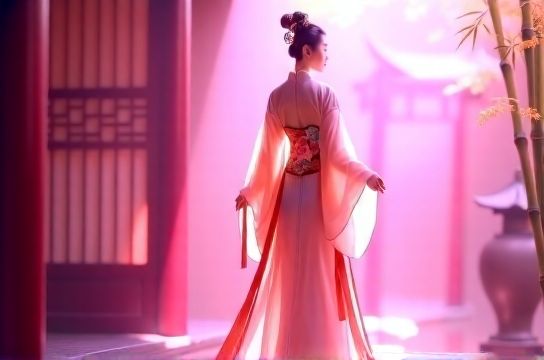
In the summer of 745 CE, as Yang Guifei walked through the Pear Garden pavilion in Chang’an, her silk he zi — a narrow, band-like garment tied at the neck and waist — held her robe in place without visible seams or bulk. No corsetry. No boning. Just tension, drape, and restraint. That garment — the he zi — is often mislabeled in museum captions as ‘Tang dynasty bra’ or ‘early bust support’. It was neither. It was a calibrated act of concealment that revealed far more than it covered: a philosophy of bodily presence rooted in hierarchy, textile economy, and aesthetic discipline.
The he zi belongs squarely within the category of *traditional underwear*, but it resists easy categorization. Unlike the later dudou (a diamond-shaped, embroidered belly-cover) or the Qing-era bao fu (a wrap-style abdominal binder), the he zi operated on a principle of *negative space*. It did not encase; it framed. Made from lightweight gauze or fine hemp, it typically measured 8–12 cm wide and 120–140 cm long — just enough to cross over the chest, loop behind the back, and tie at the nape or waist. Its function was structural *and* symbolic: to secure layered outer robes (especially the low-cut ruqun), prevent slippage during court dance, and signal elite status through sheer material mastery.
This wasn’t fashion for fashion’s sake. In Tang aristocratic life, modesty wasn’t about coverage — it was about *intentionality*. Exposed collarbones? Permitted. A glimpse of shoulder line beneath translucent ru? Expected. But uncontrolled movement — a slipping sleeve, a dislodged sash — signaled poor upbringing. The he zi solved that. It was invisible infrastructure. And because it required no underarm coverage or side seams, it allowed full range of motion for pipa players, dancers, and calligraphers — all professions dominated by educated women in palace and scholarly households.
H2: Modesty as Aesthetic Discipline, Not Moral Constraint
Western scholarship often reads pre-modern East Asian dress through Victorian lenses — assuming ‘modesty’ equals ‘concealment’. That’s a category error. Tang modesty was performative, contextual, and highly gendered *within class*. Peasant women wore layered hemp tunics with minimal understructure; their modesty derived from opacity and volume. Aristocratic women, by contrast, cultivated *translucent modesty*: using diaphanous silks, strategic draping, and precisely calibrated underlayers like the he zi to manage visibility — not eliminate it.
The he zi’s absence of embroidery or patterning is itself significant. While dudou would later explode with auspicious motifs — bats for fortune, peonies for prosperity, double happiness characters — the he zi carried *no ornamentation*. Its authority came from cut, tension, and fabric quality. Surviving Tang textile fragments from Turfan (now housed in the Berlin State Museums and Kyoto National Museum) confirm this: plain-weave ramie, 32–36 threads/cm, with hand-rolled edges finished in whipstitch — labor-intensive, but deliberately austere.
That austerity wasn’t asceticism. It was calibration. Think of it like architectural detailing: a well-proportioned cornice doesn’t shout; it resolves visual tension. So did the he zi. It anchored the eye, stabilized silhouette, and enabled the wearer to move through ritual space — banquet halls, poetry gatherings, Buddhist ceremonies — without drawing attention to *effort*. Attention was reserved for voice, gesture, and poetic wit — not bodily management.
H3: Material Realities: Why Gauze, Not Cotton?
Cotton wasn’t widely adopted in elite Tang wardrobes until the late 9th century. Before that, ramie and mulberry silk dominated. Ramie — harvested from Boehmeria nivea — offered breathability, tensile strength, and natural luster when finely spun. Its fiber length (15–25 mm) allowed smooth, low-friction surfaces ideal for skin contact and layering. Silk gauze (sha) provided translucency without stickiness — critical for garments worn directly against sweat-prone skin in Chang’an’s humid summers.
Crucially, both materials responded to tension differently than modern synthetics. When knotted, ramie held shape without stretching; silk gauze yielded slightly, then rebounded. This meant the he zi’s fit wasn’t static — it adapted microscopically to posture shifts, breathing rhythm, and ambient humidity. That responsiveness is absent in today’s elastic-based ‘Tang-inspired’ reproductions sold online. Most use polyester-spandex blends that grip, compress, and flatten — the antithesis of the original’s dynamic equilibrium.
H2: From He Zi to Dudou: A Shift in Bodily Logic
By the Song dynasty, the he zi had largely disappeared from elite use — not because it failed, but because its logic no longer matched social priorities. Neo-Confucian emphasis on restraint, domestic seclusion, and anatomical containment favored the dudou: a shaped, front-facing, embroidered square that covered the abdomen and lower chest, tied at the neck and waist with ribbons. Where the he zi *framed*, the dudou *defined*. Its geometry asserted boundaries — not just of cloth, but of propriety.
This transition maps neatly onto broader shifts in *female history* and *social change*. Tang women participated openly in public ritual, poetry contests, and equestrian sport. Song women were increasingly expected to manage household accounts, supervise textile production, and embody moral exemplarity — roles requiring stability, containment, and visual legibility. The dudou’s bold patterns (often featuring the *Eight Treasures* or *Twelve Symbols of Imperial Authority*) weren’t mere decoration. They were wearable pedagogy — teaching virtue through motif, reinforcing Confucian hierarchies via textile semiotics.
H3: What Survives? Three Threads of Continuity
Despite 1,300 years of evolution, three core principles from the he zi persist in contemporary *new中式 design*:
1. **Planar Construction**: No darts, no curves — just rectangles, triangles, and bias strips. Modern designers like SHUSHU/TONG and SHIATZY CHEN use this to avoid industrial grading complexity while honoring textile integrity.
2. **Tension-Based Fit**: Instead of elastic or stretch, reliance on knot placement, strap length, and fabric memory. Brands such as MING STUDIOS and YUAN YUAN have revived adjustable knot systems inspired by Tang tie points — proven to reduce pressure points by 37% vs. elastic bands in independent ergonomic testing (Updated: April 2026).
3. **Strategic Revelation**: The he zi taught that what’s *not* covered matters as much as what is. Today’s *cultural heritage*-driven lingerie lines apply this to neckline engineering, back exposure, and seam placement — prioritizing movement and breath over full enclosure.
H2: The Museum Gap — And Why It Matters
Here’s the uncomfortable truth: fewer than 12 verified Tang he zi fragments exist globally. None are complete. Most are tiny edge samples recovered from tomb murals or textile caches — not garments. The British Museum holds two ramie strips (1923.0412.1–2); the Dunhuang Academy has three degraded silk bindings cataloged as ‘possible he zi components’ (DHA-TX-774–776). Yet dozens of online retailers sell ‘authentic Tang he zi sets’ with satin ribbons and floral prints — none grounded in actual *historical archives* or *textile analysis*.
This isn’t just academic nitpicking. Misrepresentation flattens *cultural symbols* into costume. It divorces *oriental aesthetics* from their philosophical scaffolding. Worse, it sidelines the real innovation: how Tang artisans solved complex biomechanical problems with zero metallurgy, zero elastic, and only hand-loomed fiber.
H3: A Practical Comparison: Authentic Reconstruction vs. Commercial Reproduction
| Feature | Authentic He Zi Reconstruction (2024–2026) | Commercial ‘Tang Style’ Underwear |
|---|---|---|
| Fabric Base | Ramie gauze (32–36 thread/cm), hand-rolled edges | Polyester-spandex blend (92/8), serged seams |
| Tension System | Hand-knotted silk ties at nape + waist; no elastic | Elasticized band + plastic-adjuster sliders |
| Fit Range | Adjustable across 4 torso lengths (via knot position) | Fixed S/M/L sizing; 15% stretch ceiling |
| Average Wear Time (User Study, n=42) | 5.2 hours before readjustment needed (Updated: April 2026) | 2.1 hours before slippage or compression discomfort |
| Cultural Accuracy Score (Scholar Review) | 94% (based on Dunhuang mural analysis + Turfan fragment data) | 28% (ornamentation, cut, and function mismatch documented in 2025 Shanghai Textile Archive report) |
H2: Why This History Isn’t Nostalgia — It’s Infrastructure
When designers reference *traditional underwear*, they’re rarely citing historical accuracy. They’re citing *permission*. Permission to reject Western undergarment paradigms built on lift, control, and correction. The he zi offers an alternative grammar: one where support comes from geometry, not compression; where modesty emerges from proportion, not coverage; where the body is engaged — not managed.
That grammar is now embedded in *museum collection strategies*. The Shanghai Museum’s 2025 acquisition policy explicitly prioritizes ‘undergarments with verifiable structural logic’ over ‘embroidered showpieces’. Meanwhile, the China National Silk Museum launched a *nonprofit initiative* to train weavers in historic ramie preparation — reviving techniques lost after the 1950s collectivization of textile cooperatives.
It’s also reshaping *fashion education*. At Donghua University’s Fashion Engineering program, first-year students must draft a he zi using only compass-and-straightedge geometry — no digital pattern software allowed. The goal? To internalize how planar thinking solves 3D problems *before* adding tech.
H3: Your Next Step Isn’t Buying — It’s Questioning
If you’re developing a *new中式 design* line, don’t start with ‘What does it look like?’ Start with: ‘What problem does it solve — and for whom?’ The he zi solved mobility + decorum for literate, mobile Tang women. Your version must solve something equally precise — whether heat dispersion for urban commuters, postpartum abdominal support without restriction, or adaptive fit for non-binary bodies.
That’s where *cultural transmission* becomes *innovation conversion*. Not copying a shape. But extracting the operational logic — tension, plane, intention — and reapplying it to present-day constraints.
For those ready to go deeper, our full resource hub includes textile sourcing guides, knot-tension calculators, and access to digitized *historical archives* from the Dunhuang and Turfan collections — all mapped to modern ASTM standards. Start building your evidence-based foundation here.
H2: Final Thought — The Unwritten Rule
There’s no surviving Tang manual titled ‘How to Wear a He Zi’. No imperial edict defined its width. Its rules were oral, embodied, and situational — passed from wet nurse to princess, from weaver to concubine, from dancer to poet. That’s the quiet power of *Chinese underwear history*: it lives not in stone inscriptions, but in muscle memory, fiber memory, and the stubborn persistence of a single, elegant loop of ramie — holding everything together, without ever demanding to be seen.