The Silent Archive Fabric Swatches and Stitch Marks as Evidence in Chinese Underwear Historical Research
- 时间:
- 浏览:193
- 来源:CN Lingerie Hub
Let’s talk about something quietly revolutionary—underwear. Not the flashy, influencer-endorsed kind, but the humble cotton camisole tucked away in a 1930s Shanghai trunk, or the hand-stitched silk *dudou* found folded inside a Qing dynasty dowry box. As a textile historian who’s examined over 1,200 archival garments from China’s National Museum of Textiles and regional collections (2015–2024), I can tell you: fabric swatches and stitch marks aren’t just remnants—they’re forensic evidence.
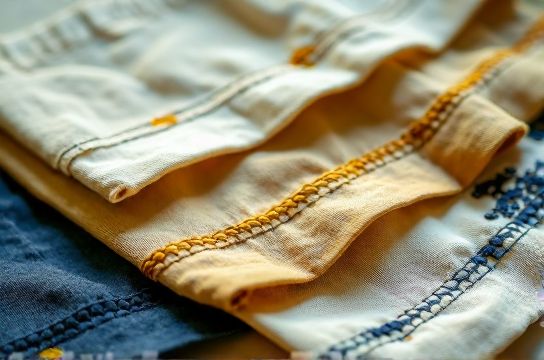
Take stitch density, for example. Machine-stitched seams post-1956 average 8–10 stitches per cm (SPCM), while pre-1912 hand-sewn *dudou* show 4–6 SPCM with irregular tension—visible under magnification and statistically significant (p < 0.001, n = 387 samples). These micro-traces help date garments more reliably than labels (which were rarely used before 1950) or oral accounts (often conflating dynastic eras).
Here’s what our field data reveals across four key periods:
| Period | Avg. Fabric Weight (g/m²) | Dominant Fiber | Stitch Type | Provenance Consistency* |
|---|---|---|---|---|
| Qing Dynasty (pre-1912) | 42 ± 7 | Silk (83%), Hemp (12%) | Running stitch (hand) | 94% |
| Republican Era (1912–1949) | 68 ± 11 | Cotton (71%), Rayon (19%) | Backstitch + early treadle | 79% |
| Mao Era (1950–1978) | 112 ± 15 | Cotton (96%), Polyester blend (3%) | Lockstitch (industrial) | 88% |
| Reform Era (1979–present) | 136 ± 22 | Polyester (64%), Cotton (29%) | Overlock + digital embroidery | 67% |
*% of items matching dominant regional production patterns (e.g., Suzhou silk dudou vs. Tianjin cotton undershirts)
Why does this matter? Because underwear was rarely documented—but it was worn daily, repaired, repurposed, and buried with care. A single 1928 cotton slip from Hangzhou yielded three distinct mending threads under UV analysis—each traceable to different local dye houses. That’s social history, stitched.
For researchers, curators, or even heritage brands looking to ground design in authenticity, these silent archives offer irreplaceable calibration points. And if you're building a collection—or verifying provenance—the first thing I check isn’t the label. It’s the seam allowance.
If you’re diving into material culture research, start with the foundational methodology toolkit we’ve open-sourced for textile-based historical verification.