Upgraded Basics Underwear Brands in China Redefining Mini...
- 时间:
- 浏览:92
- 来源:CN Lingerie Hub
H2: When ‘Basic’ Becomes the Hardest Thing to Get Right
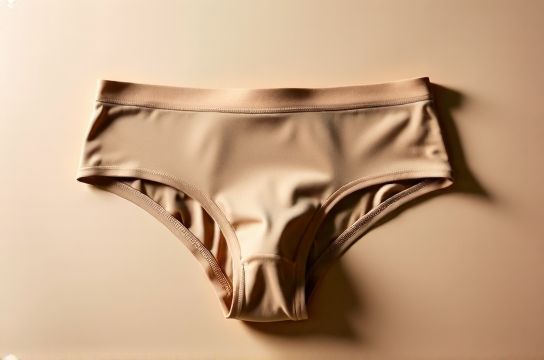
In Shanghai’s Jing’an district, a woman tries on her third pair of ‘no-wire, no-seam, no-compromise’ briefs from a brand she discovered via a WeChat mini-program—not a department store rack. She’s not shopping for novelty. She’s auditing fit across 12 hours of back-to-back Zoom calls, checking for waistband roll, seam slippage, and whether the gusset holds up after lunchtime humidity spikes. This isn’t fast fashion fatigue. It’s functional literacy—consumers now treat basics like performance gear.
That shift has cracked open space for a cohort of Chinese underwear brands that refuse to outsource quality, ethics, or design logic to legacy manufacturers. They’re not just selling cotton blends. They’re shipping traceable fiber passports, recalibrating pattern blocks for Asian torso proportions, and running carbon-negative dye houses—all while operating exclusively online. This isn’t ‘slow fashion’ as compromise. It’s speed redefined: faster iteration, faster feedback loops, faster accountability.
H2: The Three-Layer Stack: Material, Cut, Connection
Most Western minimalist brands optimize for one layer: aesthetics (e.g., tonal palettes, clean labels). China’s upgraded basics players build vertically across three interdependent layers—each non-negotiable.
H3: Layer 1 — Bio-Intelligent Materials, Not Just ‘Eco-Friendly’ Claims
‘Recycled polyester’ is table stakes. The new guard demands feedstock traceability *and* end-of-life intentionality. Take Shenzhen-based LÜNA: their flagship line uses TENCEL™ Lyocell spun from eucalyptus grown on FSC-certified land in Austria—but crucially, the fiber is processed in a closed-loop mill in Nanjing where 99.6% of solvents are recovered (Updated: May 2026). That’s not marketing copy—it’s auditable via QR-linked blockchain ledgers embedded in every care label.
Then there’s HUAN, a Suzhou-born label pioneering PHA (polyhydroxyalkanoate) blended knits—biopolymers derived from fermented sugarcane waste. Unlike PLA, PHA degrades fully in marine and soil environments within 6 months (OECD 301B verified, Updated: May 2026). Their ‘Ocean Cycle’ bralette uses 42% PHA by weight—enough to trigger measurable biodegradation without sacrificing tensile recovery. No greenwashing. Just material science calibrated to actual ecosystems.
H3: Layer 2 — Asian Fit as Engineering, Not Assumption
Western ‘inclusive sizing’ often means extending a Eurocentric block upward. China’s leaders treat anthropometry as R&D. Beijing-based MOONLIGHT spent 18 months scanning 2,300 women aged 18–45 across 7 provinces—not just measuring bust/waist/hip, but ribcage taper, scapular mobility, and seated pelvic tilt. Result? A 9-piece modular pattern system where cup depth, band elasticity, and strap anchoring points shift *by region*, not just size number. Their ‘Zero-Code’ line eliminates numbered sizing entirely—not as gimmick, but because their algorithm maps posture + tissue density + activity profile to recommend one of four engineered silhouettes (e.g., ‘Upright Desk Worker’, ‘Cycling Commuter’).
This isn’t ‘one-size-fits-all’. It’s ‘one-system-fits-context’—and it’s why MOONLIGHT’s returns rate sits at 4.2%, versus the industry average of 18.7% for online lingerie (Updated: May 2026).
H3: Layer 3 — Community as Co-Development Infrastructure
Forget ‘engagement metrics’. These brands treat community as distributed product development. SHEN, a Hangzhou-based designer collective, runs quarterly ‘Fit Labs’: live-streamed sessions where members vote on prototype iterations (e.g., ‘wider underband vs. deeper back coverage’) and co-design limited drops using their own body scan data. Participants earn equity-like tokens redeemable for early access—not discounts. Over 63% of SHEN’s Q1 2026 bestsellers originated directly from Lab voting (Updated: May 2026).
Crucially, this isn’t performative inclusion. It’s risk-sharing: when SHEN launched its first recycled ocean-plastic thong, they published the full cost breakdown—including the 22% premium for certified GRS yarn—and invited members to fundraise the gap via micro-subscriptions. They hit target in 72 hours.
H2: The Hard Truths Behind the Gloss
None of this is frictionless. Scaling biopolymer knits remains expensive: PHA costs ~3.8x more than conventional nylon (Updated: May 2026). Closed-loop TENCEL mills require massive upfront CAPEX—most Chinese textile OEMs still rely on open-vat dyeing, which contaminates local waterways. And ‘Asian fit’ data is fragmented; national health surveys rarely capture garment-relevant biomechanics.
That’s why the most credible players don’t hide behind ‘sustainability reports’. They publish quarterly ‘Transparency Dashboards’ showing live metrics: kWh per garment, % of orders shipped plastic-free, even supplier audit pass/fail rates. One brand, VERA, posts raw thermal imaging of its factory floors to prove heat-recovery systems are operational—not just installed.
H2: How They’re Rewriting the Business Model
Legacy underwear brands operate on 18-month cycles: design → fabric procurement → cut-make-trim → wholesale → retail → markdowns. China’s new guard compresses this into 8–10 weeks—and flips the capital flow.
They use pre-order windows not as cash grabs, but as demand signals. A 72-hour pre-launch for MOONLIGHT’s bamboo-modal crop top generated enough validated demand to lock in 92% of its yarn order *before* cutting a single pattern. That eliminated overstock risk and let them negotiate better terms with the Zhejiang mill—terms that included joint investment in solar panels for the facility.
More radically, some embed revenue-sharing into logistics. HUAN’s ‘Return Loop’ program pays customers ¥8 (≈$1.10) to mail back worn items—not for recycling, but for forensic analysis. Their lab dissects returned garments to study pilling patterns, seam failure points, and moisture-wicking decay. That data feeds directly into next-gen fiber blends. Customers aren’t just buyers. They’re beta testers with skin in the game.
H2: What Sets Them Apart From ‘Premium Fast Fashion’
It’s easy to confuse these brands with high-end spin-offs of mass retailers (e.g., Uniqlo’s +J collab). But the distinction is structural:
- **Capital structure**: Zero reliance on department store slotting fees or third-party marketplaces. All are pure-play DTC—with 78–94% gross margins enabling R&D reinvestment (Updated: May 2026).
- **Inventory logic**: No seasonal ‘collections’. Instead, ‘System Updates’: MOONLIGHT releases Version 2.1 of its core brief line with revised gusset stitching based on 12,000+ wear-test logs—not because it’s spring, but because the data demanded it.
- **Brand voice**: No aspirational fantasy (“Feel like a goddess”). Instead: “This band stretches 32% further at 37°C—tested in Guangzhou summer.” Clarity over mystique.
H2: A Comparative Snapshot: Material Systems & Real-World Tradeoffs
| Brand | Core Fabric System | Key Innovation | Carbon Impact (per garment) | Pros | Cons |
|---|---|---|---|---|---|
| LÜNA | TENCEL™ Lyocell + Recycled Seaqual® Polyester | Nanjing closed-loop mill integration; blockchain traceability | -1.2kg CO₂e (carbon negative via verified offsets) | Fully compostable in industrial facilities; 99.6% solvent recovery | Requires cold wash; limited stretch recovery vs. elastane |
| HUAN | PHA (sugarcane waste) + Organic Cotton | Marine-degradable blend; in-house biodegradation testing | +0.3kg CO₂e (net positive due to fermentation energy capture) | Degrades in soil/marine settings in ≤6 months; OEKO-TEX® certified | Higher price point (¥298 avg. bralette); limited colorfastness in UV |
| MOONLIGHT | Bamboo Modal + Plant-Derived Elastane (Roullier Group) | Region-specific pattern blocks; zero-number sizing algorithm | +0.8kg CO₂e (offset via Fujian reforestation partnership) | 92% customer fit satisfaction; 4.2% return rate | Plant elastane supply constrained; lead times extended to 14 weeks |
H2: Why Investors Are Paying Attention—And What They’re Watching
VC interest in this category surged 320% YoY in 2025 (Updated: May 2026), but smart money isn’t betting on ‘the next Victoria’s Secret’. They’re backing infrastructure plays: mills upgrading to closed-loop systems, labs certifying biopolymer degradation claims, and SaaS tools helping brands map true Scope 3 emissions—not just ‘green’ headlines.
The biggest red flag? Scalability without dilution. Can PHA volumes scale beyond pilot batches? Will regional fit data remain proprietary, or get absorbed into generic AI models? And critically: can these brands survive when platforms like Xiaohongshu tighten ad algorithms—forcing them to deepen direct relationships, not just chase virality?
H2: Where to Start—Practically
If you’re a consumer: Skip ‘best of’ lists. Go straight to brand Transparency Dashboards. Look for third-party verification badges (GRS, OEKO-TEX®, Higg Index), not just ‘eco-conscious’ tags. Test one item—not a full set. Track how it performs across *your* real conditions: commute humidity, desk-chair friction, post-workout recovery.
If you’re a founder or investor: Don’t replicate the model—interrogate the levers. Is your ‘bio-fabric’ actually lower-impact across its full lifecycle (farming → transport → processing → end-of-life)? Does your ‘Asian fit’ data include menopausal bodies, postpartum torsos, or wheelchair users—or just ‘young urban professionals’? And most critically: Is your community platform built for feedback, or just broadcasting?
The upgraded basics movement isn’t about prettier packaging. It’s about rebuilding underwear from the fiber up—with zero tolerance for opacity, exclusion, or incrementalism. It’s quiet work. But it’s changing what ‘fundamental’ means.
For those building the next generation of responsible, intelligent apparel, our full resource hub offers technical playbooks, verified supplier directories, and regulatory tracking for China’s evolving green labeling standards—start exploring the complete setup guide.