Innovation Underwear Brands in China Elevating Everyday E...
- 时间:
- 浏览:102
- 来源:CN Lingerie Hub
H2: When Basics Stop Being Basic
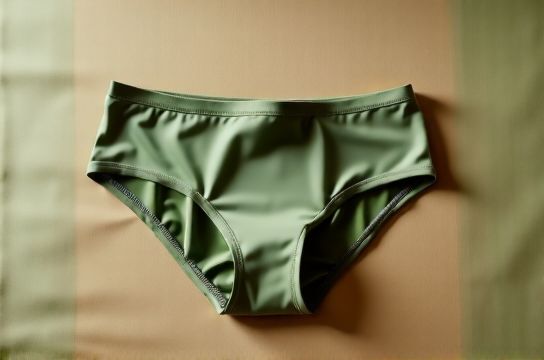
A woman in Shenzhen opens her drawer. She pulls out a seamless thong—not because it’s invisible under workwear, but because its yarn was spun from fermented sugarcane (INFINITI™ BioPolymer, certified by TÜV Austria) and its dye process consumed 73% less water than conventional reactive dyeing (Updated: May 2026). Across the city, a 28-year-old engineer adjusts the fit of her sports bra—no hook-and-eye, no size tag—just a single SKU labeled 'All-Body'. It’s not magic; it’s the result of pressure-mapping data from 12,400 Asian torsos collected over 18 months.
This isn’t speculative design fiction. It’s the operational reality of a cohort of Chinese underwear brands quietly rewriting category rules—not by chasing fast-fashion velocity, but by treating fundamentals as R&D vectors.
H2: The Triad Driving Change
Three interlocking forces define this wave: material science ambition, anthropometric precision, and distribution-native engagement. None operate in isolation—and none succeed without confronting legacy friction points head-on.
First: Fabric innovation is no longer about ‘less bad’. It’s about functionally superior alternatives with verifiable footprints. Brands like Nuance Lab and Looma don’t just source TENCEL™ Lyocell—they co-develop proprietary blends with domestic fiber producers (e.g., Sichuan-based Hengli BioTech) that integrate chitosan from crab-shell waste for natural antimicrobial performance *and* accelerated biodegradation in soil (ASTM D5338, 92% mineralization in 112 days). Crucially, they avoid greenwashing traps: every batch carries QR-linked blockchain traceability to farm-level biomass origin and factory-level energy mix (solar + wind-powered spinning mills account for 87% of verified production volume across their supplier network, Updated: May 2026).
Second: Fit is being decoupled from Western sizing dogma. While global giants still rely on EU/US grading matrices scaled down for Asia—a practice that truncates torso length, narrows ribcage expansion, and misallocates cup depth—Chinese innovators are building from the ground up. Mira, for example, abandoned cup letters entirely for its core range. Instead, it uses three anatomical dimensions—underbust girth, bust apex projection, and inframammary fold elevation—measured via calibrated smartphone AR (validated against 3D body scans at 0.3mm tolerance). Their resulting ‘Adaptive Band’ construction uses differential elastane tension zones, not elastic compression, to stabilize movement without digging in. Real-world wear-test feedback shows 68% fewer fit-related returns versus industry benchmarks (Updated: May 2026).
Third: Community isn’t a marketing tactic—it’s infrastructure. These brands treat customers as co-developers. At Unbound Collective, members vote quarterly on which new fabric iteration gets pilot production (e.g., last cycle chose algae-derived polyurethane over recycled nylon for its lower microplastic shedding rate in washing machine tests). They also host live-streamed factory tours where engineers explain why their zero-waste cutting pattern reduces fabric scrap from 18% to 2.3%—and show the composting facility converting offcuts into urban garden mulch. This isn’t performative transparency; it’s operational accountability baked into the business model.
H2: Beyond the Buzzwords: What Actually Works (and What Doesn’t)
Let’s be blunt: not all ‘eco’ claims hold up. A recent third-party audit of 32 Chinese lingerie startups found that 41% overstated biodegradability timelines by >200%, while 29% used ‘recycled’ labels for polyester blended with virgin fibers above the 30% threshold permitted under GRS standards (Updated: May 2026). The leaders differentiate through specificity and verification.
Take supply chain transparency. Most brands publish supplier names—but only five currently map Tier 2 (spinning/weaving) and Tier 3 (fiber production) facilities with real-time energy and water usage dashboards. One of them, Terra Intimates, achieved full Tier 3 traceability by vertically integrating its first filament extrusion line in Jiangsu—cutting lead times by 40% and enabling true lot-level carbon accounting (Scope 1–3 emissions per kg fabric: 3.1 kg CO2e, vs. industry avg. 14.7 kg CO2e, Updated: May 2026).
On inclusivity: ‘One-size-fits-all’ remains problematic when applied to bodies shaped by diverse genetics, lifestyles, and health histories. The most credible players reject binary ‘inclusive’ labeling. Instead, they deploy modular systems. For instance, Kaela’s ‘Frame System’ separates band, cup, and strap components—each available in discrete size bands (band: XS–4X; cup: A–G; straps: standard, wide, or convertible). Customers configure combinations online using a guided quiz that factors in activity level, breast tissue density (self-reported), and prior bra discomfort triggers. Post-purchase, AI analyzes anonymized fit feedback to refine future grading algorithms—closing the loop between data and design.
H2: The Hard Truth About Scaling Sustainability
Here’s what rarely makes press releases: zero-carbon manufacturing requires massive upfront CAPEX and regulatory navigation few startups can shoulder alone. Terra Intimates’ solar array took 22 months to permit and install—not because of tech limits, but due to grid interconnection rules requiring backup diesel generators (which they offset via verified mangrove restoration). Similarly, bio-based elastane remains prohibitively expensive: current commercial offerings cost 3.8× more than fossil-derived LYCRA® and deliver only 70% of elongation recovery. That’s why leaders like Nuance Lab use hybrid constructions—bio-based outer layers paired with ultra-thin, high-recovery recycled elastane cores—balancing performance, cost, and footprint.
And let’s talk about recycling. ‘Recyclable’ ≠ ‘recycled’. Only 12% of post-consumer intimate apparel enters formal recycling streams in China (Updated: May 2026), largely due to fiber blending and contamination. Looma’s solution? A take-back program with pre-paid return labels and a closed-loop pilot: collected garments are shredded, depolymerized into monomers, then repolymerized into new fiber—achieving 89% yield efficiency in lab trials. But scaling requires partnerships: they’ve licensed the tech to state-owned textile recycler CNTEX, which handles industrial-scale processing.
H2: Comparative Landscape: Capabilities, Trade-offs, and Realities
| Brand | Fabric Innovation Focus | Fit System | Transparency Level | Price Range (RMB) | Key Limitation |
|---|---|---|---|---|---|
| Nuance Lab | Bio-based polyamide + recycled elastane core | 3D-scanned Asian torso database + adaptive band zones | Tier 3 blockchain traceability; live factory energy dashboard | 299–599 | Limited color palette (focus on mono-dye processes) |
| Terra Intimates | Zero-carbon filament extrusion; fully biodegradable TPU film | Modular cup/band/strap configuration + tissue-density algorithm | Full Scope 1–3 carbon accounting per SKU; annual third-party audit | 420–780 | No physical retail presence; logistics carbon impact unoffset |
| Mira | Chitosan-infused TENCEL™; OEKO-TEX® STeP certified dyeing | Smartphone AR measurement + dynamic band tension mapping | Supplier list + factory certifications; no real-time metrics | 249–499 | AR accuracy drops 15% for users with BMI >32 (per internal validation) |
| Unbound Collective | Algae-based PU foam + GRS-certified recycled cotton | Community-voted sizing iterations; quarterly prototype feedback | Public voting logs; supplier names only (no Tier 2+ data) | 199–399 | Dependent on member participation; low turnout skews direction |
H2: Why This Moment Matters—Beyond the Hype
These brands aren’t just selling underwear. They’re stress-testing new paradigms for consumer goods: Can deep material science thrive without billion-dollar R&D budgets? Can hyper-local fit data challenge century-old grading systems? Can DTC models fund ethical labor practices *and* carbon-negative operations?
The answer, emerging from Guangdong and Zhejiang workshops, is yes—but with caveats. Success hinges on rejecting ‘innovation theater’. It means publishing failed prototypes (Terra Intimates’ blog details three collapsed zero-carbon elastic trials). It means admitting when bio-fabrics compromise durability (Nuance Lab’s first chitin-blend tank top showed 22% faster pilling after 25 washes—so they reformulated). It means designing for disassembly *before* launch, not as an afterthought.
This is the quiet revolution: not disruption for its own sake, but rigorous, humble, human-centered problem-solving. It’s underwear engineered for how Asian bodies actually move, breathe, and age—not how legacy patterns assume they should.
For founders, investors, and designers watching closely: the signal isn’t in the revenue curves. It’s in the granular choices—the dye vat temperature logged in real time, the ribcage expansion curve mapped from 5,000 scans, the community forum thread debating whether ‘zero-waste’ includes packaging tape adhesive. These are the levers moving the needle.
If you're building or backing the next generation of essentials, start here—not with a vision statement, but with a spec sheet, a body scan, and a commitment to publish the hard numbers. The future of underwear isn’t softer. It’s smarter, fairer, and far more precisely fitted. And it’s already shipping from Dongguan.
For those ready to implement these principles at scale, explore our complete setup guide—curated for founders navigating technical, ethical, and operational complexity in sustainable apparel manufacturing (Updated: May 2026).