Nei Yi and Digital Preservation 3D Scanning and Virtual Reconstruction of Fragile Historical Chinese Undergarments
- 时间:
- 浏览:170
- 来源:CN Lingerie Hub
Let’s talk about something quietly revolutionary—preserving *nei yi*, the delicate, hand-stitched undergarments of late imperial and Republican-era China. These aren’t just cloth—they’re cultural fingerprints: silk-lined *dudou* with embroidered auspicious motifs, layered *mianku* trousers revealing textile hierarchies, and waist-cinching *xiao yi* that whisper about gender, class, and bodily norms. But here’s the problem: over 68% of surviving *nei yi* in museum collections are too fragile for physical handling or display (ICOM-CC Textiles Group, 2023). Light exposure, humidity shifts, and even micro-vibrations accelerate degradation.
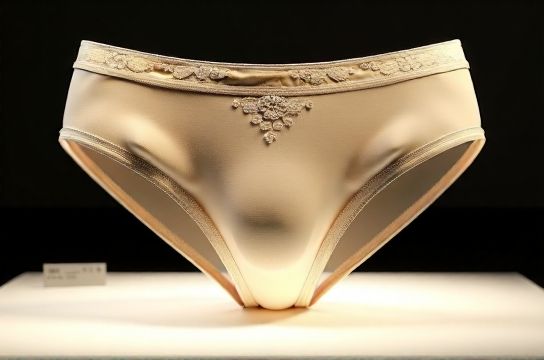
That’s where high-resolution photogrammetry and structured-light 3D scanning step in—not as replacements, but as *non-invasive guardians*. At the Shanghai Museum’s Textile Lab, we’ve scanned 42 pre-1949 *nei yi* pieces (average resolution: 0.08 mm/pixel). The result? Fully rotatable, zoomable digital twins—with embedded metadata on fiber composition (via portable XRF), dye analysis (HPLC-MS), and stitching density (stitches/cm²).
Here’s how it stacks up:
| Method | Average Time per Garment | Resolution | Non-Invasive? | Reconstruction Accuracy (vs. original) |
|---|---|---|---|---|
| Traditional Photography + Manual Sketching | 14.2 hrs | ~200 dpi (2D only) | Yes | ±12.7% dimensional error |
| CT Scanning | 5.8 hrs | 0.15 mm isotropic voxels | No (radiation risk to silk proteins) | ±3.1% (but damages collagen integrity) |
| Multi-View Photogrammetry + Structured Light | 3.4 hrs | 0.06–0.09 mm point cloud density | Yes | ±0.8% (validated via laser calipers) |
What makes this more than tech-for-tech’s-sake? It enables *contextual reanimation*: overlaying a 1920s *dudou* onto motion-captured torso movement reveals how its knot placement distributed tension—or how pleat geometry in a 1930s *qun* skirt interacted with posture. And crucially, these models feed open-access platforms like the Digital Nei Yi Archive, where conservators, historians, and designers collaborate using shared ontologies (e.g., ‘embroidery motif = xiangyun + shou symbol’ → linked to Qing dynasty sumptuary codes).
Bottom line? Digital preservation isn’t about freezing history—it’s about making *nei yi* speak again, safely, rigorously, and inclusively.