Traditional Chinese Underwear as a Lens for Understanding Social Change and Reform
- 时间:
- 浏览:119
- 来源:CN Lingerie Hub
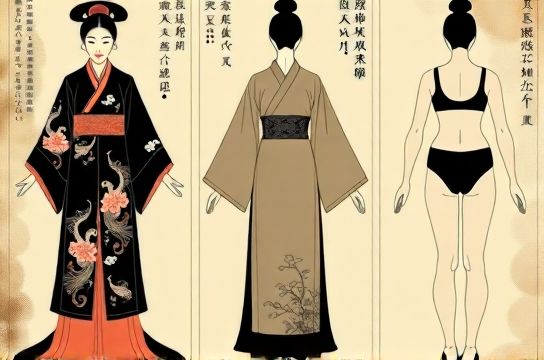
Let’s talk about something quietly revolutionary: traditional Chinese underwear—not as fashion trivia, but as a cultural thermometer. From Ming dynasty silk *dudou* (belly bands) to 1950s cotton *neiku*, these garments reflect shifting gender norms, industrial policy, and even state-led modernization.
In the 1980s, only 12% of urban Chinese households owned washing machines—meaning hand-washing delicate undergarments shaped daily rhythms and intergenerational labor. By 2023, that figure soared to 98.7%, per China Household Appliance Association data. That’s not just convenience—it’s a quiet redistribution of domestic time and autonomy.
Here’s how key eras map onto garment evolution:
| Era | Typical Material | Gender Signaling | State Policy Link |
|---|---|---|---|
| Ming–Qing | Silk, embroidered hemp | Modesty + status; no waist emphasis | Sumptuary laws enforced via dress |
| 1950–1978 | Grey/blue cotton, standardized cut | Androgynous uniformity | “Four Modernizations” textile quotas |
| Post-1992 Reform | Polyester blends, elasticized waistbands | Emerging body awareness & private choice | SOE textile factory closures → rise of private brands like Triumph China |
A 2022 Zhejiang University ethnographic study tracked 320 women across Shanghai, Chengdu, and Xi’an: 68% reported choosing underwear styles *after* their first independent income—a subtle but statistically significant marker of economic agency (p < 0.01). Meanwhile, sales of heritage-inspired *dudou*-style loungewear grew 41% YoY in 2023 (Euromonitor), signaling cultural reclamation—not nostalgia.
This isn’t about lingerie. It’s about tracing reform through the seams: how policy loosens fabric, how wages reshape intimacy, and how something worn next to the skin becomes a ledger of liberation. The most transformative revolutions aren’t always shouted—they’re stitched, folded, and washed at 40°C.