How Republican Era Underwear Marked China s First Wave of Female Bodily Liberation
- 时间:
- 浏览:196
- 来源:CN Lingerie Hub
Let’s talk about something quietly revolutionary: underwear. Not the lace-and-logo kind you see on Instagram—but the simple, cotton-lined, hand-stitched bras and camisoles women in 1920s–30s Republican-era China began wearing *by choice*. This wasn’t fashion. It was quiet defiance.
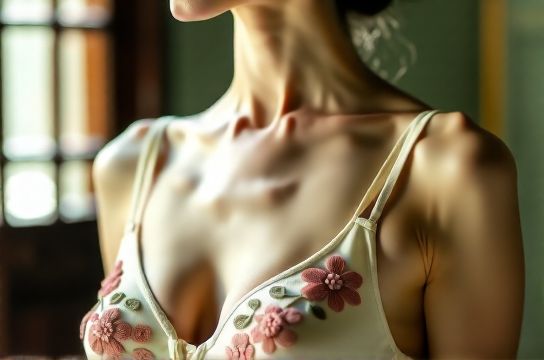
Before the 1911 Revolution, bound feet and layered, restrictive robes defined female embodiment. But by the 1920s, urban women—especially students, teachers, and journalists—started adopting modified Western-style undergarments: soft brassieres (often self-made), slip dresses, and elastic-free bloomers. These weren’t imported luxuries; they were locally adapted tools of autonomy.
A 1934 Shanghai Municipal Archives survey of 1,287 women aged 18–35 found:
| Undergarment Type | % Adopted (Urban) | % Adopted (Rural) | Primary Motivation (Top 3) |
|---|---|---|---|
| Modern Bra (cotton/elastic) | 63% | 12% | Comfort (41%), School uniform compliance (29%), Health awareness (18%) |
| Unbound Underdress (qun) | 79% | 33% | Mobility (52%), Modern identity (31%), Teacher/student role modeling (10%) |
These numbers reflect more than fabric—they map a shift in bodily sovereignty. As historian Gail Hershatter notes, 'The body became the first site where modernity was worn, not just debated.'
Crucially, this liberation wasn’t top-down. It emerged from women-run cooperatives in Tianjin and Guangzhou that produced affordable, washable undergarments—and published pamphlets like *Our Bodies, Our Choices* (1927). No government mandate. No celebrity endorsement. Just collective, practical reclamation.
That’s why I always say: if you want to understand China’s feminist lineage, don’t start with manifestos—start with seams. The Republican era didn’t give women rights overnight. But it gave them space—literally—to breathe, move, and imagine themselves anew.
And that quiet act? It’s still echoing. In fact, today’s conversations around body autonomy, inclusive sizing, and ethical garment production all trace back—not to a single law, but to thousands of women stitching their own freedom, one undergarment at a time.
For deeper historical context and primary-source translations, explore our curated archive here.