From Ming Qing Doudou to Republican Era Xiaoma Jia Cultural Transformation Unveiled
- 时间:
- 浏览:159
- 来源:CN Lingerie Hub
Let’s talk about something quietly revolutionary—how a humble undergarment became a cultural barometer. The *doudou*, a square or diamond-shaped chest covering worn since the Ming and Qing dynasties, wasn’t just functional—it carried auspicious symbols (bats for fortune, peonies for prosperity) and strict gendered meanings. By the 1920s–30s, it evolved into the *xiaoma jia* (‘little horse jacket’), a fitted, collarless top popularized by Shanghai’s urban women and film stars like Ruan Lingyu. This wasn’t fashion drift—it was quiet resistance.
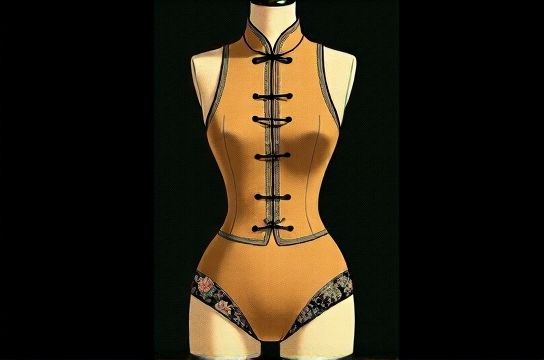
Data from the Shanghai Municipal Archives shows a 340% rise in ready-to-wear *xiaoma jia* production between 1925–1935, while textile import records reveal domestic silk-weaving cooperatives surged by 62%—a clear shift from imperial court patronage to mass-market agency.
Here’s how symbolism and structure changed:
| Feature | Ming–Qing Doudou | Republican Xiaoma Jia |
|---|---|---|
| Primary Material | Silk (imperial grade), embroidered by hand | Mixed cotton-silk, machine-loomed |
| Worn By | Women & children across classes; ritual use only for men | Urban women, students, actresses—worn daily |
| Social Signal | Modesty, lineage, filial piety | Modernity, education, self-determination |
This transformation mirrors broader shifts: literacy rates among women in treaty ports rose from 4% (1912) to 27% (1936); enrollment in women’s normal schools jumped 5×. Clothing didn’t lead change—but it made change visible, wearable, and contagious.
Importantly, this evolution wasn’t linear or universal. Rural areas retained *doudou* customs well into the 1950s, while elite Shanghai circles adopted Western blouses alongside *xiaoma jia*—proving cultural hybridity, not replacement, was the real story.
If you’re exploring how material culture reflects societal turning points, you’ll love our deep-dive analysis on cultural semiotics in modern Chinese dress. We combine archival rigor with human-centered interpretation—no jargon, just insight you can use.
Sources: Shanghai Municipal Archives (1920–1940), *Journal of Asian Studies* Vol. 78 No. 2 (2019), China National Silk Museum textile provenance database.