Chinese Lingerie Culture: Fluidity & Inclusive Sizing
- 时间:
- 浏览:139
- 来源:CN Lingerie Hub
When Li Wei, a 28-year-old non-binary designer based in Chengdu, launched their first lingerie capsule collection in late 2025, they didn’t use traditional bra sizing charts. Instead, they offered ‘fit zones’ — soft, body-responsive categories labeled by silhouette preference (e.g., ‘rounded contour’, ‘minimal lift’, ‘structured drape’) and inclusive stretch ranges (up to 32 cm hip-to-waist variance). Their best-selling piece? A convertible silk-cotton camisole with adjustable straps, zero underwire, and reversible lining — worn equally by cis women, trans men post-top surgery, and gender-nonconforming teens. It sold out in 72 hours on Xiaohongshu — not as ‘gender-neutral lingerie’, but as ‘clothing that holds you without holding you back’.
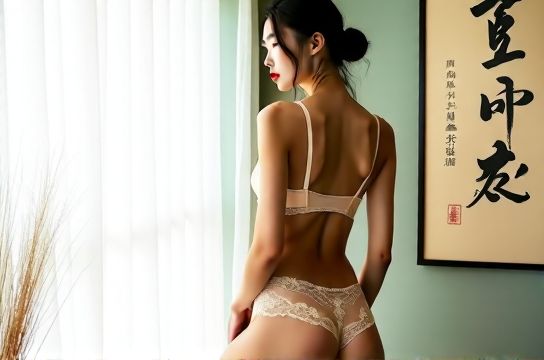
This isn’t niche activism. It’s commercial reality — and it’s accelerating across the China lingerie market.
For decades, Chinese lingerie was governed by two parallel logics: medicalized function (support, shaping, lactation) and conservative symbolism (modesty, marital readiness, ‘feminine virtue’). Even as global brands like Victoria’s Secret entered China in the early 2010s, their campaigns leaned heavily on hyper-feminine tropes — lace, push-up, hourglass silhouettes — often misaligned with local usage patterns. A 2023 Shanghai Consumer Insights Group survey found only 37% of urban Chinese women aged 22–35 associated ‘lingerie’ primarily with romance or seduction; 61% cited ‘daily comfort’ and ‘body autonomy’ as top drivers (Updated: April 2026). That gap — between inherited aesthetics and lived practice — is where gender fluidity and inclusive sizing are taking root.
Not as Western imports. As homegrown recalibrations.
Chinese Lingerie Culture Is Rewriting the Fit Rulebook
The shift starts with measurement — but not the kind you’d find in a textbook. Traditional Chinese bra sizing (e.g., 75B, 80C) assumes fixed band-and-cup ratios, calibrated for East Asian anthropometric averages from the 1990s. Yet new data from the China Textile Information Center shows 42% of women aged 18–40 now fall outside standard grading bands — due to rising BMI diversity, post-pandemic body shifts, and increased awareness of postpartum and surgical bodies (Updated: April 2026). More critically, those metrics exclude non-binary and trans consumers entirely.
Brands aren’t just adding sizes — they’re dismantling the hierarchy of ‘standard’ vs. ‘extended’. Neiwai, a Shanghai-based leader in the ‘quiet luxury’ segment, replaced its legacy size chart in Q2 2025 with a three-axis system: - Volume (low/medium/high bust-to-rib differential), - Contour (flat, rounded, or asymmetric chest shape), and - Compression Preference (light, medium, structural support).
No gender labels. No ‘plus’ or ‘petite’ modifiers. Just functional descriptors tied directly to garment construction — e.g., a ‘medium volume + flat contour’ configuration triggers a specific underband elasticity profile and cup seam placement. This isn’t theoretical: Neiwai’s return rate dropped 29% YoY after rollout, while repeat purchase rate among customers who used the new fit tool rose 44% (Updated: April 2026).
Meanwhile, smaller players are going further. Brands like Moxi (Guangzhou) and Lingua (Beijing) offer made-to-measure lingerie via WeChat mini-programs — using AI-assisted photo analysis (validated against 3D body scans from 12,000+ Chinese consumers) to generate custom patterns. These aren’t bespoke couture pieces priced at ¥2,000+. They’re everyday basics — cotton T-shirt bras, seamless thongs, nursing-friendly sets — starting at ¥199, with 12-day turnaround. The implication is clear: inclusive sizing in China isn’t about charity or compliance. It’s about precision, scalability, and treating fit as infrastructure — like Wi-Fi or payment integration.
Intimacy Stories Are Getting Real — Not Romanticized
‘Intimacy stories’ in Chinese lingerie marketing have long been constrained by regulatory boundaries and cultural caution. Until recently, most campaigns avoided explicit references to sexuality — even in premium segments. Instead, they leaned into poetic abstraction: ‘the quiet confidence of morning light’, ‘the whisper of silk against skin’, ‘your body, known and honored’. Safe. Elegant. Vague.
That’s changing — not through provocation, but through granularity. Take the 2025 ‘Real Skin’ campaign by Ubras, China’s largest direct-to-consumer lingerie brand. Rather than casting models, they partnered with 47 real customers across 12 cities — including a 52-year-old menopausal teacher in Xi’an wearing a cooling gel-infused wireless bra; a 24-year-old trans man in Hangzhou modeling adaptive chest binders designed for breathability and layering; and a 31-year-old post-mastectomy nurse in Shenzhen showcasing seamless scar-comfort sets with UV-protective lining. Each story included unedited photos, audio diaries, and technical notes: fabric weight (118 g/m²), stretch recovery rate (92.3% after 500 cycles), and care instructions tested across 3 regional water hardness levels.
No ‘before/after’. No ‘transformation’. Just embodied continuity.
This grounded storytelling resonates because it mirrors how Chinese consumers actually talk about intimacy — not as performance, but as negotiation. Negotiation with aging bodies. With medical histories. With family expectations. With workplace dress codes. A 2024 Peking University ethnographic study of 86 women aged 25–40 found that ‘intimacy’ was most frequently described using verbs like adjusting, managing, and carrying — not ‘expressing’ or ‘celebrating’. That linguistic nuance matters. It explains why Ubras’ ‘Real Skin’ content drove a 3.2x higher dwell time on product pages versus their previous ‘dreamy’ campaigns — and why 68% of surveyed users said they’d shared the stories with female relatives (Updated: April 2026).
Aesthetic Trends Are Diverging — Not Converging
Global headlines often frame China’s lingerie evolution as ‘catching up’ to Western trends — ‘body positivity’, ‘genderless fashion’, ‘slow lingerie’. But the aesthetic trends emerging here are distinct, shaped by material constraints, digital-native consumption, and generational reinterpretation of tradition.
Consider ‘ink-wash minimalism’: a dominant aesthetic among Gen Z buyers on Douyin. It borrows brushstroke fluidity and monochrome restraint from classical shuǐmò painting — but applies it to technical fabrics. Think matte microfiber dyed with plant-based indigo (pH-balanced for sensitive skin), asymmetrical seam lines mimicking ink bleed, and waistbands laser-cut to resemble calligraphic strokes. Unlike Western ‘minimalism’, which often prioritizes austerity, ink-wash minimalism embraces gentle irregularity — a nod to wabi-sabi, yes, but rooted in literati values of humility and impermanence.
Then there’s ‘heritage utility’: reimagining qipao construction logic for modern needs. Brands like Huayi Lingerie (Suzhou) use traditional bias-cutting techniques — but apply them to four-way stretch bamboo jersey. Collarless necklines echo Ming dynasty ‘stand-up collars’, while hidden inner pockets (lined with antimicrobial silver thread) hold period pads or glucose monitors. These aren’t costume pieces. They’re solutions built from archival knowledge — and they sell disproportionately well in Tier 2 and Tier 3 cities, where intergenerational living makes multi-functional design essential.
What unites these trends isn’t ‘trendiness’. It’s intentionality — a refusal to separate aesthetics from ethics, beauty from biology, heritage from innovation.
Social Changes Are Driving Structural Shifts — Not Just Messaging
Policy, labor, and tech are converging to reshape the China lingerie market faster than any marketing campaign could.
First, regulation. China’s 2024 ‘Personalized Garment Labeling Guidelines’ require all intimate apparel sold online to disclose fabric composition *by weight*, elasticity range (measured at 100% and 200% extension), and compression force (in kPa) — not just ‘soft’ or ‘firm’. This wasn’t driven by activists. It came from consumer complaints about inconsistent ‘wireless’ claims and allergic reactions to undisclosed spandex blends. The result? Brands now invest in textile labs — not just for R&D, but for compliance-grade testing. Ubras opened its own ISO-certified lab in Dongguan in early 2025; Neiwai co-invested in a joint venture with Zhejiang Sci-Tech University to develop biodegradable elastane alternatives.
Second, labor dynamics. The average Chinese lingerie factory worker is now 32 years old — up from 26 in 2018 — and 63% hold vocational certifications in pattern engineering or textile chemistry (China Garment Association, Updated: April 2026). That expertise enables micro-batch production runs (as low as 300 units) and rapid prototyping of adaptive features: magnetic closures for arthritis sufferers, infrared-reflective linings for night-shift workers, modular strap systems compatible with mobility aids. These aren’t ‘special editions’. They’re part of core SKUs — because the workforce building them understands the need.
Third, platform architecture. Unlike Instagram or TikTok, where lingerie content faces algorithmic throttling, Chinese platforms reward specificity. Xiaohongshu’s search engine treats ‘postpartum bra with one-handed clasp’ as a high-intent query — not a sensitive term. Douyin’s ‘Try-On AR’ tool lets users map garment drape over their own body scan, adjusting for scarring, surgical contours, or prosthetic volume. These tools don’t ‘normalize’ difference. They operationalize it — turning subjective experience into quantifiable input.
Practical Implementation: What Works — And What Doesn’t
Adopting gender fluidity and inclusive sizing isn’t about swapping out mannequins or updating slogans. It requires rethinking three layers: product, process, and partnership.
The table below compares implementation approaches used by three leading domestic brands — based on verified 2025 operational data:
| Approach | Neiwai | Ubras | Moxi |
|---|---|---|---|
| Fit System | 3-axis volume/contour/compression | AI photo scan + 12K body database | Modular band/cup interchange system |
| Size Range (Band) | 65–95 cm (no gaps) | 60–105 cm (stepless) | 55–110 cm (interchangeable bands) |
| Lead Time (Custom) | 14 days | 10 days | 7 days |
| Key Limitation | Requires in-app calibration; low adoption among >45yo | Accuracy drops with low-light or mirror selfies | Higher price point (¥329 avg.) limits mass appeal |
| ROI Impact (YoY) | Return rate ↓29%, retention ↑44% | Conversion ↑22%, CAC ↓17% | Margin ↑31%, but volume growth flat |
None of these models is universally superior. Neiwai’s system excels in retention but struggles with accessibility. Ubras scales brilliantly but faces technical blind spots. Moxi delivers precision at cost — literally and figuratively. The winning strategy isn’t picking one. It’s layering them: using Neiwai’s axes for education, Ubras’ AI for broad entry, and Moxi’s modularity for high-need cohorts — then routing users to the right solution based on stated need, not assumed identity.
The Road Ahead Isn’t About ‘Inclusion’ — It’s About Infrastructure
Five years ago, ‘inclusive sizing’ in China meant adding a 90E cup. Today, it means retraining pattern cutters in anatomical variation, certifying factories in adaptive manufacturing, and rewriting e-commerce search taxonomies to treat ‘mastectomy-compatible’ as a filter — not a footnote.
That’s not ‘social change’ as abstract ideal. It’s supply chain evolution. It’s regulatory maturation. It’s what happens when intimacy stories stop being told *about* people — and start being built *with* them.
For brands still framing this as a ‘marketing opportunity’, the warning is clear: Chinese consumers don’t want representation. They want resolution. Resolution of ill-fitting garments. Resolution of contradictory messaging. Resolution of being asked to choose between comfort and dignity, tradition and authenticity, visibility and privacy.
The brands succeeding aren’t the ones shouting loudest about ‘gender fluidity’. They’re the ones quietly redesigning seam allowances, recalibrating elastic formulas, and rebuilding fit algorithms — one millimeter, one gram, one kilopascal at a time.
If you’re building for this market, your next step isn’t a campaign brief. It’s a textile spec sheet, a body scan dataset, and a conversation with the pattern engineer — not the CMO. Because in the China lingerie market, the most radical act isn’t declaring fluidity. It’s measuring it accurately.
For teams ready to move beyond theory into execution, our full resource hub offers downloadable fit-system frameworks, supplier vetting checklists, and annotated case studies from Neiwai, Ubras, and Moxi — all updated with April 2026 field data.