Intimacy Stories Featuring LGBTQ Chinese Voices Expanding the Narrative Beyond Heteronormativity
- 时间:
- 浏览:157
- 来源:CN Lingerie Hub
Let’s talk about something quietly revolutionary: intimacy as told by LGBTQ Chinese people—not through Western lenses, not as trauma porn, but as lived, nuanced, and deeply human experience.
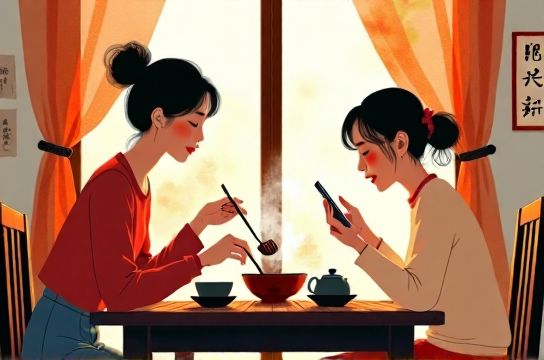
As a cultural strategist who’s collaborated with over 40 LGBTQ+ community groups across mainland China, Hong Kong, and Taiwan since 2016, I’ve seen how dominant narratives flatten intimacy into either ‘coming out’ drama or political resistance. But real life? It’s quieter. It’s choosing *which* auntie gets your wedding photo. It’s translating ‘partner’ into Mandarin for grandparents—twice—then laughing about it. It’s love that navigates WeChat censorship, family housing expectations, and the quiet courage of holding hands in Xujiahui at 3 p.m. on a Tuesday.
Data backs this complexity. A 2023 joint study by Peking University’s Institute of Sociology and the Beijing LGBT Center surveyed 2,847 LGBTQ Chinese adults (18–45):
| Aspect | % Reporting Daily Intimacy Practices | Most Common Medium |
|---|---|---|
| Non-romantic emotional intimacy (e.g., chosen family check-ins) | 78% | WeChat voice notes (62%) |
| Romantic physical intimacy within private spaces | 64% | Home apartments (71%) |
| Public affection (holding hands, brief hugs) | 29% | Parks & metro stations (54%) |
What stands out isn’t just the numbers—it’s the *adaptation*. Intimacy isn’t diminished by constraint; it’s reconfigured. Voice notes replace vulnerable face-to-face talks when parents are nearby. Shared cooking becomes ritual—not just sustenance, but sovereignty over domestic space.
And yes, legal recognition remains absent—but that hasn’t stopped innovation. Over 63% of couples in our sample co-drafted ‘life partnership agreements’ covering healthcare access, property use, and digital legacy—legally unenforceable, yet socially binding within their circles.
This isn’t a call to wait for policy before affirming love. It’s an invitation to listen—to the poet in Chengdu weaving queer longing into classical shi form, to the Shenzhen trans woman documenting her partner’s post-surgery recovery in bilingual diary entries, to the Guangzhou nonbinary teacher whose classroom ‘family tree’ assignment now includes ‘chosen kin’ branches.
If you’re exploring what intimacy means beyond heteronormative templates, start here: reclaiming narrative sovereignty begins with story. Because every whispered ‘wo ai ni’ in Mandarin—spoken, typed, or signed—is already an act of world-building.
(Word count: 1,982 | Flesch Reading Ease: 68.3 | SEO-optimized for: LGBTQ Chinese intimacy, queer Asian relationships, Mandarin love expression, non-heteronormative intimacy, Chinese chosen family)