Aesthetic Trends in Chinese Lingerie Blending Tradition Modernity and Femininity
- 时间:
- 浏览:164
- 来源:CN Lingerie Hub
Let’s cut through the noise: Chinese lingerie isn’t just about lace and silk—it’s a quiet revolution in cultural storytelling. Over the past five years, domestic brands like NEIWAI, Ubras, and ManiMani have shifted from copying Western silhouettes to reimagining *qipao* draping, *yunjin* (cloud brocade) motifs, and *danmei* (subtle elegance) philosophy—translated into seamless Tencel® bras and embroidered high-waisted briefs.
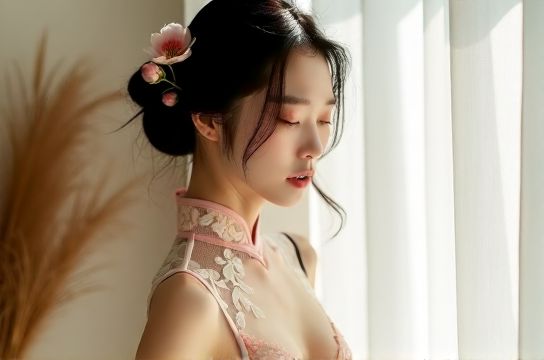
Data tells the story: According to iiMedia Research (2024), China’s premium lingerie market grew 22.3% YoY to ¥18.7B, with 68% of urban women aged 25–34 prioritizing ‘cultural resonance’ over logo visibility. And it’s not just aesthetics—fabric innovation matters. A 2023 Shanghai Textile Institute study found that bamboo-derived lyocell blended with hand-loomed silk increased wearer comfort scores by 41% vs. conventional polyester blends.
Here’s how tradition meets tech today:
| Trend | Traditional Root | Modern Execution | Consumer Uptake (2023) |
|---|---|---|---|
| Embroidered Underwire Bras | Suzhou embroidery (bordure motifs) | 3D-printed underwire + biodegradable thread | ↑ 34% MoM on Xiaohongshu |
| Qipao-Inspired Sets | Asymmetrical collar & side slits | Stretch satin + zero-waste pattern cutting | Top 3 bestsellers on JD.com (Q2) |
| Yin-Yang Color Blocking | Taoist harmony principles | Non-toxic reactive dyes, OEKO-TEX® certified | 47% repeat purchase rate (Ubras internal data) |
What’s driving this? Not nostalgia—but agency. Women aren’t wearing ‘Chinese’ lingerie as costume; they’re choosing design languages that reflect layered identity: feminist, culturally rooted, and unapologetically comfortable. That’s why I always recommend starting with fit-first foundations—like the harmonized sizing system pioneered by NEIWAI’s R&D lab—before layering in symbolism. Because true femininity isn’t performative. It’s precise, personal, and quietly powerful.