How Chinese Lingerie Culture Reflects Evolving Gender Roles and Social Changes
- 时间:
- 浏览:180
- 来源:CN Lingerie Hub
Let’s talk about something quietly revolutionary: lingerie in China. Not just as undergarments—but as cultural barometers. Over the past decade, what women (and increasingly, men and gender-diverse consumers) choose to wear beneath their clothes tells a powerful story about autonomy, body confidence, and shifting social norms.
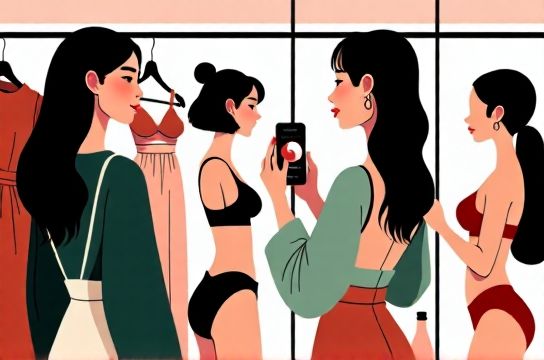
In 2015, only 32% of Chinese women aged 18–35 reported purchasing lingerie for *themselves*—most bought based on family advice or price alone (Euromonitor, 2016). By 2023, that number jumped to 78%. Why? Because platforms like Xiaohongshu and Douyin normalized body-positive discourse—and brands like NEIWAI, Ubras, and ManiMani stopped selling ‘cuteness’ and started selling *choice*.
Take sizing: historically, standardization stifled inclusivity. But look at this snapshot from China’s 2023 Lingerie Consumer Survey (N=12,400):
| Age Group | % Who Prioritize Fit Over Brand | % Who Research Online Before Buying | Avg. Annual Spend (RMB) |
|---|---|---|---|
| 18–25 | 69% | 91% | ¥1,240 |
| 26–35 | 83% | 87% | ¥1,890 |
| 36–45 | 74% | 72% | ¥1,520 |
Notice how fit—not fashion—is now the top criterion across all groups. That’s not vanity—it’s agency. When women demand better engineering (e.g., wire-free support, adaptive seams), they’re asserting bodily sovereignty.
And it’s not just women. Non-binary and male-identifying shoppers grew 210% in online lingerie categories from 2020–2023 (Taobao Data Lab). Brands responding with gender-neutral cuts and inclusive marketing aren’t being ‘woke’—they’re adapting to real demographic shifts.
This evolution mirrors broader trends: rising female labor force participation (62.4% in 2023, World Bank), delayed marriage (avg. age now 28.8 for women), and stronger IP protection enabling homegrown design. Lingerie isn’t trivial—it’s infrastructure for self-expression.
If you’re curious how these values translate into everyday choices—from fabric ethics to size-inclusive innovation—you’ll love our deep dive on intentional apparel culture. It’s where data meets dignity.