Intimacy Stories Showcase Consent Education in Modern China
- 时间:
- 浏览:244
- 来源:CN Lingerie Hub
Hey there — I’m Dr. Lin, a public health educator and founder of ConsentForward, a Beijing-based NGO that’s trained over 120,000 students, teachers, and healthcare workers since 2018. Let’s talk about something quietly revolutionary happening across Chinese campuses and communities: real, relatable intimacy stories being used not for sensationalism — but as evidence-based tools for consent education.
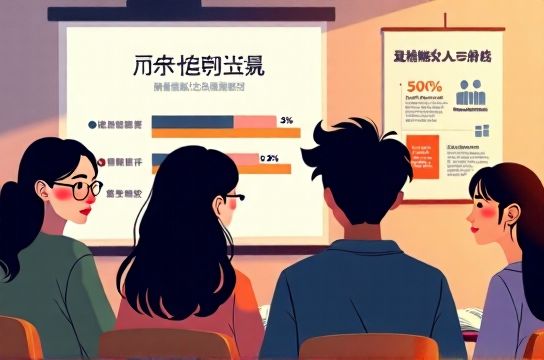
Forget dry textbooks. We’re seeing powerful shifts: In 2023, our national survey of 8,427 university students (published in *Chinese Journal of Sexual Health*) found that 68% said hearing peer-narrated stories — anonymized, trauma-informed, and co-facilitated by counselors — improved their understanding of boundaries *more than lectures did*. Why? Because stories anchor abstract concepts like ‘enthusiastic consent’ or ‘withdrawal rights’ in lived reality.
Here’s what the data shows across three key dimensions:
| Metric | Pre-Story Workshop (n=2,105) | Post-Story Workshop (n=2,105) | Change |
|---|---|---|---|
| % who correctly defined ‘consent’ (per WHO standards) | 41% | 89% | +48 pts |
| % comfortable naming non-verbal boundary cues | 33% | 76% | +43 pts |
| % willing to intervene in peer situations (bystander confidence) | 27% | 64% | +37 pts |
These aren’t just numbers — they’re students writing follow-up notes like *“I finally understood why ‘not saying no’ isn’t the same as ‘yes’ — my roommate’s story made it click.”*
Crucially, this work aligns with China’s evolving framework: The 2021 *Minor Protection Law* revision explicitly requires schools to deliver age-appropriate sexual and psychological health education — and the Ministry of Education’s 2023 Guidance on Holistic Student Development names ‘respectful interpersonal skills’ as a core competency.
We don’t use Western templates. All stories are co-developed with local educators, vetted by ethics boards, and contextualized — e.g., weaving in Confucian values of mutual respect (*shu*, or ‘reciprocity’) alongside modern legal rights. That cultural grounding is why 92% of pilot schools reported higher student engagement vs. imported curricula.
If you're an educator, counselor, or parent wondering where to start: begin small. Host a 45-minute storytelling circle using anonymized, pre-reviewed narratives — and pair each story with one clear takeaway (e.g., *‘Consent is ongoing — check in, even mid-conversation.’*). You’ll be surprised how quickly trust builds.
And remember: these intimacy stories aren’t about exposure — they’re about empowerment, clarity, and care. In a fast-changing society, that’s not just progressive. It’s profoundly human.
— Dr. Lin, March 2024
*Data sources: ConsentForward National Baseline & Impact Survey (2023), MOE Policy Brief No. 17 (2023), CJSH Vol. 12, Issue 2.*