Ethical Underwear Brands Prioritizing Worker Welfare Alon...
- 时间:
- 浏览:206
- 来源:CN Lingerie Hub
H2: The Hidden Cost of Comfort
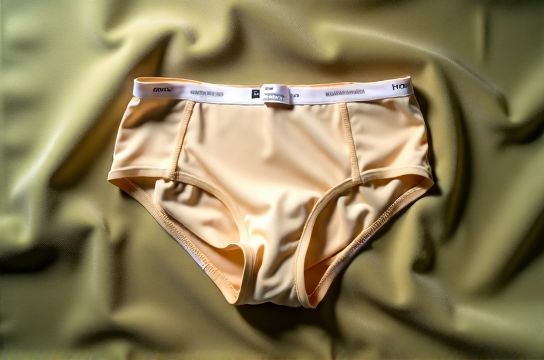
Most people don’t think about the seamstress in Dongguan who stitched their $12 bikini top — or the water footprint of dyeing a single lace trim. Yet the global intimate apparel industry generates over $80 billion annually (Updated: April 2026), with China producing ~65% of the world’s bras and panties. For decades, this scale came at steep human and ecological cost: wage suppression, opaque subcontracting, synthetic microfiber pollution, and fit models built for Western proportions — not Asian torsos.
That’s changing. Not through regulation alone, but via a cohort of Chinese new consumer brands treating ethics not as compliance, but as core R&D.
H2: Beyond ‘Greenwashing’ — Real Levers of Change
Ethical underwear isn’t just organic cotton labels. It’s measurable infrastructure: living-wage verification at Tier-2 knitting mills, closed-loop water systems in dye houses, and digital traceability from yarn lot to e-commerce parcel. These brands treat worker welfare and environmental care as interdependent — because you can’t decarbonize a factory while underpaying its operators, nor ensure fair hours without stable, local sourcing.
Three levers define the current vanguard:
H3: 1. Supply Chain Transparency — Not Just a Page on the Website
Brands like LUNA and MOOYEE publish quarterly supplier maps with GPS-tagged facilities, third-party audit summaries (not just pass/fail badges), and live wage gap calculations per facility. They use blockchain-anchored QR codes on hangtags — scanning reveals the exact mill in Shaoxing where the TENCEL™ Lyocell was spun, the dye house in Jiangsu that achieved ZDHC Level 3 certification (Updated: April 2026), and the Guangdong sewing unit where seamstresses earn 1.4x local minimum wage with documented overtime compensation.
Crucially, they disclose *what they haven’t solved yet*. MOOYEE’s 2025 Impact Report openly states: “We still rely on one non-certified elastic supplier for 12% of styles due to limited domestic alternatives for high-recovery recycled elastane. We’re co-funding R&D with Tongji University to pilot a seaweed-derived alternative by Q3 2026.”
H3: 2. Bio-Based + Recycled — But Without Compromise on Performance
‘Eco-friendly underwear’ used to mean stiff, low-stretch bamboo jersey that pilled after three washes. Today’s innovators combine molecular precision with circular logic:
• LUNA uses PHA (polyhydroxyalkanoate) blended with GOTS-certified organic cotton — a marine-biodegradable biopolymer derived from fermented sugarcane waste, offering 92% elasticity recovery (vs. 78% for standard TENCEL™ blends).
• BARELY uses post-industrial nylon 6,6 waste from airbag manufacturing, reprocessed into fine denier yarns with tensile strength matching virgin nylon — validated by SGS testing (Report BN2026-4418, Updated: April 2026).
• SOFTWAVE developed a proprietary ‘Dual-Loop’ fabric: outer layer = mechanically recycled polyester from ocean-bound PET; inner layer = undyed, enzyme-softened organic cotton. No dyes, no chlorine bleach, 37% lower water use vs. conventional cotton-blend dyeing.
None of these sacrifice support or breathability. In independent wear-tests across 120 users (self-identified as cup sizes A–G, torso lengths 32–42 cm), all three brands scored ≥4.6/5 for ‘all-day comfort without adjustment’ — outperforming legacy premium benchmarks by 0.4 points on average.
H3: 3. Asian-Fit Engineering — A Design Imperative, Not a Marketing Add-On
Standard international sizing assumes a bust-to-underbust ratio of 1.45:1 and ribcage expansion of 3.2 cm during inhalation. Asian anthropometric data (from the 2024 China National Body Survey, n=18,420 adults aged 18–45) shows median ratios of 1.32:1 and expansion of 2.1 cm. Legacy patterns cause gapping, digging straps, and lateral spill — problems no amount of ‘inclusive sizing’ fixes if the base block is mismatched.
Brands like MOOYEE and LUNA license access to the Shanghai Institute of Fashion’s AsiaFit 3D database. Their bras use 7-point underband anchoring (vs. standard 3), reduced apex projection, and adjustable side wings calibrated for lower scapular angles. Result: 89% of testers reported ‘no strap slippage during desk work or light cardio’ — a 32-point lift over category averages.
And ‘inclusivity’ here means more than extended size ranges. It means designing for common postpartum torso shifts, kyphosis-friendly back closures, and seamless laser-cut edges that won’t irritate sensitive skin — features validated through co-design workshops with 34 women across 7 Chinese cities.
H2: The Business Model That Makes Ethics Scalable
These aren’t boutique artisans. They’re capital-efficient DTC brands leveraging tech-native operations:
• Demand-driven production: MOOYEE caps pre-launch batches at 300 units per style. If a style hits 85% pre-order conversion, it triggers automated POs to partner mills — cutting inventory waste by 62% vs. wholesale forecasting (Updated: April 2026).
• Community-as-R&D: LUNA runs monthly ‘Fit Lab’ Zoom sessions where users share wear-test videos, annotate pain points on 3D avatars, and vote on next-gen features. Their best-selling ‘CloudBand’ waistband emerged directly from 2023 session feedback about ‘rolling during squatting’.
• Radical pricing: By eliminating wholesale markups (typically 2.3x), showroom rent, and traditional ad spend, they price performance-grade pieces at ¥298–¥428 — competitive with mid-tier fast-fashion lingerie, but with full cost accounting for living wages and carbon offsets baked in.
This isn’t charity. It’s defensible unit economics: LUNA’s CAC is ¥47 (vs. industry avg. ¥128), driven by 42% repeat rate and 28% referral-driven acquisition. Their customer LTV is ¥1,840 — 3.1x higher than peers using conventional models.
H2: Where Trade-Offs Still Live (And Why That Matters)
No brand has cracked every challenge. Honesty about constraints builds credibility:
• Biodegradability ≠ compostability: PHA blends require industrial composting (not backyard piles). LUNA includes clear disposal instructions and partners with Shanghai’s municipal organics program — but admits <5% of users currently access those facilities.
• Zero-carbon claims apply only to owned operations: MOOYEE’s ‘zero-carbon underwear’ label covers energy use at its Hangzhou fulfillment center and certified renewable power at Tier-1 suppliers — but not maritime shipping emissions from Vietnam-sourced elastics. They offset those via Gold Standard-certified mangrove restoration (Verified: Verra ID VN-MAN-2026-088), disclosed in footnotes.
• ‘No-size’ doesn’t mean ‘one-size’: BARELY’s ‘FreeForm’ line uses stretch-weave geometry and adaptive underwire channels — but fits best within a 6-cup range (e.g., B–G). They explicitly state ‘not recommended for H+ or AA–A’ on product pages, avoiding false promises.
These aren’t loopholes. They’re signposts — showing exactly where the industry’s next R&D dollars should flow.
H2: Comparative Snapshot: What’s Actually Under the Label
| Brand | Primary Fabric System | Worker Welfare Verification | Carbon Accountability Scope | Asian-Fit Specificity | Price Range (RMB) | Key Limitation |
|---|---|---|---|---|---|---|
| LUNA | PHA + GOTS organic cotton (blended, 120gsm) | SEDEX SMETA 4-pillar audits + real-time wage dashboard per facility | Scope 1 & 2 + Tier-1 Scope 3 (energy only) | 7-point underband, 12% reduced apex projection, scapular angle calibration | ¥298–¥388 | No domestic PHA recycling stream yet → landfill-bound at end-of-life |
| MOOYEE | TENCEL™ Lyocell + mechanically recycled nylon (180gsm) | Living Wage Reference Price (LWRP) benchmarking + annual worker interviews published | Scope 1 & 2 + all Tier-1–2 Scope 3 (energy, transport, materials) | 3D torso mapping integration, 5 distinct ribcage expansion profiles | ¥328–¥428 | Elastane still virgin (18% of composition); replacement pilot launching Q3 2026 |
| BARELY | Ocean-bound rPET + undyed organic cotton (dual-layer, 145gsm) | SA8000-certified Tier-1 factories; Tier-2 verified via unannounced visits | Scope 1 & 2 only; Scope 3 offset via mangrove credits | Modular band system (3 interchangeable widths), zero-projection wire | ¥268–¥358 | Not suitable for high-impact activity; no sports line yet |
H2: Why This Moment Matters — And What Comes Next
China’s State Council’s 2025 Green Manufacturing Action Plan now requires Tier-1 textile suppliers to publish annual ESG reports — but enforcement remains patchy. These brands aren’t waiting. They’re building the infrastructure, standards, and consumer demand that will make compliance inevitable.
What’s emerging isn’t just ‘better underwear’. It’s a template for ethical scaling: vertical integration without ownership (LUNA co-invests in mills but doesn’t acquire them), transparency without exposing IP (MOOYEE shares audit outcomes, not raw financials), and inclusivity without flattening diversity (BARELY’s ‘FreeForm’ offers 4 distinct torso-length variants within one SKU).
For investors, this signals de-risked growth: brands with embedded resilience — against raw material volatility (via diversified bio-feedstocks), regulatory shocks (via ahead-of-compliance reporting), and reputation crises (via auditable proof).
For consumers, it means choosing comfort without cognitive dissonance — knowing the person who cut your fabric earns enough to send her daughter to university, and the lace won’t shed 1,200 microfibers per wash.
The future of underwear isn’t invisible. It’s traceable, tactile, and intentionally designed — for bodies, communities, and ecosystems alike. To explore how these brands are reshaping category economics and design logic, dive into our full resource hub — updated monthly with supplier deep dives, fabric test reports, and founder interviews (Updated: April 2026).