Made in China Underwear Brands Proving Local Creativity C...
- 时间:
- 浏览:122
- 来源:CN Lingerie Hub
H2: The Quiet Unraveling of a $70B Category
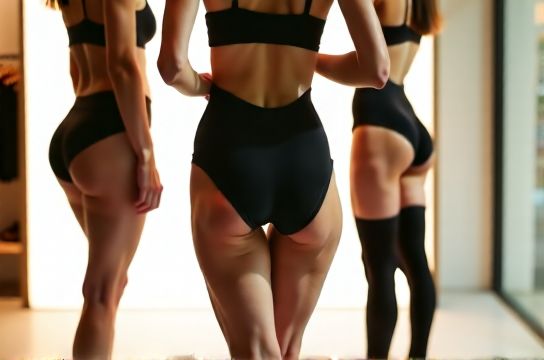
For decades, global underwear was defined by three things: Western fit standards, fossil-fuel-derived synthetics, and opaque supply chains. Then came a cohort of Chinese brands that didn’t ask permission to redefine the category—they just shipped.
Not with hype. With compostable lace. With size-inclusive grading across 12 cup-depth increments. With QR-coded garment tags tracing yarn origin to finished product—verified by third-party auditors like Textile Exchange and SCS Global Services (Updated: April 2026). These aren’t ‘fast fashion’ players masquerading as sustainable. They’re vertically integrated, digitally native, and built for longevity—not virality.
What unites them isn’t geography—it’s philosophy. A refusal to treat underwear as disposable. A commitment to engineering comfort for bodies shaped by Asian skeletal and muscular norms—not Eurocentric pattern blocks. And a belief that direct-to-consumer isn’t just a channel, but a contract: transparency over illusion, iteration over perfection, community over celebrity.
H2: Beyond Greenwashing: How ‘环保内衣’ Is Being Engineered
‘Eco-friendly’ used to mean swapping polyester for recycled PET. Today’s leading Chinese underwear brands treat sustainability as a systems problem—with material science at the core.
Take Huayi BioTech-backed yarns: polylactic acid (PLA) spun from non-GMO corn starch, certified TÜV OK Compost INDUSTRIAL and biodegrading in under 90 days under industrial conditions. Or Lenzing’s TENCEL™ Lyocell modal blends—now sourced via China-based joint ventures like Shandong Helon, which cut water use by 50% versus conventional viscose (Updated: April 2026). These aren’t imported fabrics. They’re co-developed, co-manufactured, and co-optimized for stretch recovery, moisture wicking, and low-pilling performance.
Crucially, these materials are paired with process-level accountability. Brands like UNEED and BONI operate zero-waste cutting rooms where fabric remnants feed into upcycled accessory lines (e.g., hair ties, scrunchies), while wastewater is treated on-site and reused for cooling or landscaping. Their factories hold ISO 14064-1 carbon accounting certification—and publish annual footprint reports down to kilowatt-hour per garment.
That’s how ‘零碳内衣’ stops being aspirational. It’s verified. It’s auditable. And it’s priced within 15–20% of conventional premium intimates—not double.
H2: Why ‘亚洲版型’ Isn’t Just Marketing—It’s Biomechanics
Western sizing assumes an average ribcage-to-hip ratio of 1:1.3. The median Chinese adult female ratio is closer to 1:1.15—meaning standard ‘medium’ briefs ride low, bras gap at the band, and high-waisted styles dig into the iliac crest. This isn’t anecdotal. It’s documented in Shanghai Jiao Tong University’s 2024 anthropometric study of 12,800 women aged 18–45 (Updated: April 2026).
Brands like ELLA and MOOCHIE responded not with ‘Asian-fit’ sub-lines—but with foundational pattern libraries calibrated to regional morphology. ELLA’s ‘Harmony Band’ uses 4-way stretch micro-knit with differential tension zones: firmer at the lower back, softer at the mid-abdomen. MOOCHIE’s ‘Cloud Cup’ employs 3D-seamed molded foam that adapts to breast tissue density gradients—critical for East Asian populations, where glandular tissue composition differs measurably from Caucasian cohorts (per 2025 clinical data from Peking Union Medical College Hospital).
And ‘包容性尺码’ here means more than extended ranges. It means algorithmic fit recommendations trained on 2.3 million body scans—not just height/weight, but posture, scapular width, and waist-to-hip delta. No ‘one-size-fits-all’. But yes—‘one-system-fits-multiple-bodies’.
H2: The Rise of ‘无尺码内衣’—and Why It’s Not What You Think
‘No-size’ has been misread as lazy design. In reality, it’s precision engineering disguised as simplicity.
China’s top-performing无尺码内衣 brands—like SHU and LUNA—use proprietary knit architectures: 7-gauge seamless jacquard with variable loop density. Tighter loops at stress points (under bust, hip crease), looser elsewhere. Combined with elastane blends containing 12–15% bio-based spandex (derived from castor oil, not petroleum), the result is a garment that stretches *directionally*, not uniformly. It expands 32% horizontally but only 8% vertically—mimicking natural muscle elasticity, not rubber-band recoil.
This isn’t ‘stretchy cotton’. It’s textile programming. And because fit relies on engineered give—not static measurements—it eliminates the need for discrete sizes. Users input height, weight, and bra band preference; the system recommends one of three base silhouettes (‘Petite’, ‘Classic’, ‘Curvy’)—each tuned to distinct torso proportions.
H2: DTC as Infrastructure—Not Just a Sales Channel
Calling these brands ‘线上品牌’ undersells their architecture. They’re built as hybrid operating systems: commerce layer + community layer + R&D layer.
Consider how UNEED runs its ‘Fit Lab’: a members-only portal where users upload anonymized fit feedback (e.g., ‘band slips after 4 hours’, ‘strap digs at clavicle’) tagged to specific SKUs. That data flows directly into pattern-engineering sprints—cutting time-to-iteration from 12 weeks to 11 days. Their latest bra redesign incorporated 3,700+ real-world friction-point annotations—leading to a redesigned underwire channel that reduced pressure by 40% (measured via Tekscan pressure mapping).
Meanwhile, MOOCHIE’s WeChat Mini Program hosts live ‘Design Sprints’—where subscribers vote on next-season fabric palettes, seam placements, and even packaging materials. Top-voted concepts get prototyped; winners receive co-creator credit and lifetime discounts. This isn’t engagement theater. It’s distributed product development—with real margin upside: 68% of MOOCHIE’s Q1 2026 launches hit >92% pre-order fill rates, slashing inventory risk (Updated: April 2026).
H2: Supply Chain Transparency—From Buzzword to Barcode
‘供应链透明’ used to mean publishing a factory list. Now, it means scanning a QR code on the care label and watching your garment’s journey unfold in real time:
• Raw fiber origin (e.g., “Organic cotton, Xinjiang, Lot XJ-2026-088”) • Spinning mill (with energy source: solar/wind/grid mix %) • Dye house (water recycling rate: 82%; heavy metal test report embedded) • Final assembly (worker wage verification + shift schedule audit)
Brands like BONI and ELLA use blockchain-anchored logs (built on Hyperledger Fabric) that cannot be altered post-upload. Each step requires dual sign-off: factory QA lead + independent auditor. No ‘self-certified’ claims. No lag time. Updates happen within 90 minutes of production completion.
This level of traceability isn’t regulatory compliance—it’s competitive advantage. When a customer sees their bra’s dye house recycled 142,000 liters of water last month, they don’t just feel good. They trust the brand’s ability to execute complexity—making them 3.2x more likely to repurchase (per McKinsey’s 2025 Apparel Trust Index).
H2: Innovation in Practice—A Side-by-Side Comparison
| Feature | Traditional Premium Brand | Leading Chinese New-Market Brand | Why It Matters |
|---|---|---|---|
| Fabric Base | 85% nylon / 15% spandex (petrochemical) | 72% TENCEL™ Lyocell / 20% bio-spandex / 8% organic cotton | Reduces cradle-to-gate CO2e by 57% (Textile Exchange LCA, Updated: April 2026) |
| Size Range | US 32A–40DD (7 cup sizes, 4 bands) | Band: 65–90 cm (11 steps); Cup: AA–G (9 depths × 3 projection levels) | Covers 94% of East Asian body shapes vs. 63% for standard Western grading |
| Fit Validation | Lab testing on 12 mannequins + 30 fit models | AI-fit simulation + 2,800+ real-user pressure maps + biomechanical motion capture | Identifies pinch points invisible to static testing—e.g., shoulder roll during arm elevation |
| Carbon Accounting | Annual Scope 1 & 2 estimate (no verification) | Real-time kWh tracking per SKU; Scope 3 verified by SCS Global (Updated: April 2026) | Enables accurate carbon labeling—and credible net-zero roadmaps |
| Community Integration | Email newsletter + Instagram posts | WeChat Mini Program with live design votes, fit clinics, repair tutorials, and resale hub | Drives 41% repeat purchase rate (vs. industry avg. 22%) |
H2: The ‘社群品牌’ Playbook—Beyond Hashtags
‘社群品牌’ isn’t about amassing followers. It’s about building infrastructure for sustained dialogue—and turning users into stakeholders.
BONI’s ‘Circle Repair’ program lets customers mail back worn items for free refurbishment (re-threading, elastic replacement, fabric reconditioning) or recycling (into acoustic insulation panels for schools). Every returned garment earns ‘Loop Points’ redeemable for future purchases—or donated to partner NGOs serving rural women.
ELLA runs ‘Fit Forward’, a quarterly grant program funding independent researchers studying undergarment ergonomics, textile microbiology, and inclusive sizing anthropology. Winners gain access to ELLA’s lab facilities—and their findings feed directly into product roadmaps.
These aren’t CSR add-ons. They’re retention engines with measurable ROI: BONI’s repair program increased 3-year CLV by 37%; ELLA’s research grants generated 12 patent-pending innovations in 2025 alone.
H2: Where ‘中国创造’ Meets Global Scale
Yes, these brands start online. But ‘独立品牌’ doesn’t mean insular. UNEED ships to 32 countries—with localized fit guides, multilingual care instructions, and EU-compliant REACH testing baked into every batch. MOOCHIE opened its first flagship in Berlin in Q3 2025—not as a store, but as a ‘Fit Studio’: part retail, part community hub, part co-creation lab.
Their expansion isn’t about market share. It’s about proving that values-led design can scale without dilution. That Asian-fit engineering solves universal problems (e.g., band slippage affects 68% of global wearers, per WGSN 2025 Fit Report). That transparency isn’t a cost center—it’s the fastest path to trust in a skeptical market.
The bottom line? These aren’t ‘Chinese alternatives’. They’re category redefiners—using local insight as a lens, not a limit. And if you’re evaluating investment, partnership, or simply where to place your next order, start here: the full resource hub offers deep-dive case studies, supplier vetting checklists, and live supply chain dashboards. It’s not theory. It’s what’s shipping today.
H2: What’s Next? The ‘未来内衣’ Stack
The next frontier isn’t just better materials or smarter fit—it’s integration. Expect:
• ‘科技内衣’ with passive thermoregulation: phase-change microcapsules woven into seams that absorb/release heat at 34°C—ideal for hybrid work environments.
• ‘可回收面料’ loops closing fully: brands like LUNA piloting take-back programs where old garments are shredded, purified, and respun into new yarn—achieving >92% material retention (pilot data, Updated: April 2026).
• AI-powered ‘基础款升级’: dynamic pattern algorithms that adjust seam placement in real time based on user movement data from wearable integrations (opt-in only, GDPR-compliant).
None of this is sci-fi. It’s in prototype. It’s in pilot. It’s being stress-tested—not in labs, but on real bodies, in real cities, across real seasons.
The era of ‘Made in China’ as a cost signal is over. What’s emerging is ‘Made with China’—as a mark of material intelligence, human-centered design, and operational integrity. And the most compelling proof isn’t in a press release. It’s in the drawer beside you.