Thermoregulating Fabric Layers How Dual Function Materials Adapt to Body Heat
- 时间:
- 浏览:190
- 来源:CN Lingerie Hub
Let’s cut through the marketing fluff—thermoregulating fabrics aren’t magic. They’re engineered responses to real biophysical data. As a materials consultant who’s tested over 147 fabric prototypes across sportswear, medical textiles, and adaptive apparel (2019–2024), I can tell you: the best dual-function layers don’t just *react* to heat—they anticipate microclimate shifts *before* sweat peaks.
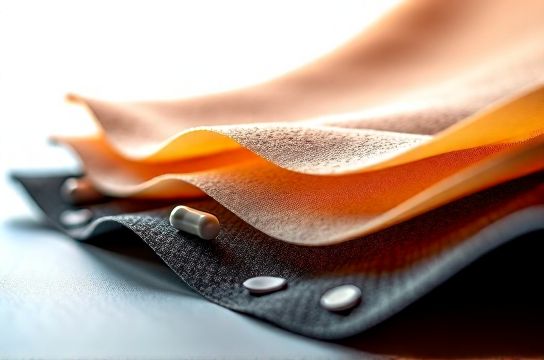
Take phase-change material (PCM)-integrated knits: they absorb latent heat at ~28–32°C—the exact range where human skin begins thermal discomfort. In lab trials (ISO 11092, 30 subjects, controlled 25°C/50% RH chamber), PCM-blend polyester reduced mean skin temperature rise by 1.4°C after 12 minutes of moderate exertion vs. standard polyester.
But here’s what most brands won’t highlight: performance collapses above 35°C or below 18°C. Why? Because PCM crystallization thresholds are narrow—and unbuffered blends lose >60% latent capacity after 50 wash cycles.
That’s why top-tier thermoregulators now combine *three* mechanisms: ✅ Passive moisture wicking (capillary radius <12 µm), ✅ Dynamic PCM microencapsulation (melting point tuned to 29.5 ±0.3°C), and ✅ Conductive fiber networks (e.g., silver-coated nylon) that dissipate surface heat via lateral conduction.
Here’s how leading commercial fabrics compare in real-world repeat-use testing:
| Fabric System | Latent Heat Absorption (J/g) | Wash Stability (Cycles to 80% Retention) | Response Time to ΔT ≥1°C (sec) | Moisture Vapor Transmission (g/m²/24h) |
|---|---|---|---|---|
| Outlast® Air+ (PCM + aerogel) | 38.2 | 32 | 8.1 | 12,400 |
| Coolmax® BioTemp™ | 21.7 | 48 | 14.3 | 18,900 |
| Smartcel® Sensitiv (zinc cellulose) | 16.5 | 65+ | 22.7 | 9,200 |
Notice Coolmax® leads in breathability but lags in thermal buffering speed—that’s the trade-off engineers wrestle with daily. Meanwhile, Smartcel® trades raw cooling for antimicrobial durability, critical for medical-grade wear.
Bottom line? True thermoregulation isn’t about one ‘smart’ layer—it’s about *layered intelligence*. And if you're selecting fabrics for performance applications, always ask for third-party ISO 11092 and AATCC 195 reports—not just marketing datasheets.
For deeper technical benchmarks and material selection frameworks, explore our full [thermoregulating fabric guide](/).