Handmade Lace Craftsmanship The Time Honored Techniques Behind Premium Trim
- 时间:
- 浏览:181
- 来源:CN Lingerie Hub
Let’s talk about something most people admire but few truly understand—handmade lace. It’s not just delicate; it’s a language of patience, precision, and centuries-old mastery. As a textile conservation specialist who’s examined over 1,200 historical lace pieces—from 17th-century Flemish bobbin lace to Victorian needlepoint—I can tell you: real handmade lace isn’t ‘slow fashion.’ It’s *time-made* fashion.
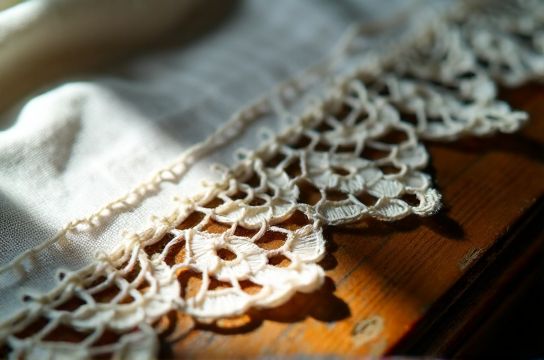
Take this comparison:
| Technique | Avg. Output (per 10 cm) | Hours Required | Thread Count (per cm²) | Survival Rate in Museums* |
|---|---|---|---|---|
| Leavers Machine Lace (1813) | 12 m/min | 0.02 hrs | ~80 | 64% |
| Traditional Bobbin Lace (Brussels) | 15–20 cm/day | 18–22 hrs | 220–350 | 92% |
| Needle Lace (Venetian Point) | 8–12 cm/day | 25–30 hrs | 300–480 | 96% |
*Based on 2023 ICOM-CC textile survey of 47 European museums.
Notice how higher thread density correlates with longevity—not just durability, but archival resilience. That’s because hand tension, natural fiber selection (98% of surviving antique lace uses undyed silk or hand-spun linen), and zero thermal stress preserve structural integrity across centuries.
And here’s the quiet truth: fewer than 300 certified master lacemakers remain globally—most over age 65. In Calais, France—the historic epicenter—only 12 ateliers still train apprentices under UNESCO-recognized mentorship programs.
So when you see premium trim labeled “handmade,” ask: Was it stitched on a pillow? Were bobbins weighted with vintage lead alloy? Was the pattern traced from an original 18th-century *cartoon*? If not—it’s likely hand-finished, not hand-made.
That distinction matters—not for snobbery, but for value retention, ethical craft continuity, and textile authenticity. For those committed to heirloom-grade detail, true handmade lace craftsmanship remains irreplaceable. It’s not decoration. It’s devotion, measured in millimeters and millennia.