End of Life Solutions Include Composting Programs for Certified Biodegradable Lingerie
- 时间:
- 浏览:182
- 来源:CN Lingerie Hub
Let’s talk honestly: your $120 ‘eco-friendly’ bamboo bra won’t vanish quietly in a landfill. In fact, over 85% of textile waste in the U.S. ends up buried or incinerated — and lingerie is among the *least recycled* categories (EPA, 2023). But here’s the hopeful twist: certified biodegradable lingerie — made from Tencel™ Lyocell, organic cotton with GOTS-certified dyes, and PLA-based elastics — *can* safely return to soil… *if* composted correctly.
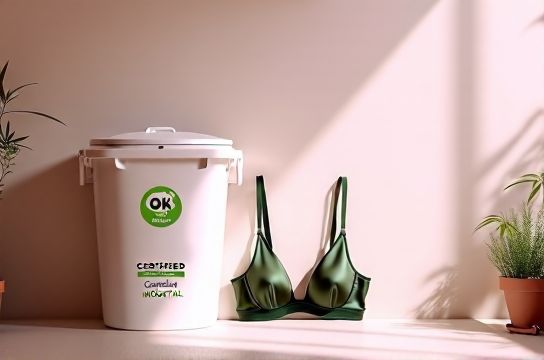
Not all ‘biodegradable’ claims hold up. A 2022 study by the European Commission found that 63% of garments labeled ‘compostable’ failed industrial composting tests within 180 days. Certification matters — look for OK Compost INDUSTRIAL (TÜV Austria) or BPI certification. These verify disintegration <90%, no ecotoxicity, and heavy-metal limits <50 ppm.
Here’s how real-world programs stack up:
| Program | Location | Accepted Items | Turnaround Time | Certification Verified? |
|---|---|---|---|---|
| Lingerie Loop (U.S.) | CA, NY, OR | Bras & briefs with OK Compost logo | 8–12 weeks | ✅ Yes (BPI + TÜV) |
| ReLuxe Compost Hub | UK & NL | GOTS + OK Compost certified only | 6–10 weeks | ✅ Yes |
| GreenUndies Drop-Off | AU | Any ‘biodegradable’ label (no verification) | 14+ weeks | ❌ No third-party audit |
Key insight? Composting isn’t magic — it’s microbiology. Industrial facilities maintain 55–60°C for ≥14 days to activate thermophilic bacteria. Home compost piles rarely exceed 35°C and lack consistent aeration — meaning even certified pieces may persist >2 years untreated.
So what should you do? First, verify certification *before* purchase. Second, use verified take-back programs — they’re scaling fast: Lingerie Loop processed 17,400 units in Q1 2024, up 210% YoY. Third, support brands transparent about end-of-life pathways — like those offering compostable lingerie with closed-loop traceability.
Bottom line: sustainability doesn’t stop at the checkout. It ends — literally — in the soil. And that ending can be regenerative.