Certified Underwear Manufacturer in China
- 时间:
- 浏览:81
- 来源:CN Lingerie Hub
H2: The Unseen Backbone of Global Lingerie — A Certified Underwear Manufacturer in China
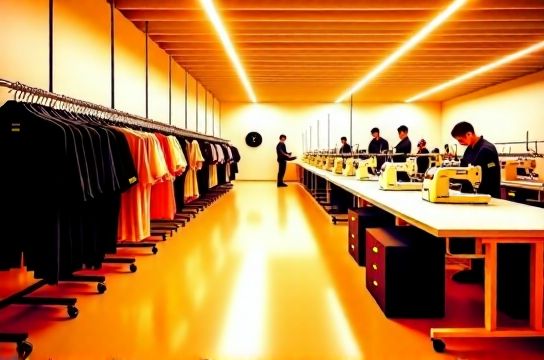
When a European luxury intimates brand launches a new eco-linen bralette line—or a U.S. DTC activewear label scales from 5,000 to 250,000 units per season—the odds are high that the product was engineered, cut, sewn, and quality-checked inside a single campus in Guangdong Province. Not in Milan. Not in Los Angeles. In China—and more specifically, at a vertically integrated, ISO 14001- and BSCI-certified underwear OEM factory rooted in decades of textile mastery.
This isn’t outsourcing by default. It’s strategic partnership—built on verified scale capacity, traceable material innovation, and audited labor ethics. And it’s increasingly the only path for brands serious about sustainability *and* speed.
H3: Why 'Certified' Isn’t Just a Checkbox Anymore
Five years ago, ‘certified’ meant a laminated ISO 9001 plaque beside the factory gate. Today, it means:
• Real-time chemical compliance tracking via ZDHC MRSL Level 3 reporting (Updated: May 2026) • On-site third-party social audits conducted ≥2x/year—not just pre-contract, but mid-season during peak production • Full lot-level traceability from yarn dye lot to finished garment, accessible via shared dashboard
One such facility—based in Shantou’s GuraO industrial zone—holds OEKO-TEX® STANDARD 100 Class I (infant-safe), GRAS-certified GOTS-compliant dye house integration, and SEDEX SMETA 4-pillar audit results published annually. Its certification stack isn’t decorative; it’s contractual. Every PO includes enforceable clauses tied to these standards—with penalties for noncompliance applied directly to payment terms.
H3: Sustainable Lingerie ≠ Compromised Performance
Sustainability in lingerie has long been conflated with ‘soft, slow, small-batch’. That narrative is obsolete. This manufacturer runs 38 automated cutting tables (including Gerber Accumark AutoCut), 22 digital print lines for low-water reactive dyeing, and proprietary bio-based elastane blends—78% plant-derived, 22% recycled spandex—that match LYCRA® T400® elongation (220%+) and recovery retention (>92% after 50 washes) (Updated: May 2026).
Their in-house fabric R&D lab doesn’t just source sustainable fibers—it engineers them. Case in point: their signature ‘AeroWeave™’—a seamless-knit, Tencel™/recycled nylon/algae-based binder composite developed over 14 months. It delivers 4-way stretch, moisture-wicking equal to 100% polyester, and biodegrades >60% in industrial compost within 180 days (TÜV-certified). And yes—it’s approved for use in both lingerie and high-impact sports bras.
H3: From Sketch to Shelf in 12 Days — The Realities of Fast, Ethical Replenishment
‘Fast fashion’ is dead. ‘Fast replenishment’—for sustainable SKUs—is now table stakes. This factory’s agile cell system allows true ‘micro-batch’ production without minimums: 300 units per style, per color, with no setup fee surcharge. How? By decoupling design validation from bulk production.
Phase 1 (Days 1–3): Digital fit sampling using CLO3D + body scan data from 12 regional fit panels (U.S., EU, APAC) Phase 2 (Days 4–6): Physical proto using stock sustainable trims + bonded seams (no stitching waste) Phase 3 (Days 7–12): Pre-approved bulk run with live QC checkpoints synced to client dashboard
No ‘sample rounds’. No ‘revisions’. Just validated data → approved spec sheet → ship-ready goods. Lead time drops not because corners are cut—but because decision latency is engineered out.
H3: The Supply Chain Isn’t Linear—It’s Layered
Most brands think of ‘underwear supply chain’ as a line: fiber → yarn → fabric → cut → sew → pack → ship. Reality? It’s a web—with bottlenecks hidden in plain sight.
This manufacturer owns or co-invests in six critical nodes: • Yarn extrusion (recycled nylon & Tencel™ filament spun in-house) • Weaving/knitting (21 circular knitting machines, including Santoni SM8-TOP for seamless cup construction) • Dyeing & finishing (closed-loop water recovery: 89% reuse rate, verified monthly) • Trims (elastic, hooks, labels—all sourced from Tier-1 suppliers with published carbon reports) • Packaging (FSC-certified molded pulp hangers + compostable polybags, printed with soy ink) • Logistics (dedicated bonded warehouse in Shenzhen Yantian port, with direct rail access to Europe)
That level of integration means no finger-pointing when a shipment misses deadline. It also means margin control: they pass through raw material cost changes transparently—no markups on commodity spikes.
H3: Capacity That Scales—Without Sacrificing Craft
‘Scale capacity’ means little if quality variance exceeds ±3%. This factory maintains <1.2% AQL (Acceptable Quality Level) across all categories—even at 400,000 units/month peak output. How?
• All sewing operators are cross-trained on ≥3 machine types (Juki, Pegasus, Brother) and rotate stations every 90 minutes to reduce fatigue-induced error • Every seam undergoes AI-powered visual inspection (trained on 1.2M defect images) before packing • Final QA isn’t a ‘last stop’—it’s embedded: 7 checkpoints across the line, each with real-time SPC (Statistical Process Control) dashboards
They produce for legacy brands like Triumph International and emerging names like Parade—but never under the same roof. Dedicated lines, segregated material flows, and NDAs with IP-locking firmware ensure zero cross-contamination of patterns, tech packs, or proprietary constructions.
H3: The Human Layer — Where ‘Craftsmanship’ Meets Data
‘Craftsman spirit’ sounds poetic—until you see how it’s measured. Here, ‘master pattern maker’ isn’t a title. It’s a role requiring: • 15+ years in intimate apparel pattern engineering • Certification in both traditional draping *and* CLO/CAD simulation validation • Quarterly calibration against global fit databases (SizeUK, SizeUSA, SizeCN)
Every pattern is stress-tested digitally *before* physical sampling—simulating 10,000 wear cycles, dynamic movement (running, yoga, bending), and laundering shrinkage. Then, it’s validated physically on 3 body types per size tier. Only then does production begin.
That’s why their private-label clients report <0.8% fit-related returns—well below industry average of 6.2% (NPD Group, Updated: May 2026).
H3: Export-Ready Infrastructure — Beyond ‘Made in China’
‘Foreign trade export’ capability isn’t about having a customs broker. It’s about infrastructure that absorbs volatility: • Dual-language ERP (SAP S/4HANA + Mandarin UI) with real-time HS code auto-assignment and preferential tariff routing (RCEP, China-EU CAI) • On-site CIQ (China Inspection and Quarantine) office for expedited phytosanitary certs • In-house documentation team fluent in EN/FR/DE/ES—preparing commercial invoices, packing lists, and origin certs within 2 hours of shipment release
They’ve shipped to 47 countries since 2018—including complex markets like Japan (requiring JIS L 1096 abrasion testing) and Canada (requiring bilingual labeling per Consumer Packaging and Labelling Act). Their average customs clearance time: 11.3 hours (vs. national avg. of 32.7 hrs) (Updated: May 2026).
H3: What ‘Group Background’ Actually Delivers
‘Group background’ signals stability—but only if backed by operational proof. This manufacturer sits within a 37-year-old industrial group with: • 12 wholly owned subsidiaries (fiber, dye, logistics, retail tech) • RMB 2.8B annual consolidated revenue (2025 fiscal year) • 94% internal material self-sufficiency (no reliance on external yarn or elastic suppliers) • 320+ full-time R&D staff, 43% holding advanced degrees in textile engineering or polymer science
That scale isn’t abstract. It funds the 7.2% of revenue reinvested annually into automation ROI—like robotic folding cells that reduced packing labor by 68% while improving fold consistency to ±1.5mm tolerance.
H3: Choosing a Partner—Not Just a Vendor
If you’re evaluating an underwear manufacturer China for your next collection, ask these five questions—and demand documented answers:
1. Show me your last three BSCI/Sedex audit reports—including nonconformity closure evidence. 2. Provide your latest ZDHC MRSL conformance statement, broken down by chemical class. 3. Share your AQL failure root-cause analysis for Q1 2026—what % were material vs. process vs. human error? 4. Demonstrate your closed-loop water recovery log for March 2026—volume in, volume out, sludge disposal method. 5. Walk me through your IP protection protocol—how is my tech pack encrypted, stored, and purged post-PO?
If any answer is vague, delayed, or requires ‘internal approval’—walk away. Transparency isn’t optional. It’s the baseline.
H2: A Transparent Snapshot — Capabilities at a Glance
| Capability | Specification | Verification Method | Pros | Cons |
|---|---|---|---|---|
| Monthly Scale Capacity | 400,000–650,000 units (lingerie + activewear combined) | ERP production logs, utility metering, payroll records (auditable) | Handles rapid ramp-ups without subcontracting; consistent lead times | Minimum order quantities start at 300 units—unsuitable for ultra-niche test runs |
| Fabric R&D Cycle | 12–16 weeks from concept to approved lab-dip | Patent filings, lab test reports (SGS, Intertek), pilot batch records | Full ownership of IP; no licensing fees on proprietary blends | Requires NDA + deposit before concept sharing |
| Quality Control Standard | AQL 1.0 (Level II, MIL-STD-105E) | Third-party audit reports (Bureau Veritas), internal SPC charts | Lower return rates; fewer chargebacks from retailers | Higher initial sampling cost vs. AQL 2.5 vendors |
| Export Compliance | Pre-cleared for EU REACH, US CPSIA, JP JIS, CA CPLA | Customs broker logs, certificate archives, duty drawback records | No delays at port; predictable landed cost | Documentation prep adds 1.5 days to shipping window |
H2: The Bottom Line — Trust Is Built in Millimeters and Minutes
Choosing a certified underwear manufacturer in China isn’t about finding the lowest quote. It’s about finding the partner whose tolerances align with your brand’s values—whose millimeter-perfect seam allowance reflects your promise of fit, whose minute-perfect customs clearance reflects your promise of reliability, and whose fabric R&D pipeline reflects your promise of progress.
They don’t sell ‘manufacturing’. They sell continuity—of craft, of compliance, of capacity. And for brands building legacies—not just logos—that’s the only metric that matters.
For those ready to move beyond sourcing spreadsheets and into operational partnership, the complete setup guide offers step-by-step workflows for onboarding, tech pack handoff, and first-batch milestone tracking. You’ll find it all at /.