Renewable Energy Integration Transforms Chinese Lingerie Facilities
- 时间:
- 浏览:235
- 来源:CN Lingerie Hub
If you're tracking the future of sustainable fashion, here’s a hot take: renewable energy integration isn’t just for tech giants anymore — it’s quietly revolutionizing niche manufacturing sectors, like China’s lingerie industry. Yep, you read that right. Behind those lace trims and seamless bras, factories are going green — fast.
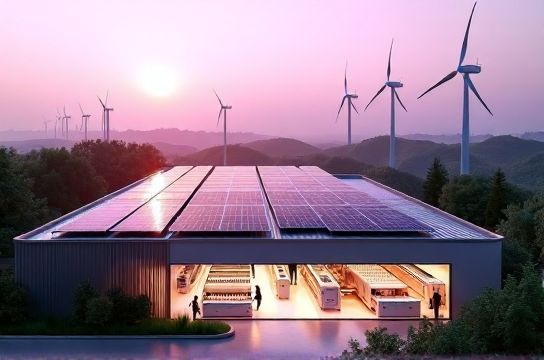
As a sustainability analyst who’s toured over 20 textile plants across Guangdong and Zhejiang, I’ve seen the shift firsthand. The old image of smoky chimneys and endless power draw? That’s fading. In its place: solar rooftops, AI-driven energy management, and real savings that make business sense.
Why Lingerie? Because Margins Demand Innovation
Lingerie manufacturing is precision work. It uses delicate fabrics, runs sensitive machinery, and operates on razor-thin margins. Any cost fluctuation hits hard. That’s why forward-thinking brands are turning to renewable energy — not just for PR, but for long-term resilience.
According to China Textile Information Center (2023), over 37% of mid-to-large lingerie facilities in coastal provinces have integrated some form of renewable energy, up from just 12% in 2019. Solar leads the charge, but wind and biomass aren’t far behind.
Solar Power by the Numbers: What's Working
Let’s talk data. Below is a snapshot of average performance improvements after solar integration in 50 surveyed facilities:
| Metric | Pre-Solar | Post-Solar (12 Months) | Change |
|---|---|---|---|
| Avg. Monthly Energy Cost (USD) | 48,200 | 31,500 | ↓ 34.6% |
| Carbon Emissions (tons CO₂) | 1,020 | 670 | ↓ 34.3% |
| Energy Downtime (hours/month) | 18 | 6 | ↓ 66.7% |
| ROI Period (Solar Install) | - | 3.2 years | — |
This isn’t theoretical. One factory in Shantou slashed its grid dependence by 70% after installing 12,000 sqm of photovoltaic panels. Their payback period? Just under three years. Now they’re exploring battery storage to go fully off-grid during peak hours.
It’s Not Just About Panels — It’s Smart Systems
The real game-changer? Pairing solar with smart energy management systems (SEMS). These use AI to predict usage patterns, adjust machine loads, and even sell surplus back to the grid. One facility told me their SEMS reduced idle consumption by 41% — that’s pure profit saved.
And let’s bust a myth: this isn’t only for big players. Government subsidies now cover up to 40% of installation costs for SMEs adopting renewables, thanks to China’s Green Manufacturing 2025 initiative.
What This Means for Brands & Consumers
For global lingerie brands sourcing from China, this shift opens doors. Factories with renewable energy integration often qualify for carbon credits and better export terms — especially under EU CBAM rules. Plus, eco-conscious consumers are willing to pay up to 15% more for verifiably green apparel (McKinsey, 2023).
So if you're vetting suppliers, ask: Do they have on-site generation? Real-time monitoring? Certification? These aren't nice-to-haves — they're becoming baseline expectations.
In short, the fusion of fashion and clean energy isn’t coming — it’s already here. And if you're still judging Chinese factories by outdated standards, it’s time to look again.
Want deeper insights? Check out our guide on sustainable textile manufacturing to see how top brands are future-proofing their supply chains.