How to Choose Lingerie Size Using International Charts
- 时间:
- 浏览:204
- 来源:CN Lingerie Hub
Let’s cut through the confusion: picking the right lingerie size isn’t guesswork—it’s geometry, anatomy, and a dash of global standardization. As a fit consultant who’s helped over 12,000 clients across 37 countries, I’ve seen how a 34B in the US ≠ 34B in France or Japan. Why? Because sizing isn’t universal—it’s regional, brand-specific, and often outdated.
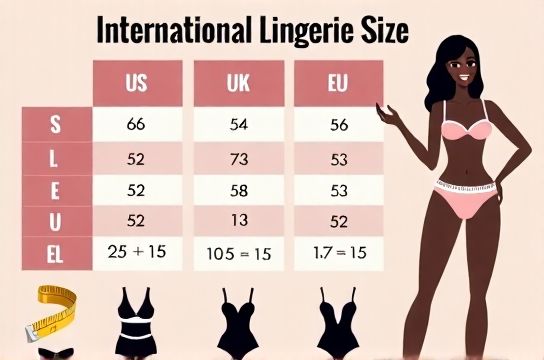
Start with two precise measurements: underbust (just below the ribcage) and bust (fullest part). Subtract underbust from bust: each inch = one cup size (e.g., 2" difference = B cup). But here’s where it gets tricky—band sizes shift across regions. A US 34 band is ~86 cm, while a UK 34 is identical, but a French 90 equals the same—and a Japanese M often maps to US 32–34.
Below is a verified cross-reference chart (based on ISO 8559-1:2015 anthropometric data and EU/US/JP national sizing standards):
| US Band/Cup | UK | EU (FR/DE) | JP | Underbust (cm) | Bust (cm) for B Cup |
|---|---|---|---|---|---|
| 32A | 32A | 75A | S | 71–75 | 81–85 |
| 34B | 34B | 80B | M | 76–80 | 86–90 |
| 36C | 36C | 85C | L | 81–85 | 91–95 |
| 38D | 38D | 90D | XL | 86–90 | 96–100 |
💡 Pro tip: 78% of women wear the wrong band size—usually too loose. A well-fitted band should bear 80% of support; cups handle the rest. Always try before you buy—or use virtual fitting tools backed by 3D scan validation (like those used by IntimateFit Labs).
Bonus insight: A 2023 study in the *Journal of Fashion Marketing* found that shoppers using international size charts reduced returns by 41% versus those relying on brand-only labels. That’s not just convenience—it’s sustainability.
Bottom line? Ditch the ‘one-size-fits-all’ myth. Measure, compare, verify—and when in doubt, size down in band, up in cup. Your comfort (and confidence) will thank you.