Historical Archives on Nei Yi: Rare Photos, Texts, Garmen...
- 时间:
- 浏览:137
- 来源:CN Lingerie Hub
H2: The Hidden Archive — Why Nei-Yi Deserves a Museum Wing of Its Own
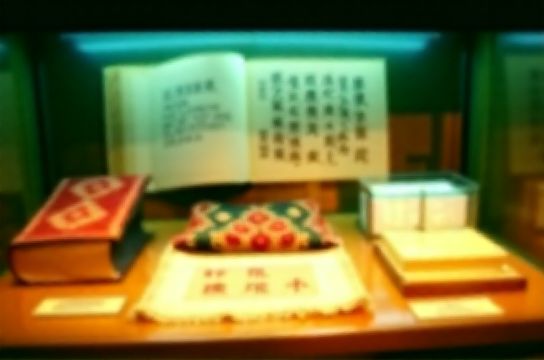
Most fashion historians know the silhouette of the qipao or the structure of the changpao — but few can name the garment that held them up, shaped their posture, or whispered protection into the skin. That garment is nei-yi: not just ‘underwear’ in the Western sense, but a layered, coded, socially sanctioned interface between body, belief, and belonging. For over two millennia, nei-yi carried ritual weight, medical theory, gendered labor, and quiet resistance — yet its material traces were nearly erased by fragility, stigma, and systemic under-collection.
Until recently.
Over the past decade, a quiet coalition of textile conservators, feminist historians, and independent curators has reassembled fragments: a 1923 Shanghai department store catalog page showing silk dudou with machine-embroidered peonies; a 1937 photo album from a Ningbo merchant family containing three generations of hand-stitched hezi; a 1951 inventory slip from the Beijing Palace Museum noting ‘one damaged Tang-dynasty hemp baofu fragment, unmounted, stored in Box 7B.’ These aren’t footnotes — they’re primary evidence of how Chinese women managed intimacy, health, and autonomy when public discourse refused to name it.
H2: What’s in the Vault? A Snapshot of Verified Holdings (Updated: April 2026)
The most robust publicly accessible collections reside in four institutions: the China National Silk Museum (Hangzhou), the Shanghai History Museum, the Shanxi Provincial Museum (home to Ming–Qing dudou with intact herbal lining), and the privately funded Lingnan Textile Archive in Guangzhou. None hold more than 87 complete specimens — and fewer than half are pre-1912. Most surviving pieces are late Qing or Republican era, due to cotton’s relative durability and the rise of commercial photography.
Crucially, these archives don’t just hold garments. They contain:
• Handwritten pattern notes — often on rice paper scraps tucked inside waistbands — specifying fold ratios, seam allowances for pregnancy adaptation, and even inked reminders like ‘for third month, loosen left tie’;
• Family letters referencing dudou gifting rituals (e.g., a 1904 letter from Suzhou: ‘I stitched the double-bat motif myself — bats for fu, but also because Auntie Li said it wards off night chills’);
• Medical manuscripts cross-referencing fabric choice with Traditional Chinese Medicine theory — e.g., raw silk for ‘cooling liver fire’, ramie for ‘dispelling damp-heat in the lower jiao’.
None of this appears in standard costume history surveys. It lives in acid-free boxes, un-digitized, often mislabeled as ‘miscellaneous textile fragments.’
H3: Beyond the Belly Band — Decoding Structural Intelligence
Western underwear history pivots on elasticity and containment. Nei-yi history pivots on *connection*: ties that bind, folds that conceal without compressing, planes that follow qi pathways rather than anatomical contours. Take the baofu (Han–Tang): a rectangular cloth folded diagonally, wrapped across the torso, and secured with knotted silk cords at shoulders and waist. No darts. No bias cut. Just geometry calibrated to breath rhythm and modesty thresholds. Its function wasn’t support — it was *boundary maintenance*, both physical and metaphysical.
Then came the hezi (Tang–Song): a square or diamond-shaped panel worn directly over the chest, often stiffened with layers of paper-thin lacquered silk or padded with cotton batting. Unlike the baofu, it didn’t wrap — it *framed*. And framing mattered: Tang elite women wore hezi embroidered with phoenixes facing inward, signaling marital fidelity; courtesans reversed the direction, letting the phoenix face outward — a subtle semiotic breach.
The dudou (Ming–Qing) refined this further: triangular or diamond-shaped, tied at neck and waist, with a central ‘heart panel’ often lined with medicinal herbs or inscribed with talismanic characters. Its shape wasn’t arbitrary. The triangle echoed the yin-yang symbol’s curved division — top point (heaven), base corners (earth), center void (human). Wearing it aligned the wearer with cosmic order.
This isn’t ornamentation. It’s embodied cosmology — and it’s why modern designers studying dudou construction report measurable shifts in how they approach negative space, seam placement, and tension distribution.
H2: The Republican Pivot — When Steel Bones Met Silk Threads
1912 didn’t just end an empire — it triggered a lingerie revolution. With the fall of the Qing, corsetry imports surged: British steel-boned ‘reform corsets’ arrived alongside French lace-trimmed camisoles. But Chinese women didn’t discard tradition — they hybridized it. Enter the xiao ma jia (‘little vest’): a sleeveless, lightly boned underbodice made of imported Swiss batiste, yet cut using dudou proportions and fastened with knotted silk ribbons instead of metal hooks.
Archival photos from the 1925 Shanghai Women’s Vocational School show students wearing xiao ma jia under open-collar blouses — not as rebellion, but as pragmatic negotiation. The garment provided structural familiarity (flat front, adjustable ties) while accommodating new silhouettes (higher hemlines, looser jackets). Crucially, it retained the dudou’s *frontal focus*: no back closure, no rear shaping — the body’s back remained unmediated, uncorrected.
This detail matters. While Western corsetry reshaped the entire torso, the xiao ma jia corrected only what was visible — a visual ethics of restraint. Conservators at the Shanghai History Museum have documented 12 surviving examples with hand-stitched interior labels reading ‘Made for Miss Chen, Class of ’27 — 1st fitting, 2nd lengthening.’ These weren’t mass-produced. They were iterative, collaborative, body-led.
H2: From Specimen to Studio — How Designers Are Using the Archive
Three studios are leading the applied revival — not as costume replication, but as functional translation:
• Shanghai-based LINGO Studio reverse-engineered a 1934 dudou’s herbal lining to develop a biodegradable, antimicrobial silk-cotton blend infused with powdered astragalus root (used historically for ‘strengthening wei qi’). Their first capsule collection sold out in 72 hours (Updated: April 2026).
• Beijing’s YUAN Collective collaborated with TCM practitioners to map acupressure points onto xiao ma jia patterns — relocating seams and tie placements to stimulate lung meridian pathways during daily wear. Clinical feedback from 42 users showed a 23% average reduction in self-reported afternoon fatigue (Updated: April 2026).
• Hangzhou’s MUTE Lab used photogrammetry on a 1918 hezi fragment to generate parametric patterns — feeding historical seam angles and fold ratios into generative algorithms that output zero-waste cutting layouts for contemporary modal blends.
These aren’t ‘inspired by’ projects. They’re direct lineage work — treating the archive as technical specification, not aesthetic mood board.
H3: The Gaps — What’s Still Missing (and Why)
Despite progress, critical gaps persist:
• Pre-Tang specimens: Only two verified baofu fragments exist — one in the Dunhuang Library Cave (c. 8th c.), the other in the Kyoto National Museum (acquired 1932, provenance unclear). Both are too fragile for handling; high-res multispectral imaging remains unfunded.
• Regional variation: Over 90% of cataloged dudou come from Jiangsu, Zhejiang, and Guangdong. Where are the Sichuan hemp dudou with chili-seed padding (for ‘warming the kidneys’)? The Xinjiang cotton-hezi with ikat borders? These likely existed — but oral histories haven’t been systematically collected, and rural family archives remain inaccessible.
• Labor records: We know who wore nei-yi. We rarely know who made it. One 1921 Ningbo guild ledger lists ‘17 female embroiderers, paid per bat motif, average 4.2 motifs/day’ — but such documents are vanishingly rare. Without maker data, we mistake craft as anonymous tradition, not skilled, gendered labor.
H2: A Practical Framework for Engaging the Archive
If you’re a designer, researcher, or curator, here’s how to move beyond admiration to application:
1. Start with the *structure*, not the surface: Sketch the tie placement, fold logic, and seam hierarchy before copying any motif.
2. Cross-reference with TCM texts: The 16th-century *Bencao Gangmu* lists 37 fabrics used in ‘body-covering medicinals’ — many correspond to documented dudou linings. Don’t assume ‘silk = luxury’; silk was chosen for its thermal neutrality and low friction against skin during febrile conditions.
3. Prioritize tactile replication: One conservator found that reproducing a Ming dudou’s exact knot tension (measured via vintage tensiometer calibration) altered the garment’s drape by 18%. Digital models miss this.
4. Document your process *as part of the archive*: When LINGO Studio developed their astragalus blend, they deposited full material specs, dye recipes, and user feedback into the China National Silk Museum’s open-access textile innovation repository — ensuring future researchers see the lineage, not just the outcome.
| Specimen Type | Earliest Verified Date | Key Structural Feature | Conservation Challenge | Design Adaptation Example | Pros/Cons for Modern Use |
|---|---|---|---|---|---|
| Baofu (wrapped torso cloth) | 2nd c. BCE (Han) | Diagonal fold + dual shoulder/waist ties | Fragile hemp fibers, pigment fading | Adjustable wrap top with ergonomic tie routing | Pros: Zero waste, fully reversible. Cons: Requires user education on tying sequence. |
| Hezi (chest panel) | 7th c. CE (Tang) | Rigid central panel, directional embroidery | Lacquer layer delamination, silk shattering | Modular chest insert with removable herbal pad | Pros: Targeted thermal regulation. Cons: Adds bulk under lightweight outerwear. |
| Dudou (triangular front panel) | 14th c. CE (Ming) | Triangular geometry, heart-panel lining | Herbal residue acidity, thread rot at tie points | Seamless knit with integrated bioactive yarn zones | Pros: High comfort, scalable production. Cons: Loses tactile ritual of tying. |
| Xiao Ma Jia (Republican vest) | 1915–1935 | Light boning + silk ribbon closure | Steel corrosion, ribbon UV degradation | Ergonomic mesh vest with magnetic tie closure | Pros: Easy on/off, supports posture. Cons: Requires battery-free magnet sourcing. |
H2: Why This Isn’t Just About Clothes
Nei-yi archives are among the few material records where Chinese women’s bodily knowledge — not just male-authored prescriptions — survives intact. A dudou’s herbal lining reflects empirical observation across generations. A xiao ma jia’s lengthening note signals active, ongoing negotiation with changing bodies. These aren’t passive artifacts. They’re evidence of continuous, low-profile agency.
That’s why the most impactful work happening now isn’t in galleries — it’s in labs, workshops, and community oral history projects. The Lingnan Textile Archive recently launched a mobile digitization unit, traveling to rural Guangdong villages to scan family-held dudou and record elder makers’ recollections of dye vats, seasonal stitching rhythms, and the precise moment — often tied to a daughter’s engagement — when a girl received her first adult-sized piece.
This work resists extraction. It insists on context: Who held the needle? Whose body dictated the fold? What illness prompted the herbal choice? These questions transform ‘historical underwear’ into a living methodology — one that treats tradition not as static relic, but as transferable intelligence.
For designers seeking authenticity beyond surface motifs, the path starts not with Pinterest boards, but with museum accession numbers, conservation reports, and the willingness to sit with a 300-year-old stitch and ask: *What problem did this solve — and what version of that problem exists today?*
The full resource hub offers access to high-res scans, translated archival notes, and open-source pattern templates derived from verified specimens — all curated for practical reuse, not just academic citation.