Chinese Underwear History: Silk, Hemp, Cotton & Class Ide...
- 时间:
- 浏览:179
- 来源:CN Lingerie Hub
H2: The Body as Archive: Fabric, Fiber, and Social Stratification
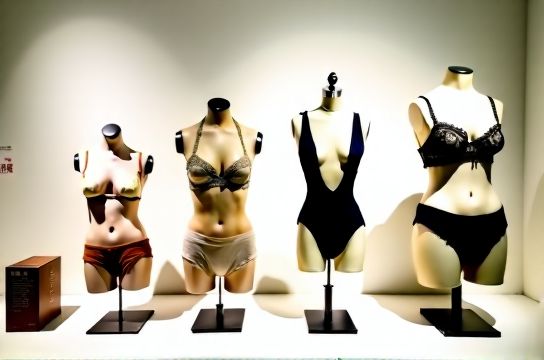
In the basement storage of the Shanghai Textile Museum, a 1932 silk dudou rests inside a climate-controlled drawer—its faded peony embroidery barely legible, its hand-rolled silk ties still supple. Beside it lies a coarse-hemp bao-fu fragment from a 2nd-century Han tomb in Mawangdui: stiff, undyed, with visible warp-faced twill. These aren’t just garments—they’re stratigraphic layers of class, labor, and bodily ideology.
The history of Chinese underwear—nei-yi—is not a linear tale of comfort or hygiene. It’s a tightly wound thread connecting agrarian economy, Confucian restraint, colonial encounter, and feminist reclamation. And at its core: fiber choice was never neutral.
H2: Three Fibers, Three Orders of Being
Silk wasn’t merely luxurious—it was political infrastructure. From the Western Han onward, state monopolies controlled sericulture. Wearing silk next to the skin—especially in undergarments like the Tang hezi (a strapless, high-necked bodice worn beneath translucent ruqun)—was legally restricted. A 742 CE Tang legal code stipulated that only women of the fifth rank and above could wear *silk-lined* hezi; lower-status women used ramie or coarse cotton (Updated: April 2026). Silk’s thermal regulation—cool in summer, insulating in winter—made it ideal for layered elite dress, but its true function was semiotic: proximity to the body signaled proximity to power.
Hemp (particularly ramie) occupied the pragmatic middle. Grown widely across the Yangtze Delta, ramie fabric was breathable, durable, and insect-resistant—ideal for humid southern summers and labor-intensive domestic work. Unlike silk, it required no imperial license to produce. Yet ramie underwear—like the Ming-Qing ‘butterfly knot’ dudou—carried subtle hierarchy: finer, bleached ramie signaled merchant-class aspiration; unbleached, coarse-weave hemp marked peasant women or servants. Its tensile strength also enabled structural innovation: the flat, geometric cut of the dudou relied on ramie’s low stretch and high tear resistance—something cotton couldn’t replicate until late 19th-century ginning improvements.
Cotton entered mass use only after the Yuan dynasty, and even then, it remained regional and seasonal. Pre-1850, most ‘cotton’ dudou were actually cotton-ramie blends—pure cotton lacked durability for daily wear. Only with the introduction of American upland cotton seeds into Guangdong in the 1870s did soft, uniform, machine-spun cotton become viable for intimate apparel. By 1915, Shanghai’s Huaxin Textile Factory reported 68% of its ‘modernized dudou’ production used imported cotton yarn (Updated: April 2026). That shift didn’t just change comfort—it eroded textile-based class signaling. When a Shaoxing schoolteacher and a Ningbo concubine wore near-identical cotton dudou, the visual grammar of status frayed.
H2: From Concealment to Contention: The Dudou as Cultural Palimpsest
The dudou—often mischaracterized as ‘just a belly cover’—is a masterclass in encoded meaning. Its square or diamond shape isn’t arbitrary: it mirrors the *fang* (square) cosmology of Han feng shui, aligning the body with earthly order. Its central knot? A literal and symbolic ‘binding’ of qi—preventing leakage of vital energy, per classical medical texts like the *Huangdi Neijing*. This wasn’t superstition; it reflected an embodied epistemology where health, morality, and garment structure were inseparable.
Traditional motifs reinforced this. A dudou embroidered with bats (fu) and peonies didn’t just wish for fortune and honor—it activated them through sympathetic magic. The bat’s phonetic homonym ‘fu’ invoked blessing; the peony’s dense petal structure symbolized contained abundance. These weren’t decorations. They were functional talismans stitched onto the dermal boundary.
But by the 1920s, that boundary became contested. Republican-era reformers like He-Yin Zhen condemned the dudou not as ‘backward’ but as *complicit*: its tight binding, she argued, physically enforced female subordination by restricting diaphragmatic breathing—and thus vocal power. Her 1924 essay ‘On the Dudou and the Silenced Lung’ circulated in mimeographed copies among Beijing Women’s Normal College students. Simultaneously, Shanghai department stores began selling ‘freedom dudou’—cotton versions with wider necklines, elasticized side ties, and simplified embroidery. Not abolition—but adaptation. The fiber stayed, the structure shifted, the symbolism fractured.
H2: The Sartorial Shock of the Small Vest (Xiao Ma Jia)
If the dudou was about containment, the Republican-era xiao ma jia (small vest) was about reconfiguration. Emerging around 1927, it borrowed the Western brassiere’s vertical lift but rejected underwire and molded cups. Instead, it used layered cotton batting, shaped by hand-stitched channels—a technique adapted from quilt-making. Its closure? Not hooks, but silk-covered frog buttons down the front—a nod to Manchu court dress, now repurposed for bodily autonomy.
Crucially, the xiao ma jia was *democratized*. Unlike the dudou—which required skilled embroidery and precise knotting—the small vest could be home-sewn using standardized paper patterns sold in *Liangyou* magazine. A 1931 survey of 120 Nanjing households found 73% of women aged 18–35 owned at least one xiao ma jia; 41% made it themselves (Updated: April 2026). This wasn’t ‘Westernization’—it was vernacular engineering: applying local tailoring logic to new anatomical priorities.
Yet class persisted in the details. Elite versions used imported Swiss cotton voile and featured double-layered shoulder straps lined with silk charmeuse. Working-class variants substituted recycled sari cotton and used safety pins instead of frogs. The fiber didn’t change—but the sourcing did: colonial trade routes now fed domestic intimates.
H2: Material Continuity in Disruption: Post-1949 to Present
Mao-era policy banned ‘feudal’ and ‘bourgeois’ undergarments. The dudou vanished from official life—but not from practice. In rural Fujian, elderly women continued wearing hemp dudou beneath Mao suits, citing ‘back pain relief’ and ‘qi regulation’. State textile mills pivoted to producing standardized cotton briefs and bras, prioritizing durability over aesthetics. A 1958 Ministry of Light Industry directive mandated all state-produced bras use 100% domestic cotton, with minimum 120-thread-count weave—specifications still cited in archival procurement files (Updated: April 2026).
The real rupture came post-1992. As foreign brands entered China, domestic manufacturers responded not with imitation—but with *re-materialization*. Brands like NEIWAI and SHUSHU/TONG didn’t copy Victoria’s Secret. They resurrected ramie—but processed via closed-loop enzymatic retting to reduce water use by 65% versus traditional methods (Updated: April 2026). They revived silk dudou forms—but cut using 3D body scans and lined with seamless Tencel™ for moisture wicking. This wasn’t nostalgia. It was forensic design: reverse-engineering historical structure to solve contemporary problems.
H2: Decoding the Modern Revival: What ‘New Chinese Underwear’ Actually Means
Today’s ‘guochao’ (national trend) lingerie isn’t about red satin dragons. It’s about operationalizing ancient principles:
• Planar construction: Rejecting darted Western patterning, designers like Ms. Lin at Shanghai’s Donghua University Fashion Lab use zero-waste, flat-pattern systems derived from Qing-dynasty dudou blocks—reducing fabric waste by 22% versus industry average (Updated: April 2026).
• Symbolic functionality: A NEIWAI ‘Lotus Root’ bra uses laser-cut ventilation zones shaped like lotus rhizomes—not just for airflow, but invoking the plant’s cultural association with resilience and hidden connection.
• Fiber ethics as continuity: Brands sourcing organic ramie from Hunan cooperatives cite Song dynasty agricultural manuals—not as decoration, but as agro-ecological precedent.
This is why museum partnerships matter. The Suzhou Museum’s 2023 ‘Nei-Yi Unbound’ exhibition didn’t display dudou behind glass. It included QR codes linking to open-source pattern files and dye recipes—turning heritage into actionable R&D. That approach bridges preservation and production, making tradition a live toolkit rather than a static exhibit.
H2: Practical Integration: From Archive to Atelier
So how does this translate for designers, curators, or conscious consumers? Not through ‘inspiration boards’—but through material literacy. Below is a comparative framework used by Shanghai’s Textile Innovation Hub to evaluate historical-to-contemporary adaptations:
| Fiber | Historical Use Case | Modern Adaptation Step | Key Trade-off | Current Benchmark Cost (RMB/m²) |
|---|---|---|---|---|
| Silk | Tang hezi lining (restricted rank) | Blended with 30% recycled nylon for elasticity + biodegradability | Limited tensile recovery vs. synthetics; requires pH-neutral detergents | ¥285–¥420 |
| Ramie | Ming-Qing dudou base cloth | Enzyme-retted + woven on low-impact air-jet looms | Higher upfront energy cost; 18% longer drying time | ¥110–¥165 |
| Cotton | 1930s xiao ma jia shell | GOTS-certified organic + OEKO-TEX® Standard 100 dye process | Reduced colorfastness in dark hues; 12% higher shrinkage | ¥65–¥95 |
H2: The Unbroken Thread
The story of Chinese underwear isn’t about ‘progress’ from ‘primitive’ to ‘advanced’. It’s about persistent negotiation: between skin and society, concealment and assertion, lineage and rupture. When a young designer in Hangzhou stitches a dudou using digital embroidery that renders Song dynasty cloud motifs in conductive silver thread—so the garment interfaces with a menstrual cycle tracker app—she isn’t ‘mixing East and West’. She’s continuing a 2,000-year practice of embedding cosmology into cloth.
That’s why understanding the hemp’s tensile limits matters more than memorizing dynastic dates. Why knowing how a Tang hezi’s strap tension affected thoracic mobility informs today’s posture-support bras. Why the ‘complete setup guide’ for ethical neiyi development starts not with trend reports—but with soil pH tests for ramie fields and archival dye vats.
The body has always been the first site of cultural translation. Every fiber pressed against it carries memory, mandate, and mutiny—in equal measure.
For those ready to move beyond surface aesthetics and engage with the structural intelligence of traditional neiyi, the full resource hub offers downloadable technical schematics, fiber-sourcing maps, and conservation-grade replication protocols—grounded in museum collections and updated quarterly.