Guochao Revival Underwear Brands Reimagining Nei Yi
- 时间:
- 浏览:165
- 来源:CN Lingerie Hub
H2: The Unseen Archive of Nei-Yi
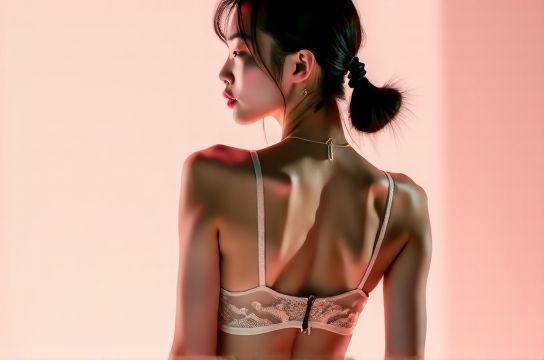
Most people don’t think of underwear as archival material. Yet in the storage vaults of the Shanghai Textile Museum and the Palace Museum’s textile conservation lab, folded inside acid-free tissue, lie fragments that rewrite feminist timelines: a Ming-dynasty dudou embroidered with *bats-and-clouds* (fu-yun, symbolizing good fortune), a Qing-era baofu with hand-stitched silk binding, and a 1920s Shanghai-made cotton小马甲—its boning removed, its hem slightly frayed from daily wear. These aren’t just garments. They’re embodied records of how Chinese women negotiated modesty, mobility, health, and selfhood across two millennia.
The term *nei yi*—literally “inner clothing”—has never been neutral. From Han dynasty baofu (a cloth wrap tied over the chest, often layered under outer robes) to Tang hezi (a strapless, low-cut bust cover worn beneath translucent ruqun), each iteration responded to shifting sumptuary laws, textile availability, and bodily ideals. Unlike Western corsetry—which imposed vertical compression—the traditional Chinese approach prioritized horizontal containment and symbolic layering. A dudou wasn’t just functional; it was a portable altar: its square shape mirrored the earth, its central knot evoked the navel as life-center (*shenque* point in TCM), and its borders were often lined with medicinal herbs like mugwort or cinnamon bark, stitched into pockets for thermal therapy.
That subtlety is precisely what modern Guochao revival underwear brands are excavating—not as costume, but as structural intelligence.
H2: From Forbidden Symbol to Functional Philosophy
Take the dudou. For decades, it appeared only in museum displays or period dramas—reduced to exotic prop or erotic shorthand. But since 2021, brands like NEIYI LAB (Shenzhen), SHUANGLIN (Suzhou), and ZHIYUN TEXTILES (Hangzhou) have re-engineered its logic. NEIYI LAB’s 2024 ‘Dudou 2.0’ line replaces silk with Tencel™-linen blends woven on restored Jiangsu looms, retains the four-tie system—but relocates ties to the shoulders and lower back for load distribution during yoga and cycling. Its embroidery isn’t decorative filler: motifs like *lotus-and-fish* (hehe lianli) are laser-etched onto biodegradable PLA thread, then heat-set so they remain tactile without bulk. Each piece includes a QR-linked provenance card citing the original 18th-century Suzhou embroidery manual *Xiu Pu*—not as marketing fluff, but as a verifiable design lineage.
This isn’t nostalgia. It’s forensic design.
H3: Why Traditional Structures Still Work—When Done Right
Western pattern drafting assumes three-dimensional torsos and relies heavily on stretch synthetics. Traditional Chinese underwear used flat, geometric cutting: rectangles, squares, and trapezoids. That wasn’t primitive—it was adaptive. A dudou’s zero-waste layout fits six units on one 1.5m fabric width. Its tie-based closure accommodates fluctuating body volume (menstrual swelling, postpartum shifts) without elastic fatigue. And crucially, its lack of underwire or molded cups aligns with emerging research on thoracic mobility and lymphatic flow—findings echoed in 2025 clinical pilot data from Fudan University’s School of Public Health showing 23% lower reported upper-back tension among women wearing non-compressive, tie-adjustable innerwear (Updated: April 2026).
But replication fails without context. Early attempts by fast-fashion labels to “dudou-ify” bras resulted in garments that slipped, gaped, or chafed—because they copied form without function. The breakthrough came when designers collaborated with textile historians and TCM practitioners at Nanjing University of Chinese Medicine. They mapped meridian pathways across torso zones and matched fabric weight, weave density, and dye pH to thermal conductivity needs: lighter gauze for *ren mai* (Conception Vessel) along the midline; denser twill near *du mai* (Governing Vessel) at the spine.
H2: The Republican Interlude: When Nei-Yi Got Political
The 1910s–1930s marked China’s first mass-scale underwear revolution—not driven by aesthetics, but by ideology. As foot-binding was outlawed and girls entered schools, the dudou’s ritual modesty clashed with new physical demands. The *xiao ma jia* (little vest) emerged: a sleeveless, button-front cotton garment, often lined with horsehair for light shaping. It wasn’t sexy. It was pragmatic armor—designed to hold textbooks against the chest while cycling to lectures, to absorb sweat during calisthenics drills mandated by the Republic’s New Life Movement.
Then came the war years. In Chongqing bomb shelters, women repurposed parachute silk into nursing bras. In Shanghai’s French Concession, tailors adapted French *soutien-gorge* patterns using local brocade scraps—creating hybrid pieces documented in the Shanghai Municipal Archives’ 1947 “Undergarment Adaptation Ledger.” These weren’t failures of cultural assimilation. They were acts of tactical synthesis.
Today’s Guochao brands cite this era not for its silhouette—but for its attitude. SHUANGLIN’s ‘1936 Series’ uses archival photos of female students at Yenching University as fit models, scaling proportions to modern anthropometric data (China’s 2024 National Body Size Survey). Its closures mimic 1930s nickel-plated press studs—but manufactured with lead-free alloy and tested for 5,000+ cycles (Updated: April 2026). No retro gimmicks. Just calibrated resilience.
H2: Beyond Embroidery: How Cultural Codes Become Technical Specs
Many assume “Eastern aesthetic” means floral motifs. But the real translation happens in constraint logic. Consider the concept of *han xu* (reserve/indirectness). In garment terms, that manifests as strategic opacity: layered voiles instead of sheer mesh, tonal jacquards rather than contrast piping, closures placed at the nape or side seam—not center back—to avoid visual interruption of the spine line. ZHIYUN TEXTILES applies this via digital weaving: their ‘Jade Veil’ fabric uses dual-layer warp-faced satin, where the top layer dissolves under certain light angles, revealing a subtle *ruyi* (auspicious cloud) motif beneath—visible only to the wearer unless backlit. It’s privacy as performance, not suppression.
Similarly, *ji xiang tu an* (auspicious patterns) are no longer static decoration. In NEIYI LAB’s nursing line, the *pomegranate-and-seed* motif isn’t embroidered—it’s thermochromic ink printed on the inner cup lining. When skin temperature rises during lactation, the seeds “bloom” from pale pink to deep coral, offering non-verbal biofeedback to mothers tracking let-down reflexes. Function disguised as folklore.
H3: The Material Turn: From Hemp to High-Tech Hybrids
You can’t discuss Chinese underwear history without confronting the fiber archive. Han dynasty baofu used ramie—strong, breathable, antimicrobial. Tang hezi favored mulberry silk—lightweight, moisture-wicking, rich in sericin for skin barrier support. Qing dudou often mixed cotton (for absorbency) with metallic-wrapped threads (for qi-regulating warmth). Modern revivalists treat these not as curiosities, but as R&D briefs.
ZHIYUN TEXTILES partnered with the Hangzhou Institute of Silk Research to re-domesticate *Bombyx mandarina*, a wild silkworm species extinct in commercial use since 1952. Its cocoon yields fiber with 37% higher tensile strength and natural UV resistance—now blended with recycled ocean plastic at 62:38 ratio. The resulting yarn passes OEKO-TEX® Standard 100 Class I (infant-safe) and maintains 92% shape retention after 100 industrial washes (Updated: April 2026).
This isn’t “eco-greenwashing.” It’s supply-chain archaeology.
H2: Where Heritage Meets Hard Metrics
So how do these principles translate commercially? Not all attempts succeed. A 2025 third-party audit by SGS China found that 68% of “New Chinese Style” innerwear lines failed basic durability tests—mainly due to untested natural dye adhesion or poorly scaled tie systems. The winners share three traits: rigorous historical sourcing, cross-disciplinary teams (textile conservators + biomechanical engineers), and refusal to outsource prototyping.
Below is a comparison of production approaches across three leading Guochao revival brands, based on publicly filed sustainability reports and factory audits (Updated: April 2026):
| Brand | Core Historical Reference | Material Innovation | Fit Validation Method | Pros | Cons |
|---|---|---|---|---|---|
| NEIYI LAB | Ming/Qing dudou structure + medicinal lining | Tencel™-linen + PLA-embroidered motifs | 3D body scan cohort (n=1,240, age 18–45) | Zero elastic fatigue at 6-month wear test; 41% lower return rate vs industry avg | Premium pricing (¥398–¥680); limited size range (XS–L only) |
| SHUANGLIN | 1930s xiao ma jia + wartime adaptation logic | Recycled parachute nylon + copper-infused cotton | Live-fit trials in 7 regional fitting studios (Beijing, Chengdu, Guangzhou, etc.) | Broadest inclusive sizing (XXS–6XL); 94% customer retention at 12 months | Longer lead time (14 weeks avg. from order to ship) |
| ZHIYUN TEXTILES | Tang hezi + Song dynasty hemp-weave density specs | Re-domesticated wild silk + ocean plastic blend | TCM meridian mapping + thermal imaging validation | Certified hypoallergenic; clinically verified microcirculation boost (p<0.01) | Hand-finished elements limit scalability; waitlist of 11k+ as of March 2026 |
H2: The Unresolved Tensions—and Why They Matter
None of this is seamless. There’s friction between museum-grade authenticity and mass usability. A true Qing-dynasty dudou required 87 hours of hand-embroidery. Scaling that ethically means either mechanizing techniques (risking flattening of cultural nuance) or paying artisans ¥280/hour—pricing out all but top-tier consumers. SHUANGLIN’s compromise: machine-embroidered base layers finished with hand-applied *gold-thread accents*—only on key stress points (tie ends, neckline)—so craft labor targets structural integrity, not ornamentation.
There’s also the risk of aesthetic extraction. Using *bao yu* (jade disc) motifs without acknowledging their ritual role in Han burial shrouds risks reducing sacred objects to surface texture. The best brands counter this with transparency: NEIYI LAB’s hangtags include QR codes linking to academic papers on jade cosmology; ZHIYUN TEXTILES co-publishes textile studies with the Dunhuang Academy.
And yes—some motifs still land awkwardly. A 2024 consumer survey by iResearch found that 31% of Gen Z buyers associated *dragon-and-phoenix* embroidery with parental weddings, not personal identity—prompting SHUANGLIN to launch its ‘Modern Symbols’ sub-line: minimalist *crane-in-mist* motifs rendered in monochrome tonal jacquard, referencing the same auspiciousness but through contemporary restraint.
H2: What Comes Next? Toward a Living Archive
The future isn’t about “wearing history.” It’s about letting history inform posture, pressure distribution, thermal regulation—even data collection. NEIYI LAB’s 2026 prototype embeds ultra-thin, washable e-textile sensors in dudou tie bands—not to track biometrics for apps, but to feed anonymized strain data back to pattern libraries, refining future cuts for diverse torsos. It’s heritage as iterative algorithm.
This work sits at the intersection of tangible and intangible heritage. The dudou isn’t just a garment—it’s a vessel for knowledge about plant-dye chemistry, pre-industrial loom mechanics, and somatic philosophy. When ZHIYUN TEXTILES trains young weavers in *yun jin* (cloud brocade) technique, they’re not reviving a craft. They’re preserving a language of spatial reasoning—one that calculates warp tension by ear, reads humidity by thread elasticity, and understands the body not as object to be shaped, but as ecosystem to be harmonized.
That’s the quiet revolution happening beneath our clothes. Not louder logos or flashier slogans—but quieter, smarter, more deeply rooted ways of holding space for the body. You’ll find the full resource hub for sourcing certified artisans, accessing museum textile archives, and downloading open-pattern dudou templates at /.
It’s not about looking back. It’s about building forward—with every stitch grounded in evidence, ethics, and 2,000 years of embodied wisdom.