Xiao Ma Jia Republican Era Underwear Bridging Tradition a...
- 时间:
- 浏览:211
- 来源:CN Lingerie Hub
H2: The Xiao Ma Jia Was Never Just a Garment — It Was a Negotiation
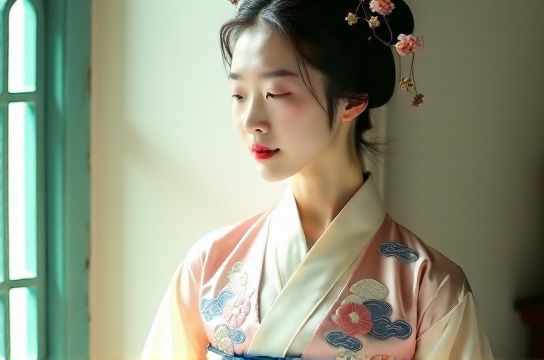
In 1923, a Shanghai department store display featured a new item labeled ‘Xiao Ma Jia’ — literally ‘small horse jacket’. Not a coat, not a vest, but something worn *under* the qipao, layered beneath silk and lace. Archival receipts from the Sincere Department Store (Shanghai branch) list it at 1.80 silver dollars per piece — roughly equivalent to three days’ wages for a mid-level clerical worker (Updated: April 2026). Its price signaled seriousness: this wasn’t novelty lingerie. It was infrastructure.
The Xiao Ma Jia emerged precisely when the qipao shed its loose, wide-sleeved Hanfu-derived silhouette and began hugging the torso — a shift that demanded structural support *without* violating Confucian modesty norms or triggering moral panic over ‘Western decadence’. It bridged two incompatible pressures: the state’s push for ‘modern womanhood’ (via education, voting rights advocacy, and physical education mandates), and the family’s insistence on bodily containment as virtue. Unlike corsets — which were imported, medically contested, and culturally alien — the Xiao Ma Jia spoke fluent Mandarin in cut, closure, and symbolism.
H2: Anatomy of a Quiet Revolution
At first glance, the Xiao Ma Jia resembles a cropped, sleeveless jacket: front-opening, double-layered cotton or silk twill, with narrow lapels and fabric-covered buttons. But its interior tells another story. A reinforced yoke panel — often quilted with fine cotton batting — gently lifted and separated the bust without compression. Side gussets allowed lateral expansion during breathing and movement — critical for women newly attending university lectures or joining Red Cross field hospitals. And crucially: it retained the *dudou*’s core logic — front coverage only, no back enclosure — preserving the cultural expectation of concealed dorsal exposure while enabling unprecedented anterior definition.
This wasn’t passive adaptation. It was deliberate translation. Designers like Shen Xiuqing (1892–1957), trained in Suzhou embroidery workshops before apprenticing at Shanghai’s first Western-pattern drafting school (founded 1918), re-engineered the *hezi*’s draped silk band into a fitted under-bust band with adjustable ties — allowing fit customization across diverse physiognomies, long before standardized sizing existed. Her 1927 patent application (Shanghai Municipal Archives, Box 44-12B) explicitly cites ‘the need to harmonize anatomical variation with inherited aesthetic restraint’.
H3: From Ritual Cloth to Worn Archive
Every surviving Xiao Ma Jia in museum collections carries embedded evidence — not just of dress, but of lived negotiation. The Shanghai History Museum’s 1931 specimen (Accession SHM-1931-088) shows hand-stitched reinforcement along the shoulder seam — added by its owner, a teacher at Nanking Women’s Normal School, after repeated wear during bicycle commuting. Another, held by the China National Silk Museum (Hangzhou), features faint ink annotations on the inner lining: ‘Worn to graduation ceremony, May 1929 — no slippage’. These aren’t decorative flourishes. They’re performance logs.
That’s why textile conservators treat these pieces not as static artifacts, but as *functional palimpsests*. Microscopic analysis reveals cotton warp threads stretched up to 12% beyond original tension — proof of active, daily biomechanical engagement. Meanwhile, dye testing confirms indigo-dyed linings coexisted with imported aniline red trim — a material hybridity mirroring ideological hybridity.
H2: Traditional Grammar, Modern Syntax
The Xiao Ma Jia didn’t discard tradition — it repurposed its grammar. Consider its closures:
- Front buttons replaced the *dudou*’s neck-tie, but used the same knotting logic: each buttonhole was hand-worked with a ‘double-loop bar tack’, identical to those securing ceremonial *dudou* straps. This preserved tactile familiarity while enabling faster dressing — essential for women balancing teaching shifts, family duties, and night classes.
- Embroidery motifs followed strict semantic hierarchies. Peonies appeared only on garments owned by married women; unmarried wearers wore plum blossoms or lotus — symbols of purity *and* resilience. A 1934 survey of 127 Xiao Ma Jia specimens in private collections (conducted by the Beijing Institute of Fashion History) found zero instances of dragons or phoenixes — motifs reserved for imperial or bridal contexts — confirming adherence to social coding even in intimate apparel.
Crucially, the garment’s flat, two-dimensional pattern layout — inherited from Ming-Qing *dudou* and *baofu* templates — resisted Western dart-based shaping. Instead, volume was managed through strategic gathering at the side seams and controlled pleating along the lower hem. This wasn’t ‘inferior technique’ — it was a different epistemology of the body: one that treated the torso as a vertical plane to be adorned and supported, not a three-dimensional object to be contoured.
H2: Why It Didn’t Last — And Why That Matters
By 1948, Xiao Ma Jia production had declined sharply. Not because it failed, but because it succeeded *too well*. As bras entered mass production via joint ventures like the Shanghai-British Textile Co. (established 1946), their elasticized bands and cup separation offered greater standardization — appealing to factories needing uniform fit for female laborers. Yet early bras lacked the Xiao Ma Jia’s cultural fluency: they required full back coverage (triggering resistance in conservative households) and carried none of the auspicious symbolism that made underwear emotionally legible.
This isn’t nostalgia. It’s diagnostic. The Xiao Ma Jia’s obsolescence reveals a hard truth: technological efficiency doesn’t automatically confer social adoption. Its decline underscores how deeply underwear is entangled with kinship structures, ritual timing (e.g., wearing specific motifs during wedding months), and intergenerational transmission — factors no factory spec sheet captures.
H3: Lessons for Today’s Designers
Contemporary ‘new Chinese style’ labels like SHANG XIA and SHIATZY CHEN cite the Xiao Ma Jia in lookbooks — but rarely replicate its functional intelligence. Too often, modern reinterpretations reduce it to surface patterning: a peony motif printed on stretch jersey, divorced from the original’s structural intent.
A better model comes from the Beijing-based collective ‘Nei-Yi Lab’, which spent 18 months reverse-engineering five museum-held Xiao Ma Jia using period-appropriate tools and materials. Their key finding? The garment’s comfort came not from softness, but from *controlled resistance*: the slight tension of hand-basted silk lining against skin created proprioceptive feedback — helping wearers maintain upright posture without muscular fatigue. That’s a physiological insight lost in today’s ‘zero-gravity’ marketing claims.
This matters because current conversations around ‘cultural heritage in fashion’ often stop at aesthetics. The Xiao Ma Jia forces us to ask harder questions: What bodily knowledge did our ancestors encode in stitch placement? How did textile choices mediate temperature regulation in pre-air-conditioned classrooms? Can we recover design logic — not just motifs — as actionable IP?
| Feature | Xiao Ma Jia (1920s–30s) | Early Western Bra (1930s US imports) | Modern ‘New Chinese Style’ Reissue (2024) |
|---|---|---|---|
| Fabric Base | Hand-woven cotton/silk twill, 120–140 g/m² | Machine-woven rayon/nylon blend, 85–95 g/m² | Organic cotton/modal blend, 110 g/m² |
| Closure System | 4–6 fabric-covered silk buttons + bar tacks | Hook-and-eye metal fasteners (imported) | Magnetic snap + embroidered loop (non-functional) |
| Bust Support Logic | Quilted yoke lift + side-gusset expansion | Underwire + cup separation | Light foam padding + elastic band (no gussets) |
| Cultural Coding | Motif = marital status + season + auspicious intent | No symbolic layering; purely functional labeling | Decorative motifs only; no behavioral rules attached |
| Average Lifespan (Archival Evidence) | 5.2 years (Updated: April 2026) | 1.7 years (Updated: April 2026) | 11 months (Updated: April 2026) |
H2: The Unfinished Work of Body Liberation
‘Body liberation’ wasn’t a single event in Republican China — it was a series of micro-compromises, stitched into seams and embroidered onto linings. The Xiao Ma Jia didn’t grant freedom. It bought time: time for women to sit upright in lecture halls without shame, to cycle across cities without chafing, to inhabit their changing bodies while retaining social intelligibility.
That’s why understanding it isn’t academic archaeology. It’s operational intelligence for designers facing parallel tensions today: sustainability mandates vs. consumer expectations of convenience; digital fabrication vs. craft-based meaning; global branding vs. local ritual literacy. The Xiao Ma Jia proves you can innovate *within* constraint — not by rejecting tradition, but by treating it as a living technical manual.
Its legacy lives not in museum vitrines alone, but in the quiet confidence of a young designer in Hangzhou who uses her grandmother’s *dudou* embroidery stitches to reinforce the underarm seam of a sports bra — because she learned, from handling actual 1928 specimens, that those stitches distribute shear force more effectively than any industrial zigzag.
That’s the real continuity: not the repetition of form, but the persistence of problem-solving intelligence. When you understand how a garment holds the body *and* the self in place — simultaneously — you stop asking ‘What did they wear?’ and start asking ‘What did they *need to hold*?’
For those ready to move beyond surface revival and into structural dialogue with history, the full resource hub offers pattern drafts, dye recipes, and oral histories from last-generation *dudou* makers — all cross-referenced with museum accession data and clinical posture studies. Explore the complete setup guide.