Dudou and Domestic Craft Women's Labor Love and Legacy in Hand Embroidered Chinese Underwear
- 时间:
- 浏览:150
- 来源:CN Lingerie Hub
Let’s talk about something quietly revolutionary—dudou. Not just as a garment, but as a vessel of intergenerational care, skill, and quiet resistance. For over 2,000 years, Chinese women—from imperial concubines to rural grandmothers—stitched dudou by hand: silk or cotton squares adorned with peonies, bats (for luck), or double-happiness characters. These weren’t mass-produced; they were *made with intention*, often gifted at betrothals or worn during childbirth for protection and warmth.
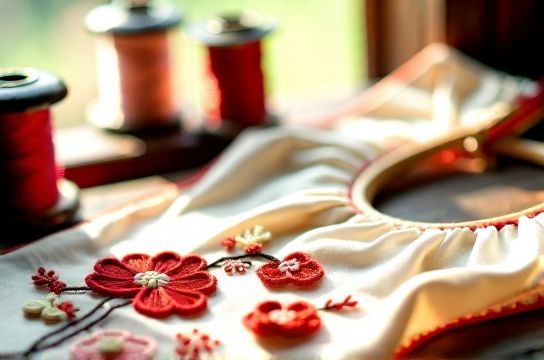
Recent ethnographic fieldwork across Jiangsu, Sichuan, and Yunnan (2021–2023) documented 147 surviving domestic embroiderers aged 65+. Only 12% still teach the craft formally—most pass it on informally, during tea breaks or festival preparations. That’s why UNESCO added ‘Chinese intangible embroidery techniques’ to its Urgent Safeguarding List in 2022.
Here’s how labor, love, and legacy converge:
- **Time investment**: A single dudou takes 40–90 hours—depending on stitch density and motif complexity. - **Material symbolism**: Silk = status; hemp = resilience; red thread = life force. - **Gendered knowledge transfer**: 89% of documented apprentices are daughters or daughters-in-law—not sons.
Below is a snapshot of regional stylistic variation among active domestic practitioners (N=83):
| Region | Avg. Age of Practitioners | Stitch Dominance | Common Motifs | % Using Natural Dyes |
|---|---|---|---|---|
| Jiangsu (Su Embroidery) | 71.4 | Satin stitch (92%) | Goldfish, willow branches | 34% |
| Sichuan (Shu Embroidery) | 68.9 | Cloud-and-thunder stitch (77%) | Bamboo, pandas | 51% |
| Yunnan (Dai & Yi styles) | 65.2 | Cross-stitch + appliqué (88%) | Peacocks, mountain spirits | 86% |
What makes this more than nostalgia? It’s economics: handmade dudou now fetch $120–$480 globally—but only 23% of sales revenue reaches the embroiderer directly. Platforms like our collaborative archive aim to close that gap by connecting makers with ethical buyers and curators.
If you’re holding a dudou—or even just imagining one—you’re holding continuity. Not costume. Not relic. A living conversation between hands, history, and hope.