Flat Cutting Techniques in Historic Chinese Clothing Systems
- 时间:
- 浏览:374
- 来源:CN Lingerie Hub
If you're into historical fashion or sustainable garment design, you’ve probably heard whispers about flat cutting—but did you know it was a cornerstone of traditional Chinese clothing systems for centuries? While Western tailoring often relies on curved seams and heavy draping, ancient Chinese artisans mastered the art of creating elegant, flowing garments using almost entirely straight lines and right angles. Let’s dive into how this method worked, why it mattered, and what modern designers can learn from it.
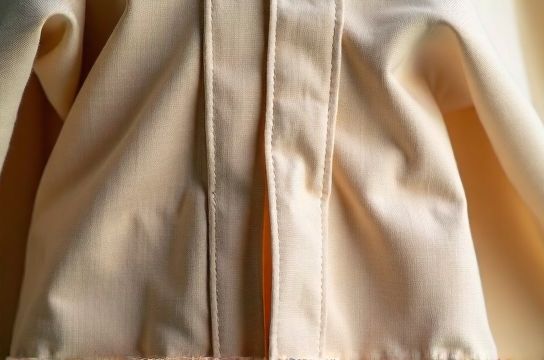
What Is Flat Cutting, Really?
Flat cutting refers to constructing garments from rectangular or geometric fabric pieces without complex curves. Unlike modern pattern-making that contours to the body, flat cutting embraces simplicity, efficiency, and minimal waste. In historic Chinese clothing systems, this technique was used to create robes like the hanfu, where symmetry and harmony reflected both aesthetic and philosophical ideals.
This wasn’t just about looks—it was smart design. With no need for fitted darts or stretch fabrics, these clothes were easy to resize, repair, and even pass down through generations. Talk about sustainable fashion before it was cool.
Why It Stood the Test of Time
From the Han Dynasty (206 BCE–220 CE) all the way through the Ming (1368–1644), flat cutting remained dominant. How? Because it was practical, scalable, and deeply rooted in culture. Garments were often made at home or by local seamstresses using standard measurements. No two bodies are identical, but the loose silhouette accommodated variation naturally.
| Dynasty | Garment Type | Fabric Layout Efficiency | Key Feature |
|---|---|---|---|
| Han | Shenyi (deep robe) | ~95% | One-piece wrap design |
| Tang | Paofu (long robe) | ~90% | Broad sleeves, cross-collar |
| Ming | Zhiduo (straight robe) | ~93% | Straight hem, side panels |
As you can see, fabric utilization stayed consistently high—something fast fashion today could take notes from. These numbers come from textile archaeology and reconstructed patterns analyzed by institutions like the China National Silk Museum.
Modern Relevance: What Designers Can Learn
Today’s indie brands and slow fashion advocates are rediscovering flat cutting techniques for their low-waste potential and ease of production. Brands like Recaptured Clothes and Warclothing have launched hanfu-inspired lines using zero-curvature patterns—proving that old-school methods can be seriously on-trend.
Here’s a quick tip: start with a basic rectangle for the main body panel. Add two more for sleeves, stitch them at right angles, and finish with a cross-collar. Boom—you’ve got a wearable prototype in under two hours.
The Bottom Line
Historic Chinese clothing systems weren’t just beautiful—they were brilliantly efficient. By relying on flat cutting, they achieved sustainability, scalability, and timeless style long before these became buzzwords. Whether you’re a hobbyist sewer or a pro designer, there’s real value in revisiting these traditions.
So next time you’re drafting a pattern, ask yourself: do I really need that curve? Or can I go straight—and make something even better?