Republican Era Corsets and Women's Liberation in China
- 时间:
- 浏览:250
- 来源:CN Lingerie Hub
When we think about fashion revolutions, the Republican era corsets in China might not be the first thing that comes to mind. But between the 1910s and 1940s, clothing became a battlefield for identity, freedom, and modernity—especially for women.
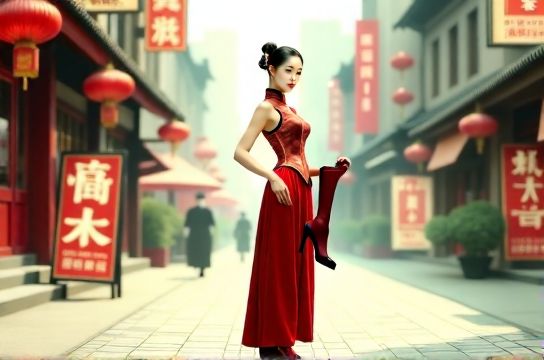
Forget tiny feet and tight bindings. The shift from Qing dynasty traditions to Republican-era styles wasn’t just about looking modern—it was about being modern. And at the heart of this transformation? The evolving silhouette of women’s wear, where corset-like undergarments played a surprising role.
From Foot Binding to Waist Shaping: A New Kind of Restriction?
You’ve heard of foot binding—but did you know that as it declined, new forms of body shaping emerged? While Western corsets aimed for an hourglass figure, Chinese Republican era corsets (often called *neiku* or *xiong’e*) were more about posture, modesty, and supporting the straight-cut lines of the qipao.
Wait—so were these garments liberating… or just another form of control? Let’s break it down with some real data.
| Era | Foot Binding Prevalence | Corset Use Among Urban Women | Female Literacy Rate |
|---|---|---|---|
| Late Qing (1900) | ~50% nationwide | <5% | ~2% |
| Early Republic (1920) | ~20% | ~30% (urban) | ~15% |
| Late Republic (1940) | <5% | ~60% (urban) | ~30% |
As you can see, while traditional oppression decreased, new fashion norms rose in parallel with rising education and urbanization. Interesting, right?
The Qipao Effect: How Fashion Fueled Freedom (and Pressure)
The rise of the tailored qipao in the 1920s–30s changed everything. It hugged the body in ways that traditional robes didn’t—and suddenly, posture and shape mattered more. Enter the Republican era corsets: not steel-boned monsters, but often stiffened cotton or silk bands designed to flatten the chest (in line with early feminist ideals of rejecting sexualization) and create a sleek, modern look.
In cities like Shanghai, wearing a well-fitted qipao with proper understructure signaled you were educated, independent, and forward-thinking. But let’s be real—it also created new beauty standards. As one 1935 Shanghai Women’s Journal article put it: “A woman’s dignity is in her poise.” Translation? Stand tall, stay slim, and don’t wrinkle your dress.
So Was This Liberation or Just a Redesign?
Here’s the twist: many women embraced these garments as symbols of progress. They weren’t bound to the home or their husband’s family—they worked, studied, and walked city streets. Their clothing reflected that autonomy.
Yet, as seen in surveys from women’s liberation movements of the time, there was growing debate. Some feminists welcomed the move away from foot binding but criticized the pressure to conform to new body ideals.
In short: freedom isn’t just about swapping one garment for another. It’s about choice.
Final Thoughts: Style With Substance
The story of Republican era corsets isn’t just about fashion—it’s about how women navigated change in a society rushing toward modernity. These garments were both a product of constraint and a badge of progress.
Today, as we rethink body image and cultural identity, looking back at this era reminds us: liberation is rarely simple. But it’s always worth discussing.