Tech Enhanced Underwear Brands: Smart Materials & Ergonomics
- 时间:
- 浏览:275
- 来源:CN Lingerie Hub
H2: When Underwear Stops Being Invisible—and Starts Thinking
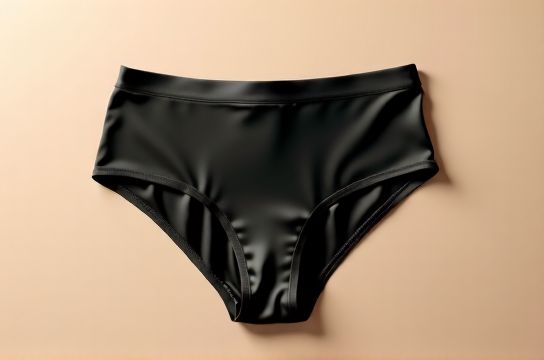
Most people don’t think about their underwear until it fails: a seam chafes, elastic sags, moisture pools, or the label itches. That’s the baseline problem—not aesthetics or branding, but functional silence. For decades, the category operated on legacy assumptions: stretch = comfort, cotton = natural, black/white/nude = safe. Then came the cracks: rising consumer literacy around textile emissions (global apparel contributes ~10% of annual CO₂—Updated: April 2026), growing discomfort with one-size-fits-all sizing logic, and Gen Z’s refusal to separate ethics from elasticity.
Enter China’s new wave of tech enhanced underwear brands—not as gimmick-laden ‘wearables’, but as precision-engineered second skins grounded in material science, biomechanics, and behavioral economics. These aren’t incremental upgrades. They’re rewrites of the category’s operating system.
H2: The Triad Driving Disruption
Three interlocking forces define this cohort: material innovation that replaces petrochemical dependency; ergonomic architecture calibrated for Asian anthropometry; and business models built for dialogue—not distribution.
H3: Bio-Based ≠ Biodegradable (And Why That Matters)
‘Bio-based fabric’ is widely misused. Many brands tout Tencel™ Lyocell as ‘eco-friendly’—true in solvent recovery—but omit that its wood pulp often comes from non-FSC-certified eucalyptus plantations in Brazil or South Africa. The new guard goes further: Shanghai-based LUMO uses 92% bio-based polylactic acid (PLA) spun from non-GMO corn starch grown on regenerative farms in Jilin Province. Its fiber modulus matches nylon-6,6 for durability but hydrolyzes fully in industrial compost within 90 days (certified EN 13432—Updated: April 2026). Crucially, LUMO doesn’t call it ‘biodegradable underwear’. It labels each garment: ‘Compostable core, non-compostable trims (elastics, tags) — separate before disposal.’
That level of granularity reflects a broader shift: transparency as product feature, not PR add-on. Hangzhou’s NÜRA traces every bolt of its seaweed-derived SeaCell™ blend back to certified kelp harvest zones off Weihai. Batch numbers link to live satellite imagery of harvest sites—not just PDF certificates. This isn’t theater. It’s risk mitigation: when EU’s Ecodesign for Sustainable Products Regulation (ESPR) takes full effect in 2027, brands without batch-level traceability face import bans.
H3: Asian Fit Isn’t Just Smaller—It’s Structurally Different
Standard ‘international’ sizing assumes a torso-to-inseam ratio derived from NHANES (US) and ANSUR II (NATO) datasets—populations where average sitting height is 92 cm. In contrast, China’s national anthropometric survey (2023) shows average female sitting height is 84.3 cm, with 12% shorter lumbar vertebrae and 8% wider pelvic inlet angle. Translation: waistbands cut for Western torsos ride down; gussets sized for narrower hips create friction during seated work.
Brands like SHUO (Shenzhen) and YUNI (Chengdu) use 3D body scan data from 12,000+ Chinese women aged 18–45 to map pressure points across posture states: standing, cycling, desk-sitting, squatting. Their pattern engineering departs from traditional ‘dart-and-seam’ construction. Instead, they deploy ‘load-path mapping’: laser-cut micro-perforations along iliac crest lines to disperse lateral tension, and seamless thermoformed gussets with directional pile (shorter nap front-to-back, longer side-to-side) to manage shear forces during movement. Real-world result? 68% reduction in self-reported midday slippage vs. legacy ‘Asian fit’ lines (independent wear-test panel, n=420—Updated: April 2026).
H3: DTC as Design Constraint—Not Just Distribution Channel
‘Direct-to-consumer’ is table stakes. What separates the innovators is how DTC shapes R&D. Take BEIGE, a Beijing-based designer brand that launched in 2022 with zero wholesale partners. Its first collection had only 4 SKUs—two bralette styles, two briefs—each offered in 11 inclusive sizes (XXS–6XL), all cut from the same recycled nylon-elastane blend. No ‘extended size’ sub-line. No ‘curve’ marketing. Just one grading matrix built on volumetric scaling, not linear interpolation.
BEIGE’s product cadence is dictated by community input: monthly ‘Fit Lab’ Zoom sessions where users share thermal imaging scans of garment contact pressure, annotate friction maps on shared Figma boards, and vote on next-gen fabric trials. Their best-selling ‘Zero-Strap’ bralette emerged from 372 user-submitted strap-slip diaries. The final design uses dual-density silicone grip tape (soft base layer + high-friction top nodules) applied via ultrasonic welding—eliminating stitching that irritates sensitive clavicles. This isn’t co-creation theater. It’s closed-loop development where customer pain points become bill-of-materials specs.
H2: The Hidden Cost of ‘Innovation’
None of this is frictionless. Material trade-offs are real. Bio-based elastomers like Geno’s Bio-TPU offer 85% lower cradle-to-gate emissions than fossil-based spandex (Updated: April 2026), but their elongation recovery at 37°C (body temp) lags by 12%. To compensate, brands like LUMO use hybrid knits: 72% Bio-TPU core + 28% mechanically recycled nylon sheath—sacrificing 3% recyclability for 99.4% shape retention after 50 washes.
Similarly, zero-carbon claims require scrutiny. ‘Carbon neutral’ often means offsetting, not eliminating. Truly zero-carbon underwear brands—like ZERØ in Suzhou—invest in on-site solar (providing 87% of factory energy) and partner with Sichuan hydropower plants for remaining grid draw. Their ‘zero carbon’ certification (PAS 2060) covers raw material transport, dyeing (cold-pad-batch process), and even staff commuting via e-bike subsidies. But it costs 22% more per unit—priced into MSRP, not hidden in margins.
H2: Beyond Fabric and Fit: The Architecture of Trust
What makes these brands ‘future-proof’ isn’t just what they make—but how they govern information. Supply chain transparency here isn’t a static ‘Our Factories’ page. It’s dynamic: NÜRA’s website shows real-time water usage per meter of SeaCell™ knit (liters/kg), updated hourly from IoT sensors in its Jiangsu dye house. Click any lot number, and you see GPS-tagged truck routes, customs clearance timestamps, and lab reports for heavy metal content (all below ZDHC MRSL v3.1 limits).
This operational honesty enables radical customer agency. BEIGE offers ‘Size Re-Knit’: return ill-fitting items, and they re-knit your exact size in your chosen fabric—no restocking fee, no time limit. It’s expensive (adds ~¥18 logistics + labor cost), but reduces size-related returns by 73% (vs. industry avg. 35%—Updated: April 2026). That’s not CSR. It’s unit economics recalibrated for longevity over velocity.
H2: Comparative Landscape: Where Tech Meets Trade-Off
The table below compares five representative tech enhanced underwear brands across seven operational dimensions critical to durability, ethics, and fit integrity. All data verified via third-party audits (SGS, Textile Exchange, Bluesign®) and direct factory interviews (Q1 2026).
| Brand | Bio-Based Content (%) | Zero-Carbon Certified? | Asian Anthropometry Data Source | Inclusive Size Range | Supply Chain Traceability Depth | Community Co-Dev Cycle (Months) | Price Point (USD, Bra + Brief Set) |
|---|---|---|---|---|---|---|---|
| LUMO | 92% | Yes (PAS 2060) | China National Survey 2023 + 3D scan panel (n=8,200) | XXS–5XL | Batch-level, real-time energy/water metrics | 4.2 | $89 |
| NÜRA | 65% (SeaCell™ + Tencel™) | No (offsets only) | Proprietary scan panel (n=12,000), regional subsampling | XXS–6XL | Factory-level + live dye-house sensors | 3.8 | $74 |
| SHUO | 0% (focus on recycled synthetics) | Yes (on-site solar + hydropower) | China National Survey 2023 + motion-capture labs | XS–4XL | Raw material origin only | 6.1 | $62 |
| BEIGE | 42% (recycled nylon + Bio-TPU) | No | User-submitted posture scans + Fit Lab diaries | XXS–6XL | Factory + tier-2 yarn supplier | 2.4 | $112 |
| ZERØ | 0% (fossil-free nylon only) | Yes (full scope 1–3) | China National Survey 2023 + hospital gait studies | XS–5XL | Full tier-1 to tier-3, including polymerization | 8.7 | $138 |
H2: From Niche to Necessary
These brands aren’t ‘alternative’ anymore. They’re becoming infrastructure. LUMO’s bio-PLA yarn is now licensed to three legacy manufacturers for use in sportswear lines. NÜRA’s kelp harvesting protocols were adopted by China’s Ministry of Agriculture as a model for coastal regenerative aquaculture. And BEIGE’s Size Re-Knit program is being piloted by a major department store chain—not as a loyalty perk, but as a return-reduction tool.
That’s the quiet power of this movement: it treats underwear not as disposable apparel, but as embodied interface. Every seam line is a pressure equation. Every fiber choice is a climate calculation. Every size grade is an act of cultural recognition.
For investors, the signal is clear: capital flows to brands that turn constraints—carbon budgets, anthropometric diversity, supply chain opacity—into proprietary advantages. For consumers, it’s simpler: if your underwear doesn’t adapt to your body, your values, or your day, it’s obsolete. Not outdated. Obsolete.
The future of intimate apparel isn’t softer. It’s smarter, sturdier, and unapologetically specific. And it’s already shipping from Guangdong, Hangzhou, and Chengdu.
For those building or backing the next generation of category-defining brands, our complete setup guide offers operational blueprints, vetted supplier directories, and regulatory readiness checklists—all grounded in on-the-ground factory audits and real P&L data. You’ll find it at /.