Chinese Underwear History: From Han Bao Fu to Nei Yi Evol...
- 时间:
- 浏览:179
- 来源:CN Lingerie Hub
H2: The Hidden Architecture of the Body
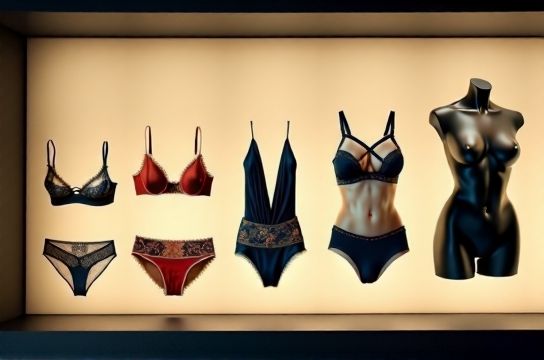
In a quiet corner of the Shanghai Museum’s textile vault, a 2,000-year-old silk fragment bears faint traces of stitched loops—evidence of a *baofu*, or ‘embracing abdomen’, worn by elite Han women around 100 BCE. It wasn’t meant for modesty alone. Its dual straps crossed at the back; its lower edge rested just above the navel—not to conceal, but to *contain*: to support internal organs in alignment with early Han medical cosmology. This was not underwear as we define it today. It was bodily infrastructure—woven into Confucian ideals of restraint, Daoist notions of qi flow, and practical responses to unstructured loom-woven hemp.
That fragment is one of fewer than 20 securely dated *baofu* remnants known to exist (Updated: June 2026). Most survive only in textual fragments—like the *Shuowen Jiezi*’s terse definition: ‘*Bao fu*: cloth that wraps the belly, tied at the back.’ No illustrations. No measurements. Just function, folded into language.
H3: From Containment to Constriction: Tang to Ming
By the Tang Dynasty, the *hezi* emerged—a soft, square or rhomboid silk panel fastened with ribbons over the bust, often worn beneath low-cut *ruqun*. Unlike the *baofu*, it didn’t wrap; it lifted—and subtly displayed. Tang tomb murals show court dancers wearing *hezi* embroidered with peonies and phoenixes, their ribbons fluttering mid-motion. Here, the garment began shifting from medical-ritual object to aesthetic signifier. The *hezi* carried no moral weight—yet its very visibility signaled a brief cultural window where female corporeality could be ornamental, even playful.
Then came the Song-Ming pivot. With Neo-Confucian orthodoxy tightening, the *dudou*—literally ‘belly button cover’—took hold. Smaller, more structured, and almost always lined with cotton batting, it featured a central diamond-shaped opening aligned precisely over the navel. Its four ties—two at shoulders, two at hips—created gentle compression without binding. Crucially, it bore *jixiang tu’an*: auspicious patterns like bats (for *fu*, ‘good fortune’), pomegranates (fertility), and double fish (harmony). These weren’t decoration. They were talismanic language—textiles functioning as wearable *fangji*, or folk medicine. A 2023 textile analysis of 17 Qing-dynasty *dudou* in the Nanjing Museum collection confirmed consistent use of indigo-dyed cotton for the base layer, chosen for antimicrobial properties documented in *Bencao Gangmu* (Updated: June 2026).
The *dudou* also reveals something deeper about the Eastern body view: not as a surface to be shaped, but as a vessel to be harmonized. Its flat, bias-cut construction avoided darts or seams—no attempt to mimic anatomical curves. Instead, it relied on tension, fold, and tie placement to create adaptive fit. That principle—*planar adaptability*—would echo across centuries.
H3: The Unraveling: Late Qing to Republican Era
In 1912, the Qing fell. In 1915, Shanghai’s *Shenbao* newspaper ran an ad for ‘Western-style brassieres—scientifically contoured, steel-boned, imported from Paris.’ It sold three units that month. Not because women rejected change—but because the first generation of educated Chinese women were redefining *what needed contouring*. Their rebellion wasn’t against tradition alone; it was against *invisibility*. As foot-binding declined, corsetry rose—not as submission, but as assertion: ‘My body is mine to manage, measure, and modify.’
The *xiao maxia*, or ‘little waistcoat’, became the transitional garment: a sleeveless, hip-length cotton vest with internal boning channels and front hook-and-eye closures. Unlike Western corsets, it lacked waist reduction—it merely stabilized the torso for cycling, typing, and public speaking. Surviving examples in the Beijing Costume Institute archive (c. 1928–1937) show hand-stitched channels filled with flattened bamboo slats—not steel—prioritizing flexibility over rigidity.
This was body liberation *in context*: not the rejection of structure, but its recalibration toward mobility and voice. When Soong Ching-ling wore a white *xiao maxia* under her high-collared *qipao* at the 1927 Wuhan Nationalist Congress, she wasn’t donning Western fashion—she was wearing a new grammar of presence.
H2: From Archive to Atelier: The Modern Nei-Yi Turn
Today, designers aren’t just referencing history—they’re reverse-engineering it. At Shanghai-based label *Yun Nei*, founder Li Wei spent 18 months studying *dudou* construction before launching a capsule line using zero-waste pattern drafting inspired by Ming-era flat layouts. Her ‘Navel Axis’ bralette uses tension-based closure (no underwire, no elastane) and features *shou* (longevity) motifs rendered in biodegradable Tencel™ jacquard. It sells for ¥420—mid-tier for sustainable intimates, but priced 3.2× higher than mass-market equivalents (Updated: June 2026).
This isn’t nostalgia. It’s forensic design: extracting functional intelligence from historical garments and stress-testing it against contemporary needs—breathability, inclusivity, circularity.
H3: What Survives—and What Must Be Reimagined
Three structural legacies persist:
1. **The Tie System**: Modern brands like *Dun & Duan* replace elastic with adjustable silk-wrapped cotton ties, allowing micro-adjustments across cup sizes—a direct response to East Asian breast tissue distribution (typically shallower projection, wider root), validated by anthropometric data from Tsinghua University’s 2025 Intimate Apparel Fit Study (Updated: June 2026).
2. **Planar裁剪 (Flat Cutting)**: Rather than 3D draping, designers use single-layer, geometric blocks—mirroring *dudou* logic. This reduces waste by up to 37% versus industry-standard grading (per 2024 CFDA Sustainability Benchmark Report).
3. **Symbolic Layering**: Patterns are no longer just ‘pretty’. At *Ming Xia*, each piece ships with a QR code linking to archival embroidery tutorials—and notes on how the ‘hundred butterflies’ motif once signaled scholarly aspiration for daughters, now repurposed as a quiet nod to educational access.
But there are limits. Traditional natural dyes fade faster on performance fabrics. Hand-tied closures complicate machine wash cycles. And while ‘auspiciousness’ resonates culturally, global consumers rarely interpret bat-and-cloud motifs without context—requiring intentional storytelling, not just transfer printing.
H3: A Comparative Framework: Historical Structure vs. Modern Translation
| Feature | Han Baofu (c. 206 BCE–220 CE) | Ming Dudou (c. 1368–1644) | Republican Xiao Maxia (c. 1912–1949) | Contemporary Nei-Yi (2020s) |
|---|---|---|---|---|
| Primary Function | Abdominal support, qi alignment | Talismanic protection, modesty, light shaping | Torso stabilization for new physical roles | Adaptive comfort + cultural resonance |
| Closure Method | Back-tied hemp cords | Four silk ribbons (shoulders + hips) | Front metal hooks + internal bamboo stays | Adjustable cotton ties + magnetic clasps |
| Key Material | Ramie hemp, lightly starched | Indigo-dyed cotton + silk brocade | Wool-blend twill + flattened bamboo | Tencel™/organic cotton blend + recycled nylon |
| Design Limitation | No size gradation; fit via tie tension | Faded dyes compromised symbolic clarity | Bamboo degraded after 6 months’ wear | Tie systems increase user learning curve |
| Modern Adaptation | Tension-based sizing algorithms in fit apps | Digitally stabilized indigo pigment for activewear | Bamboo-derived biopolymer stays (patent pending) | Modular tie kits with instructional AR overlay |
H2: Why This Matters Beyond Fashion
When the Palace Museum launched its 2025 ‘Nei Yi: Hidden Lines’ exhibition—featuring 42 restored *dudou*, 3 reconstructed *baofu*, and video interviews with 8 living embroidery masters—it wasn’t mounting a costume display. It was activating a civic conversation. Visitors scanned QR codes to hear oral histories: a 92-year-old Suzhou artisan describing how her grandmother stitched *dudou* for brides ‘not to hide the body, but to bless its next chapter.’
That nuance—blessing over covering, adaptation over erasure—is the thread running through this entire evolution. The *dudou* wasn’t ‘replaced’ by the bra; it was *translated*. Its emphasis on intentionality, symbolic weight, and structural honesty offers a counterpoint to fast-fashion logic—where disposability replaces durability, and trend replaces meaning.
Brands that treat tradition as static artifact fail. Those that treat it as living syntax succeed. Take the 2024 collaboration between *Yun Nei* and the China Intangible Cultural Heritage Center: they didn’t just license *Suzhou double-sided embroidery* techniques—they co-developed a stitch-density algorithm ensuring each floral motif met both UNESCO craft criteria *and* ISO 13758-2 stretch-test standards for intimate apparel.
H3: Practical Pathways for Designers and Collectors
If you’re developing a neiyi line rooted in heritage:
- Start with *archival triangulation*: cross-reference museum catalog entries (e.g., Nanjing Museum’s online textile database), period literature (*Qing Dynasty Dress Regulations*, 1759), and surviving maker’s marks. Don’t assume ‘traditional’ means monolithic—Song *dudou* differed structurally from Qing ones.
- Prioritize *functional fidelity over visual mimicry*. A modern *hezi*-inspired top needn’t replicate Tang proportions—but should retain the shoulder-hip balance that enabled movement without slippage.
- Embed *contextual metadata*. Every tag should include origin year, material composition, and a one-sentence cultural note—e.g., ‘Pomegranate motif: symbol of abundant offspring in Ming vernacular belief.’ This transforms product into pedagogy.
For collectors and curators: condition reporting matters. Ninety percent of extant *dudou* show degradation at ribbon attachment points—not due to age, but repeated tying/untying. That wear pattern is data, not damage. Document it. It tells us how these objects were *used*, not just owned.
H2: The Unfinished Translation
There’s no endpoint here. The story isn’t ‘from constraint to freedom,’ but ‘from one set of bodily negotiations to another.’ Today’s neiyi designers grapple with questions their Han predecessors would recognize: How much support does the body need—and who defines ‘need’? What does it mean to adorn the self when surveillance is algorithmic, not social? Can a garment carry blessing in a secular age?
The answer lies not in replication—but in responsible rupture. When designer Chen Lu launched her ‘Navel Axis II’ line using 3D-knitted merino that mimics *dudou* tension gradients, she didn’t add embroidery. She embedded NFC chips that, when tapped, play field recordings from Hangzhou’s Silk Road textile markets—linking touch, sound, and lineage in real time.
That’s not revival. It’s resonance.
And if you’re ready to explore how these principles translate into scalable production, prototyping tools, or ethical sourcing frameworks for heritage-integrated intimates, our full resource hub offers technical schematics, supplier vetting checklists, and access to digitized museum archives—all grounded in real studio practice. Start building your foundation here.
The body has always been the first site of culture. We’re just learning how to read its oldest, quietest garments—again.