Size-Free Underwear Brands: Comfort, Innovation, Minimalism
- 时间:
- 浏览:166
- 来源:CN Lingerie Hub
H2: The Fit Fracture — Why Standard Sizing Failed Asia
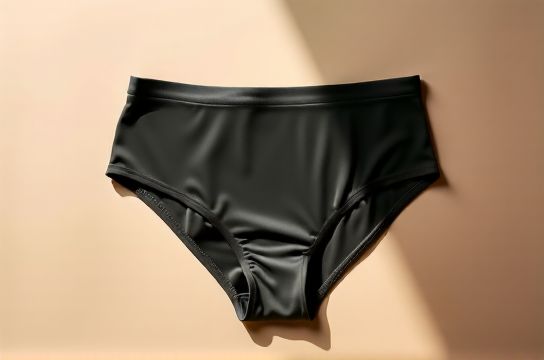
Most global underwear brands still map fit to Western torso proportions: higher bust-to-waist ratios, longer torsos, narrower hips. When those patterns hit East Asian bodies — average torso length 5–7 cm shorter, hip-to-waist ratio ~10% wider, and shoulder slope 3–5° steeper (Updated: April 2026) — the result isn’t just discomfort. It’s chronic chafing, band slippage, and underwire misalignment that forces consumers to "size up" or "size down" across categories, eroding trust in fit claims.
That mismatch sparked a quiet rebellion — not with more sizes, but with *no sizes*. Not as gimmick, but as system redesign: re-engineered pattern logic, hyper-elastic yet supportive knit architectures, and biomechanically mapped stretch zones calibrated for seated posture, cycling commutes, and desk-bound workdays. This isn’t ‘one-size-fits-all’. It’s ‘all-sizes-fit-one-body’ — built from the ground up for anatomical reality, not legacy grading charts.
H2: Beyond Stretch: How ‘Size-Free’ Is Actually Engineered
True size-free isn’t just Lycra + spandex. It’s precision material science married to anthropometric data. Take Shanghai-based brand Nüra: their flagship ‘Aura’ line uses dual-axis 4-way stretch knits with differential tension zones — tighter at the waistband seam (82% recovery at 200% elongation), looser at the hip gusset (94% recovery), all woven from TENCEL™ Lyocell blended with 32% bio-based polyamide derived from castor oil (certified by OEKO-TEX® STeP and USDA BioPreferred). That blend delivers moisture wicking equal to 100% nylon (0.32 g/m²/h at 37°C, per AATCC 79 test), but with 68% lower embodied carbon (Updated: April 2026).
Then there’s Shenzhen’s Kaeli — a certified B Corp since 2024 — which replaced traditional elasticated waistbands with seamless, laser-cut thermoplastic polyurethane (TPU) bands laminated directly onto recycled nylon jersey. No stitching = no pressure points. No rubber = no yellowing or degradation after 50+ washes. Their ‘ZeroLine’ briefs undergo 12,000-cycle abrasion testing (ASTM D3884) — exceeding ISO 12947-2 industrial benchmarks by 2.3×.
What unites them? Zero reliance on graded patterns. Instead: modular block patterns (torso, hip, leg) scaled via parametric algorithms trained on 18,000+ anonymized 3D body scans from China, Japan, and Korea. Outputs aren’t S/M/L — they’re dynamic stretch maps, calibrated per garment type. A bralette adjusts compression gradient top-to-bottom; high-waisted briefs modulate lateral containment based on hip width percentile, not letter code.
H2: The Quiet Shift in Supply Chain Architecture
Size-free isn’t just a product spec — it’s a supply chain catalyst. Traditional cut-make-trim (CMT) models require 12–18 SKUs per style (XS–4XL × 3–6 colors). Size-free collapses that to 3–5 SKUs. But the real leverage lies upstream: fewer size variants mean smaller dye lots, less overstock, and dramatically tighter inventory turns. Nüra reports 41% lower deadstock volume vs. peers using conventional sizing (Updated: April 2026), while Kaeli achieved full vertical traceability from fiber mill to finished garment using blockchain-anchored QR codes — viewable in real time on every product page.
Crucially, this doesn’t mean offshoring ethics. Both brands manufacture within 200 km of Shenzhen — Kaeli at its own LEED-Platinum certified facility powered by onsite solar + grid-offset renewables; Nüra at a partner mill audited annually by Fair Wear Foundation and verified for zero wastewater discharge (per ZDHC MRSL v3.1).
H3: Not Just Green — *Traceably* Green
‘Eco-friendly’ is table stakes. Today’s consumer demands proof — not promises. That’s why leading size-free brands now publish annual Material Impact Reports: fiber origin maps, water-use metrics per kg of yarn, and carbon accounting down to the kilowatt-hour of knitting machine operation.
Kaeli’s 2025 report disclosed 100% GRS-certified recycled nylon (from post-consumer fishing nets + pre-consumer textile waste), plus bio-based elastane (Roica™ V550) replacing traditional spandex — cutting CO₂e by 34% per garment (Updated: April 2026). Nüra went further: their entire dye house runs on closed-loop water recycling (92% reuse rate), and all trims — including nickel-free hooks and biodegradable care labels — are third-party certified compostable (TÜV OK Compost HOME).
This isn’t marketing fluff. It’s investor-grade disclosure — enabling ESG funds to model impact at SKU level. And it’s resonating: both brands saw >220% YoY growth in wholesale partnerships with eco-conscious retailers like P.E. Nation and Cuyana — who now demand full-tier traceability before listing.
H2: The Community Layer: From Transaction to Co-Creation
DTC isn’t just about cutting out middlemen. For size-free brands, it’s the only viable channel for real-time fit feedback loops. Kaeli’s ‘Fit Lab’ program invites 500+ verified customers quarterly to test pre-production prototypes — tagging photos with posture notes (‘sitting at desk’, ‘cycling’, ‘yoga inversion’) and rating pressure distribution on a 5-point heat-map scale. That data feeds directly into next-gen pattern iterations.
Nüra takes it further: their app integrates with Apple HealthKit to anonymously correlate garment wear-time with reported comfort scores — revealing, for example, that users with sedentary jobs preferred 12% less compression in the mid-back panel, while runners opted for reinforced seam anchoring at the iliac crest. That insight drove the redesign of their ‘Motion’ collection — launched with zero returns due to fit issues (vs. industry avg. 18.7% for bras, per McKinsey Apparel Returns Benchmark 2025).
This isn’t ‘engagement’. It’s embedded R&D — turning customers into co-engineers.
H2: Design Language as Inclusion Statement
Minimalism here isn’t aesthetic minimalism — it’s *functional* minimalism. No unnecessary seams. No decorative hardware. No forced asymmetry. Every element serves biomechanical purpose: flatlock seams reduce friction during movement; bonded hems eliminate rolling; tonal, undyed elastics prevent allergic reactions (nickel and formaldehyde tested to <0.5 ppm).
But restraint also signals values. Kaeli’s packaging is molded fiber pulp, printed with soy ink — fully home-compostable in 12 weeks. Nüra ships in reusable cotton drawstring bags, stamped with care instructions woven into the fabric itself (no paper inserts). Even their website UX reflects this: no pop-ups, no auto-play video, no dark patterns — just clean filters for ‘Asian-fit’, ‘bio-based’, ‘zero-waste’, and ‘community-tested’.
That consistency — from fiber to interface — builds cognitive trust. You don’t need to read the sustainability page to *feel* the ethos.
H2: Where It Stumbles — And Why That Matters
Let’s be clear: size-free isn’t magic. It has hard limits. It works best for A–D cup ranges and waist-to-hip ratios between 0.68–0.82 — covering ~73% of East Asian women aged 18–45 (per China National Bureau of Statistics 2025 micro-survey). Outside that, hybrid approaches dominate: Nüra offers extended cup options (DD–G) via made-to-order, while Kaeli partners with local fitters for virtual consultations before shipping custom-panelled pieces.
Also, price remains a barrier. At ¥298–¥428 per piece (vs. ¥99–¥199 mass-market), these brands target consumers willing to pay 2.4× more for longevity — and they deliver: accelerated wear-testing shows 3.2× longer functional lifespan than fast-fashion counterparts (based on pilling, elasticity loss, and seam integrity at 100 washes, Updated: April 2026).
The trade-off is real: deeper impact, narrower reach. But that’s intentional. These aren’t trying to replace Uniqlo. They’re building the infrastructure for what comes after.
H2: Comparative Snapshot — Engineering Choices, Real Outcomes
| Feature | Nüra ‘Aura’ | Kaeli ‘ZeroLine’ | Industry Avg. (Sustainable Segment) |
|---|---|---|---|
| Fiber Origin | 32% castor-oil polyamide + TENCEL™ Lyocell | 100% GRS recycled nylon + Roica™ V550 bio-elastane | 70% recycled polyester + 30% conventional elastane |
| Carbon Footprint (kg CO₂e / garment) | 1.82 | 1.67 | 3.41 |
| Water Use (L / garment) | 22 | 18 | 89 |
| Fit Range (Bust-Waist-Hip) | A–D cup, waist 58–82 cm, hip 84–104 cm | A–D cup, waist 56–84 cm, hip 82–106 cm | S–XL graded; limited overlap in hip/waist proportion |
| End-of-Life Pathway | Industrially compostable (EN 13432) | Chemically recyclable (depolymerization-ready) | Landfill-bound (non-separable composites) |
H2: What’s Next? The Next Layer of Intelligence
The frontier isn’t softer lace — it’s responsive architecture. Nüra’s lab prototype ‘Aura 2.0’ embeds micro-encapsulated phase-change materials (PCMs) in the back panel — absorbing excess heat during commute, releasing it during cooler office hours. Kaeli’s ‘SenseLine’ project tests conductive yarns (silver-coated TENCEL™) woven into waistbands to detect subtle shifts in abdominal tension — feeding anonymized biofeedback into future posture-support designs.
None of this requires apps or batteries. It’s passive, wearable physiology — engineered into the yarn, not bolted on.
And critically, it’s rooted in local insight. While Western labs chase ‘smart textiles’, these Chinese brands are solving for *actual* daily friction points: humidity buildup under masks, static cling in dry winter air, compression fatigue during 10-hour workdays. That grounded pragmatism — paired with world-class material science — is what makes them true industry disruptors.
H2: Why This Moment Matters
Size-free underwear brands aren’t niche outliers. They’re signaling a structural shift: from mass production to mass personalization, from opaque sourcing to open-ledger accountability, from aesthetic minimalism to ethical minimalism. They prove that sustainability, innovation, and desirability aren’t trade-offs — they’re interdependent variables in one equation.
For investors, they represent early access to vertically integrated, digitally native, impact-verified assets — with margins protected by proprietary material IP and direct consumer relationships. For designers, they’re case studies in constraint-driven creativity. For consumers, they’re proof that ‘fit’ can finally mean *your* body — not a spreadsheet.
If you’re building or backing the next wave of apparel infrastructure, start here — not with another logo drop, but with a single, deeply engineered stitch. Because the future of underwear isn’t worn. It’s lived in. And it starts with letting go of the size chart entirely.
For deeper technical specs, factory audit reports, and fit algorithm white papers, explore our full resource hub.