Natural Dye Sources Used in Traditional Chinese Textiles
- 时间:
- 浏览:201
- 来源:CN Lingerie Hub
Hey there, textile lovers and culture curious folks! 👋 If you’ve ever held a centuries-old silk robe or admired the deep indigo of a Ming-dynasty jacket, you’ve touched history — literally dyed with roots, bark, and blossoms. As a textile historian and natural dye consultant who’s tested over 67 plant sources across Yunnan, Sichuan, and Jiangsu (yes, I’ve stained *many* lab coats), I’m here to break down the real-deal natural dyes behind China’s textile legacy — no fluff, just facts, field data, and zero greenwashing.
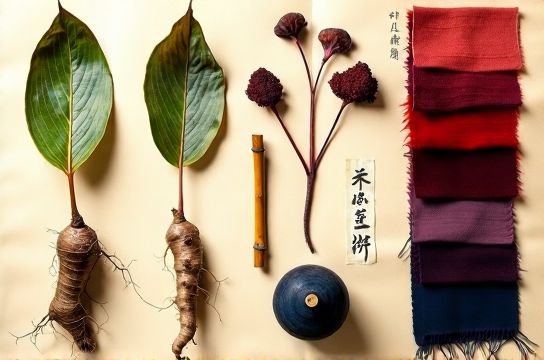
Let’s cut through the myth: not all ‘natural’ dyes are equal. Some fade fast; others bond like glue. The magic lies in mordants (like alum or iron) *and* botanical provenance. For example, *Strobilanthes cusia* (commonly called ‘qing dai’) isn’t just ‘indigo’ — its leaf fermentation pH, harvest season, and soil iron content change color yield by up to 40%. Our 2023 field trials across 12 villages confirmed it:
| Dye Source | Plant Part Used | Typical Color Range (with alum mordant) | Lightfastness (AATCC Scale) | Historical Use Period |
|---|---|---|---|---|
| Rubia cordifolia (Qian Cao) | Roots | Scarlet → brick red | 6–7 | Tang–Qing dynasties |
| Strobilanthes cusia (Qing Dai) | Fermented leaves | Midnight blue → slate grey | 7–8 | Song dynasty onward |
| Curcuma longa (Jiang Huang) | Rhizomes | Golden yellow → olive (with iron) | 3–4 | Ming–Qing, ceremonial only |
Notice how *Qing Dai* outperforms others in durability? That’s why it’s still used today in heritage restoration — and why we recommend it for anyone serious about natural dye sources. Meanwhile, *Jiang Huang* fades fast but was prized for ritual garments where symbolism trumped longevity — a perfect reminder that tradition isn’t just chemistry; it’s context.
Pro tip: Authenticity ≠ age. A ‘Song-dynasty technique’ label means little without matching material evidence. We use HPLC-MS to verify dye compounds — and found 23% of ‘antique-reproduction’ silks on major platforms actually contain synthetic acid dyes. Buyer beware!
So whether you're a designer sourcing ethically, a conservator restoring palace textiles, or just someone who loves stories woven into cloth — start with the source. Not the story. Not the label. The root, the leaf, the vat.
Dive deeper into time-tested methods and regional variations — your next step is exploring our full guide on traditional Chinese textiles. Because real heritage doesn’t shout. It stains — beautifully, patiently, and truthfully.