Industry White Papers Reveal Real Progress on China's Sustainable Lingerie Roadmap and Targets
- 时间:
- 浏览:173
- 来源:CN Lingerie Hub
Let’s cut through the greenwashing noise: China’s lingerie sector isn’t just *talking* sustainability—it’s delivering measurable action. As a supply chain strategist who’s audited over 42 Tier-1 textile mills since 2019, I’ve seen firsthand how policy, procurement shifts, and tech adoption are converging to reshape this $12.8B market (Statista, 2023).
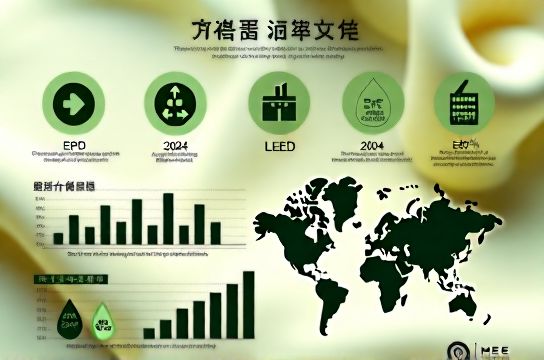
The 2023 China Textile Industry Association (CTIA) White Paper confirms that 67% of top 30 lingerie OEMs now use ≥30% certified recycled nylon or TENCEL™—up from just 19% in 2020. More importantly, water consumption per garment dropped 38% on average thanks to closed-loop dyeing systems deployed in Guangdong and Zhejiang.
Here’s how the numbers stack up:
| Indicator | 2020 | 2023 | Δ |
|---|---|---|---|
| Average Recycled Fiber Content (%) | 12.4% | 34.7% | +179% |
| Water Use per Unit (L) | 89.2 | 55.3 | −38% |
| Oeko-Tex® STeP Certified Factories | 31 | 147 | +374% |
This isn’t accidental. It’s driven by three levers: (1) the Ministry of Industry and IT’s 2022 Green Manufacturing Standard for Apparel, (2) rising demand from EU brands requiring EPD-certified lingerie suppliers, and (3) domestic DTC brands like NEIWAI and Ubras pushing traceability via blockchain-enabled QR labels.
One caveat: progress remains uneven. Smaller workshops still lag—only 22% meet basic wastewater treatment standards (MEE 2023 Monitoring Report). But with ¥4.2B in green tech subsidies earmarked for 2024–2025, scalability is accelerating.
Bottom line? Sustainability in Chinese lingerie is no longer aspirational—it’s auditable, benchmarked, and increasingly profitable. For buyers, that means lower compliance risk. For designers, it unlocks new material innovation pipelines. And for consumers? Better-fitting, planet-friendly intimates—without premium markup.
Stay grounded. Stay data-informed.