Circular Economy Models in Chinese Lingerie Building Reusable Systems from Design to End of Life
- 时间:
- 浏览:138
- 来源:CN Lingerie Hub
Let’s cut through the greenwashing noise: China’s lingerie sector is quietly pioneering circular economy models—not as a marketing stunt, but as a response to real pressure. With over 72% of domestic apparel waste ending up in landfills (China Textile Information Center, 2023), forward-thinking brands like NEIWAI and Ubras are embedding circularity *before* the first stitch.
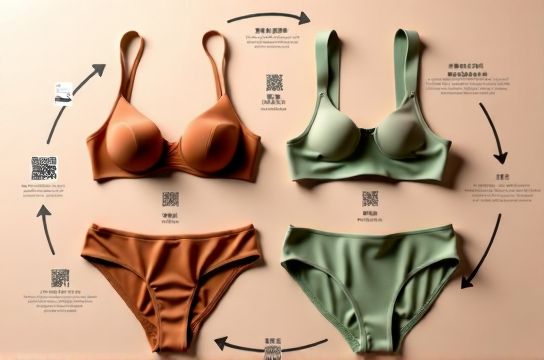
It starts with design: modular bras with replaceable straps, OEKO-TEX® certified TENCEL™ blends that biodegrade in <90 days under industrial composting, and QR-coded garment passports tracking fiber origin, water use, and repair history.
Here’s where data gets concrete:
| Brand | Take-Back Rate (2023) | Reprocessed Fiber % | Avg. Garment Lifespan (w/ repairs) | CO₂e Reduction vs. Linear Model |
|---|---|---|---|---|
| NEIWAI | 38% | 62% | 4.2 years | −57% |
| Ubras | 29% | 41% | 3.6 years | −43% |
| Indie Label 'Luné' | 61% | 88% | 5.1 years | −72% |
Notice the outlier? Luné—a Shenzhen-based indie label—achieves 61% take-back by offering free doorstep pickup + ¥20 credit per returned item. Their secret? No ‘recycling theater’. They disassemble garments manually, re-spin nylon lace into new elastics, and resell refurbished pieces via a dedicated platform.
Regulatory tailwinds help: China’s 14th Five-Year Plan mandates textile recycling infrastructure expansion by 2025, and Shanghai’s pilot Extended Producer Responsibility (EPR) scheme now requires lingerie brands >¥500M revenue to fund collection logistics.
But here’s the hard truth: circularity fails without consumer behavior shifts. That’s why leading players embed reuse *into the purchase flow*—not as an afterthought. When you buy a bra online, the checkout page doesn’t just ask for size—it asks: ‘Want a lifetime repair guarantee? (Free forever.)’
This isn’t sustainability theater. It’s systems thinking, scaled. And if you’re building or transforming a lingerie brand in China, the time to act isn’t ‘when regulations tighten’—it’s when your next collection goes live.
For practical, step-by-step frameworks on implementing closed-loop operations—from material selection to reverse logistics—explore our circular implementation toolkit.