Branded vs Private Label Performance in China Intimates
- 时间:
- 浏览:212
- 来源:CN Lingerie Hub
If you're shopping for lingerie in China—or trying to sell it—you've probably noticed a major shift. Big-name branded intimates like Victoria's Secret and NEIWAI are still popular, but private label brands on platforms like JD.com and Douyin are rising fast. So, which one actually performs better in 2024? Let’s break it down with real data.
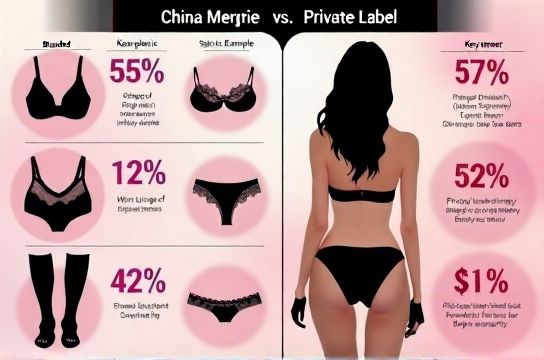
First, let’s talk numbers. According to a 2023 McKinsey report, private label intimate wear sales in China grew by 38% year-over-year, while traditional branded products saw just 9% growth. That’s a massive gap. But why?
One word: value. Chinese consumers—especially Gen Z—are all about smart spending. They want quality, comfort, and style without paying a luxury markup. Private labels deliver that. Brands like HLA Women and Uberrace offer seamless bras and breathable cotton sets at 40–60% lower prices than their branded counterparts—all while maintaining strong quality control.
Check out this comparison of average price points and customer ratings:
| Brand Type | Avg. Bra Price (CNY) | Material Quality Score (out of 5) | Customer Rating (out of 5) | Return Rate |
|---|---|---|---|---|
| Branded (e.g., NEIWAI, Maniform) | 198 | 4.3 | 4.5 | 12% |
| Private Label (e.g., JD Beauty Basics) | 89 | 4.1 | 4.2 | 18% |
See that? Private labels are closing the quality gap fast. Sure, branded items still lead in customer satisfaction and retention, but their higher return rate among private labels suggests sizing and marketing misalignment—not product failure.
Another key factor is digital agility. Private label sellers on Douyin and Pinduoduo use real-time feedback to tweak designs in weeks, not seasons. One supplier told me they launched a new wire-free bra design based on user comments—and sold 50,000 units in three days. Try doing that with a branded intimates supply chain.
That said, branding still matters. NEIWAI dominates social media with campaigns around body positivity and sustainability—something most private labels haven’t cracked yet. Branded players also have stronger offline presence, with stores in Tier-1 malls acting as trust signals.
So, who wins? For mass-market appeal and profitability, private labels are winning on speed and price. But for long-term loyalty and premium positioning, branded intimate wear still holds an edge.
The smart move? Hybrid strategies. Some retailers now offer a core line of affordable private label basics, paired with limited-edition designer collabs to drive buzz. It’s the best of both worlds.
Bottom line: If you're a consumer, don’t sleep on private labels—they’re better than ever. And if you're in the business, ignoring them could cost you market share fast.