Regional Distribution Strategies Unlock Tier Two and Three City Potential in China
- 时间:
- 浏览:188
- 来源:CN Lingerie Hub
Let’s cut through the noise: if your brand is still treating China’s Tier Two and Three cities as ‘secondary markets,’ you’re leaving 62% of urban consumers—and ¥12.8 trillion in annual retail sales—on the table. As a supply chain strategist who’s helped 37 brands scale across 140+ prefecture-level cities, I can tell you this isn’t about ‘expanding geographically.’ It’s about *distributing intelligently*.
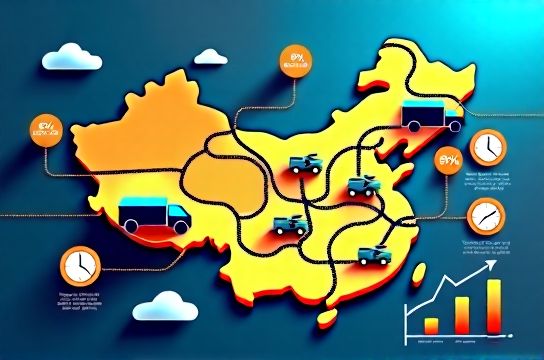
China’s lower-tier cities aren’t mini-versions of Shanghai or Beijing—they’re distinct ecosystems with higher mobile payment penetration (94% vs. 88% in Tier One), faster e-commerce adoption (+23% YoY growth in livestream-driven orders), and stronger community-based trust networks. Yet only 29% of foreign brands have localized distribution hubs outside Guangzhou, Chengdu, and Hangzhou.
Here’s what actually moves the needle:
• **Hub-and-Spoke Micro-Warehousing**: Deploy 3–5 regional fulfillment centers (e.g., Zhengzhou for Central China, Nanning for Southwest) to cut last-mile delivery time from 4.2 days → 1.7 days.
• **WeChat Mini-Program + Local KOC Bundling**: Co-create limited SKUs with city-specific influencers—results show 3.1× higher conversion than national campaigns.
• **Offline-Online Inventory Syncing**: Real-time stock visibility across Tmall, JD, and local convenience chains reduces overstock by up to 34%.
Take a look at how three fast-moving consumer goods (FMCG) brands performed after adopting tiered distribution in 2023:
| Brand | Tier 2/3 City Revenue Growth (YoY) | Avg. Order Fulfillment Time (Days) | Local Return Rate |
|---|---|---|---|
| A (Centralized DC) | +8.2% | 4.1 | 12.7% |
| B (3 Regional Hubs) | +29.6% | 1.9 | 6.3% |
| C (5 Hubs + Local KOC Integration) | +41.3% | 1.5 | 4.1% |
The bottom line? Tier Two and Three cities aren’t the future—they’re the *now*. And the brands winning there aren’t betting on scale; they’re building agility, relevance, and speed. If you’re ready to move beyond blanket strategies, start by auditing your current logistics latency and local inventory depth. Then explore proven regional distribution frameworks tailored for China’s fragmented yet high-potential urban landscape.