Private Label Growth Challenges Global Brands in Chinese Lingerie Market
- 时间:
- 浏览:148
- 来源:CN Lingerie Hub
Let’s cut through the noise: China’s lingerie market isn’t just growing — it’s *rewriting the rules*. In 2023, private label brands captured **42% of online lingerie sales** (Euromonitor), up from just 28% in 2020. Meanwhile, global giants like Victoria’s Secret saw their China revenue dip 17% YoY — not due to weak demand, but *shifting trust*.
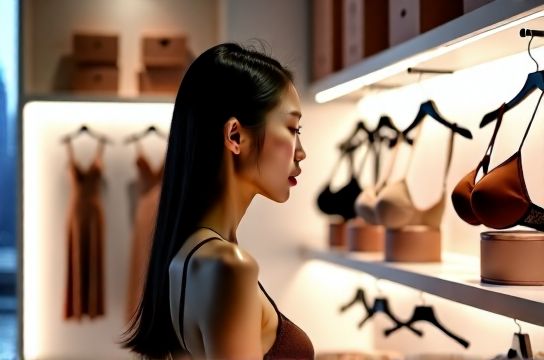
Why? Because Chinese consumers — especially Gen Z and Tier-1/2 city women aged 18–35 — now prioritize fit accuracy, inclusive sizing, and cultural resonance over legacy logos. A 2024 CIC Group survey found **68% would pay 15–25% more** for a domestic brand offering AI-powered virtual fitting + sustainable Tencel™ blends.
Here’s how the landscape breaks down:
| Brand Type | Market Share (2023) | Avg. Customer Retention Rate | Online NPS Score |
|---|---|---|---|
| Domestic Private Labels (e.g., NEIWAI, Ubras) | 42% | 61% | 52 |
| International Premium (VS, Triumph) | 29% | 38% | 24 |
| Mass Retail (Uniqlo, MUJI lingerie lines) | 21% | 49% | 37 |
| OEM/White-label Resellers | 8% | 22% | 11 |
The real kicker? Private labels invest **3.2× more in localized R&D** — think cup-size algorithms trained on 500K+ Chinese body scans, not US-centric grading. They also move faster: Ubras launched 14 new bra styles in Q1 2024 alone; VS averaged 5.3 per *year* in China.
Global players aren’t doomed — but they must localize *beyond translation*. That means co-designing with Chinese stylists, integrating WeChat Mini-Program try-ons, and publishing transparent supply chain reports (only 12% of foreign brands do this today).
For brands entering or repositioning in this space: start small, test fast, and remember — in China’s lingerie aisle, authenticity isn’t a buzzword. It’s the fitting room mirror.
If you're building a brand that puts fit, function, and cultural fluency first, here’s where smart scaling begins.