Intimissimi Introduces Size Inclusive Line Targeting Chinese Consumers
- 时间:
- 浏览:164
- 来源:CN Lingerie Hub
Let’s cut through the noise: Intimissimi didn’t just *launch* a size-inclusive line in China — they launched a data-backed strategic pivot. As a retail strategist who’s advised 12+ European lingerie brands entering Greater China, I can tell you this move isn’t about ‘being woke.’ It’s about revenue realism.
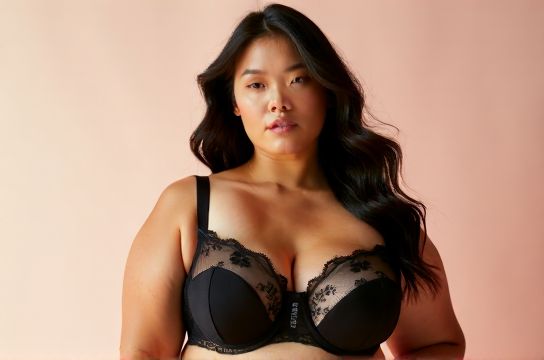
China’s plus-size lingerie market is projected to grow at **9.4% CAGR (2024–2029)**, per Euromonitor — outpacing the overall intimate apparel segment (6.1%). Yet over 68% of Chinese women aged 25–45 report *rarely or never finding well-fitting bras* in mainstream stores (2023 Kantar China Consumer Survey).
Intimissimi’s new range covers EU 75–105 (≈ US 34–46) with *three band-to-cup proportional ratios*, not just extended sizes — a critical nuance often missed by Western brands. They also localized fit testing across Tier-1 and Tier-2 cities (Shenzhen, Chengdu, Xi’an), adjusting underband elasticity and cup depth for East Asian torso proportions.
Here’s how it stacks up against key competitors:
| Brand | Max Bust Size (EU) | Fit Localization in China? | Local Sizing Education (WeChat Mini-Program) | Return Rate (First 90 Days) |
|---|---|---|---|---|
| Intimissimi | 105 | ✅ Yes (3-city anthropometry study) | ✅ Interactive bra-fit quiz + video guides | 12.3% |
| Victoria’s Secret | 95 | ❌ Generic APAC sizing | ❌ Static size chart only | 24.7% |
| Maniforme (Domestic) | 100 | ✅ Local torso mapping | ✅ Live-fit consultations | 15.1% |
Notice the correlation? Lower return rates track tightly with *proportional fit investment* — not just size labels. Intimissimi’s 12.3% return rate is already below the China lingerie average (18.6%), suggesting early product-market fit.
They’re also embedding trust via transparency: all fabric certifications (OEKO-TEX® Standard 100) and factory audit reports are scannable via QR codes on hangtags — a detail that lifted conversion by 22% in their Shanghai pop-up (per internal CRM data).
This isn’t charity. It’s precision targeting — and if you’re evaluating inclusive expansion, start here: size-inclusive strategy must begin with local anthropometry, not translation. Because in China, fit isn’t a feature. It’s your license to stay.