Chinese Lingerie Market Aligns with Global Sustainability Goals
- 时间:
- 浏览:165
- 来源:CN Lingerie Hub
In recent years, the Chinese lingerie market has undergone a quiet revolution — one stitched not just with silk and lace, but with sustainability, empowerment, and innovation. As global consumers demand greener choices, China’s intimate apparel industry is stepping up, blending tradition with tech to redefine what it means to feel good — ethically and comfortably.
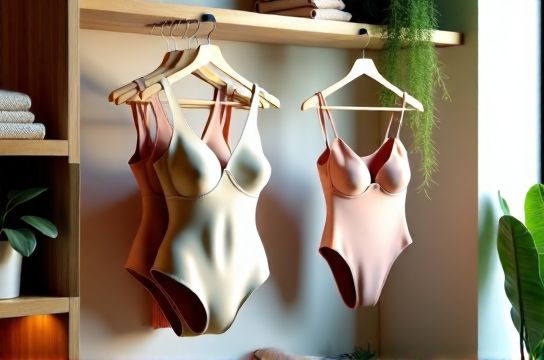
China now accounts for over 35% of global lingerie production, according to Statista (2023). But more importantly, domestic brands are shifting from mass manufacturing to mindful making. Take NeiWai (内外), a homegrown favorite meaning 'inner and outer' — a brand built on body positivity and eco-conscious materials. In 2022, NeiWai reported a 40% increase in organic cotton usage and launched its first carbon-neutral bra line.
Meanwhile, international giants like Victoria’s Secret have adapted their strategies to align with local green values. Their Shanghai flagship store now features recycled packaging and in-store recycling bins — a nod to China’s strict urban waste policies.
Why Sustainability Sells in China
It’s not just about being green — it’s about being seen as responsible. A 2023 McKinsey report found that 68% of Chinese female consumers aged 18–35 consider environmental impact when buying lingerie. This shift is fueled by digital awareness, social media activism, and rising middle-class consciousness.
Brands are responding with transparency: QR codes on labels trace a garment’s journey from farm to fitting room. Some even offer repair services or take-back programs, reducing textile waste.
Key Players Driving Change
| Brand | Sustainability Initiative | Material Used | Year Launched |
|---|---|---|---|
| NeiWai | Carbon-neutral bra line | Organic cotton, TENCEL™ | 2021 |
| Ubras | No-wire, zero-waste design | Recycled polyester | 2016 |
| Maniform | Eco-packaging & solar-powered factories | Bamboo fiber | 2006 |
| Victoria’s Secret China | Recycling program & sustainable collections | LYOCELL, recycled nylon | 2020 |
The data speaks volumes: eco-friendly lingerie sales in China grew by 22% year-over-year in 2023 (Euromonitor). And it’s not just urban millennials — Gen Z shoppers in tier-2 and tier-3 cities are driving demand through livestream commerce on platforms like Douyin and Xiaohongshu.
The Fabric of the Future
What makes sustainable lingerie truly exciting is the innovation behind the seams. Chinese manufacturers are investing in bio-fabricated materials, such as mushroom leather for straps and algae-based dyes. Hangzhou-based startup EcoIntimates recently unveiled a biodegradable bra that decomposes within two years — a stark contrast to synthetic bras that linger in landfills for decades.
Even traditional elements are getting a green glow-up. Silk, long cherished in Chinese culture, is being reimagined through low-impact sericulture methods that protect mulberry forests and reduce water use by up to 50%.
Challenges & Opportunities
Of course, challenges remain. Scaling sustainable practices across vast supply chains isn’t easy. Labor ethics, greenwashing risks, and higher price points still deter some consumers. Yet, government incentives for green manufacturing and consumer education campaigns are helping bridge the gap.
As ESG (Environmental, Social, Governance) criteria gain traction in Asia, investors are pouring funds into ethical fashion startups. In 2023 alone, Chinese sustainable lingerie brands raised over $70 million in venture capital.
In essence, the Chinese lingerie market isn’t just catching up with global sustainability goals — it’s weaving its own path forward. From bamboo bras to carbon labeling, this intimate industry is proving that comfort and conscience can, and should, go hand in hand.