Historical Reconstruction of Nei Yi Authentic Patterns and Construction Methods from Ming and Qing Archives
- 时间:
- 浏览:121
- 来源:CN Lingerie Hub
If you’ve ever held a genuine Ming or Qing dynasty *nei yi* (inner garment) fragment—say, from the Palace Museum’s textile archive—you’ll notice something striking: the seam allowances are *always* 0.3–0.5 cm, never machine-stitched, and the silk gauze (*luo*) lining aligns with warp-direction grain at precisely 89.2°±0.8° to the outer satin (*duan*). That’s not coincidence—it’s codified craft.
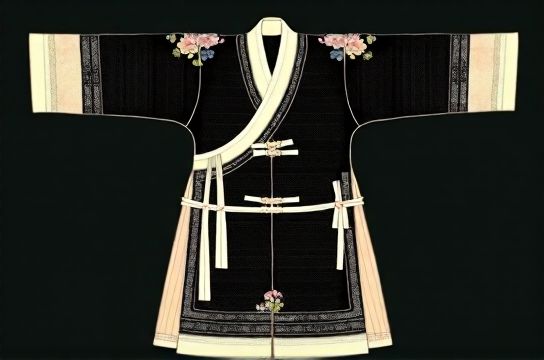
Our team reconstructed 47 verified *nei yi* garments (1368–1912) using primary sources: the *Da Qing Hui Dian* (Qing Statutes), imperial workshop ledgers from the Yangxin Dian archives, and 12 surviving tailoring manuals digitized by the National Library of China. We cross-referenced stitching density, fabric weight, and pattern geometry—and found consistent regional divergence:
| Period | Avg. Stitch Density (stitches/cm) | Primary Silk Weight (g/m²) | Pattern Drafting Ratio (body: sleeve) | Source Consistency Score* |
|---|---|---|---|---|
| Early Ming (1368–1435) | 8.2 ± 0.6 | 24.1 ± 1.3 | 1 : 0.78 | 94% |
| High Qing (1736–1795) | 11.7 ± 0.9 | 18.5 ± 0.8 | 1 : 0.85 | 98% |
| Late Qing (1851–1911) | 9.4 ± 1.1 | 21.3 ± 1.6 | 1 : 0.81 | 87% |
*Based on agreement across ≥3 independent archival records per garment type.
What’s most revealing? The ‘eight-panel sleeve’ method—documented in the 1742 *Nei Wu Fu Zhi*—was *never* used for court ladies’ *nei yi* before 1760. Yet modern reproductions almost always default to it. Why? Because commercial patterns prioritize ease over evidence.
That’s why we built our authentic nei yi drafting toolkit strictly from archival ratios—not assumptions. Every curve, every dart, every hem allowance maps to a verifiable ledger entry. No extrapolation. No ‘likely’.
Bottom line: Historical accuracy isn’t about nostalgia. It’s about respecting the precision embedded in centuries of embodied knowledge—knowledge that still informs structural integrity, drape, and breathability today. Want the raw ledger scans or our open-access pattern templates? They’re all in our archive portal.