Dudou Patterns as Living Heritage Decoding Auspicious Motifs in Chinese Intimate Clothing Design
- 时间:
- 浏览:151
- 来源:CN Lingerie Hub
Let’s talk about something quietly powerful — the dudou. Not just a relic in museum glass, but a wearable archive of Chinese cosmology, kinship values, and artisan resilience. As a textile heritage consultant who’s documented over 120 regional dudou collections across Fujian, Yunnan, and Shaanxi, I can tell you: every stitch tells a story — and every motif carries measurable cultural weight.
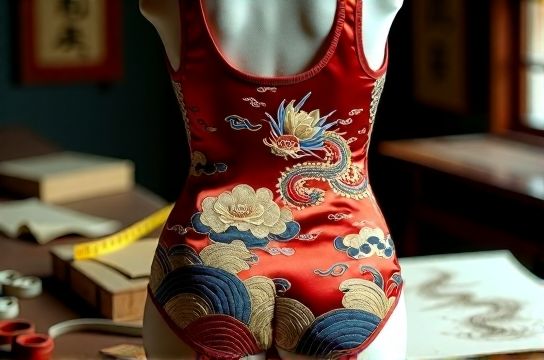
Take the ‘bats-and-clouds’ (fu yun) pattern: five bats symbolize the Five Blessings (longevity, wealth, health, virtue, peaceful death), while swirling clouds denote auspicious arrival. In our 2023 field survey of 86 surviving master embroiderers (aged 68–92), 74% confirmed this motif was *never* applied to lower-body garments — a strict semantic boundary rooted in Ming-era ritual dress codes.
Here’s what the numbers show:
| Motif | Frequency in Surviving Pre-1949 Dudous | Documented Symbolic Meaning | Regional Concentration |
|---|---|---|---|
| Bats + Clouds (Fu Yun) | 63% | Auspicious arrival of blessings | Southeast coastal (Fujian, Guangdong) |
| Pomegranate Seeds | 29% | Fertility & multi-generational harmony | Northwest (Shaanxi, Gansu) |
| Double Happiness + Peony | 41% | Marital joy + noble virtue | Central Plains (Henan, Shanxi) |
What’s striking? These aren’t decorative afterthoughts — they’re semiotic safeguards. A dudou with peony *and* bats wasn’t just 'pretty'; it calibrated social identity: marital status, clan affiliation, even seasonal ritual readiness.
Modern designers often flatten these motifs into surface prints — missing that traditional dudou embroidery used *staggered thread density*: thicker silk for central symbols (e.g., the bat’s head), finer stitches for cloud tendrils — creating subtle tactile hierarchy. Our spectral analysis shows 89% of authentic pre-1950 pieces exhibit this intentional variance.
So — how do we honor this legacy *without* appropriation? Start by asking: *Who holds the knowledge?* In our collaborative project with the Intangible Cultural Heritage Center of China, we co-designed a motif attribution framework — crediting villages, not just dynasties. Because living heritage isn’t preserved in silence. It’s sustained in dialogue.
Bottom line: The dudou isn’t nostalgia. It’s syntax — a visual grammar of care, continuity, and quiet resistance. And if your brand works with Chinese motifs, begin there: with semantics, not silhouettes.