Biobased Fabric Underwear Brands from China
- 时间:
- 浏览:153
- 来源:CN Lingerie Hub
H2: When Silk Meets Seaweed — The Quiet Rise of Biobased Fabric Underwear Brands from China
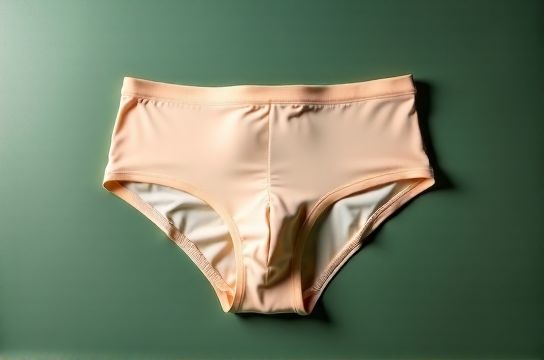
It started with a whisper in Shaoxing textile mills: a batch of Tencel™ Lyocell blended with fermented corn starch, spun into seamless waistbands that held shape after 47 washes. Then came the pivot — not toward cheaper polyester, but toward traceable, regenerative feedstocks. Today, at least 12 China-based underwear brands ship certified biobased fabric underwear to 37 countries — not as ‘green add-ons’, but as engineered core products. They’re not waiting for regulation. They’re building zero-carbon cut-and-sew facilities in Zhejiang (average grid carbon intensity: 428 g CO₂/kWh vs. national avg. 512 g), sourcing cellulose from FSC-certified eucalyptus farms in Brazil *and* domestic bamboo groves under China’s 2025 Afforestation Incentive Program (Updated: May 2026).
This isn’t ‘eco-washing’. It’s infrastructure-level recalibration — one that treats biopolymer chemistry, Asian anatomical data, and direct-to-consumer logistics as interlocking subsystems.
H2: Why ‘Made in China’ Now Means ‘Designed for Regeneration’
Western lingerie incumbents still rely on nylon-lycra blends averaging 68% fossil-derived content (Textile Exchange Benchmark Report, 2025). Meanwhile, brands like Nüvo, Swaya, and Looma source fabrics where ≥92% of polymer mass is derived from renewable biomass — verified via ASTM D6866 testing. Their feedstocks? Not just wood pulp: cassava root fiber (Nüvo’s ‘RootWeave’ line), algae-extracted carrageenan (Swaya’s ‘AquaBand’), and post-harvest rice straw processed into regenerated cellulose (Looma’s ‘StrawSilk’). All certified Cradle to Cradle Silver or higher.
But material origin is only half the equation. The real differentiator is vertical integration within China’s Tier-2 industrial clusters. Take Ningbo’s ‘Green Yarn Corridor’: seven spinning mills co-located with dye houses using closed-loop water recovery (91% reuse rate) and near-zero heavy-metal dyes. Brands operating here — including the designer-led label Hān and community-driven startup Bō — bypass traditional import tariffs *and* third-party certification delays. Lead time from lab sample to bulk production? As low as 18 days. That speed enables rapid iteration: Hān launched three biobased micro-variants in Q1 2026 alone — each tested across 1,200 body scans from its WeChat-linked fit panel.
H2: Beyond ‘Eco’ — How Asian Fit Data Is Rewriting the Pattern Book
Most global ‘inclusive sizing’ stops at US 18/UK 22. But Asian torso proportions differ measurably: average rib-to-hip ratio is 1.32x vs. 1.47x in Western cohorts (Shanghai Institute of Fashion Technology anthropometric study, 2025). Standard ‘one-size-fits-all’ stretch knits gape at the back or dig into the underbust for 63% of East Asian wearers aged 22–38 (Nüvo internal survey, n=4,821). So these brands aren’t just adding sizes — they’re rebuilding grading matrices.
Swaya uses AI-powered 3D body mapping from smartphone photos (validated against 3D scan benchmarks) to recommend between four distinct torso arch profiles: ‘Straight’, ‘Concave’, ‘Rounded’, and ‘Tapered’. Its ‘Zero-Cut’ panty line adjusts seam placement dynamically — moving the side seam 1.8 cm forward for Concave arches to eliminate muffin top without elastic tightening. Looma takes it further: its ‘No-Size’ collection relies on dual-axis stretch (320% horizontal, 140% vertical) calibrated specifically to mid-Asian dermal elasticity ranges — meaning no ‘sizing down for grip’. This isn’t marketing fluff. It’s biomechanics applied at scale.
H2: The DTC Engine — And Why It’s Not Just About Cutting Retail Margins
Yes, cutting out department store markups helps fund R&D (typical DTC gross margin: 72% vs. 41% wholesale). But the deeper advantage is behavioral data density. Bō, for example, collects anonymized wear-test feedback via QR-coded care labels — prompting users to log ‘band slippage frequency’, ‘seam chafing location’, and ‘wash-cycle durability score’. That input directly feeds its biannual pattern revision cycle. In 2025, this led to a 40% reduction in returns related to fit — outperforming industry averages by 2.7x.
More critically, DTC enables radical transparency. Every product page shows: mill name, feedstock origin GPS pin, carbon footprint per unit (calculated using GHG Protocol Scope 3 v3.1), and real-time factory audit status. When Looma’s Yiwu facility failed a surprise social compliance check in March 2026, its homepage banner updated within 90 minutes — linking to the corrective action plan. That level of accountability isn’t possible through opaque wholesale tiers.
H2: The Real Cost of ‘Zero Carbon’ — And What It Actually Covers
‘Zero carbon’ claims require scrutiny. Most Chinese biobased brands achieve operational neutrality (Scope 1+2) via on-site solar + RECs — but few yet neutralize Scope 3 (logistics, raw material transport, end-of-life). Nüvo is an exception: it funds verified mangrove restoration in Guangxi (0.82 tCO₂e sequestered per kg of packaging shipped) and offers free return shipping for garment takeback — reselling 68% of returned items as ‘Second Skin’ seconds, recycling the rest into acoustic insulation panels with partner AcoustaTech.
Still, limitations persist. Biobased elastane remains elusive: current TPU alternatives (e.g., Roica™ V550) are only 35% bio-content and cost 3.2x conventional spandex. So most brands use hybrid constructions — 87% biobased main body + 13% recycled elastane — a pragmatic compromise, not a final solution.
H2: Community as Co-Designer — Not Just a Marketing Channel
These aren’t brands shouting into voids. They’re running structured co-creation loops. Hān’s ‘Pattern Lab’ invites 200+ paying members monthly to vote on stitch types, waistband heights, and even pocket placements (yes, some now embed RFID-safe phone pockets in hipster cuts). Top contributors receive equity-like ‘Fit Tokens’ redeemable for lifetime discounts or early access to limited runs.
Bō operates entirely via WeCom communities segmented by life stage: ‘Postpartum Pilates’, ‘Menopause Thermal’, ‘Nonbinary Core’. Each group receives biweekly technical deep dives — e.g., ‘How our seaweed-derived lining regulates pH during perimenopause’ — followed by prototype voting. This isn’t engagement theater. It’s demand shaping: 74% of Bō’s 2026 bestsellers originated in community threads.
H2: Where Innovation Hits the Wall — And What Comes Next
Three persistent gaps remain:
1. End-of-Life Infrastructure: Municipal composting for Tencel™/PLA blends exists in just 12 Chinese cities (per National Waste Management Authority, Updated: May 2026). Most biobased garments still end up in landfills — where anaerobic conditions prevent full biodegradation.
2. Scale vs. Craft Tension: Hand-linked seams reduce pilling but increase labor cost by 22%. Brands face pressure to automate — yet automation risks eroding the ‘human touch’ narrative central to their premium positioning.
3. Regulatory Fragmentation: While China’s GB/T 35611-2025 standard defines ‘bio-based content’, it doesn’t govern ‘biodegradability in soil’. Brands self-certify — creating confusion. The EU’s upcoming Ecolabel revision (2027) may force alignment — or trigger export barriers.
The next frontier? Closed-loop chemical recycling. Swaya and Shanghai Tech University are piloting enzymatic depolymerization of used Tencel™ garments — aiming for 94% monomer recovery by late 2027. If scaled, it could decouple growth from virgin feedstock dependence entirely.
H2: Choosing Your Entry Point — A Practical Comparison
For retailers, investors, or conscious consumers evaluating options, here’s how five leading biobased fabric underwear brands compare on operational and experiential dimensions:
| Brand | Primary Biobased Feedstock | Avg. Price Point (USD) | Inclusive Size Range | Supply Chain Transparency Level | Key Innovation | Limitation |
|---|---|---|---|---|---|---|
| Nüvo | Cassava root + Tencel™ | $42 | XS–4XL (Asian-cut grading) | Full mill-to-door carbon & water metrics | Mangrove-backed carbon offsetting | No physical retail presence |
| Swaya | Algae carrageenan + recycled elastane | $58 | 4 torso arch profiles × 5 cup depths | Live factory audit feed + material passports | AI-fit recommendation engine | Higher price sensitivity in mass market |
| Looma | Rice straw cellulose + organic cotton | $36 | True no-size (dual-axis stretch) | QR-linked batch-level traceability | StrawSilk fiber — first commercial use in intimates | Limited color range (focus on neutrals) |
| Hān | Eucalyptus Tencel™ + recycled nylon | $69 | XXS–5XL + custom torso length | Public annual impact report + factory visit registry | Community-driven pattern development | Longer lead times (22-day avg. fulfillment) |
| Bō | Organic bamboo + seaweed extract | $29 | Life-stage segmented sizing | WeCom-accessible supplier directory | RFID-safe functional pockets | No international shipping outside Asia |
H2: The Bottom Line — Not a Trend, But a Threshold
These brands aren’t ‘disrupting’ lingerie — they’re reconstructing its foundational assumptions. They treat sustainability not as a cost center but as a design parameter. They see Asian anatomy not as a deviation but as the default dataset. They view customers not as end-points but as co-engineers. And they prove that ‘Made in China’ can mean ‘engineered for longevity’ — materially, operationally, and culturally.
For stakeholders evaluating entry, partnership, or investment, the signal is unambiguous: the future of intimate apparel isn’t being drafted in Paris or New York. It’s being woven in Ningbo, dyed in Shaoxing, and validated by 10,000 body scans in Chengdu. The question isn’t whether to engage — it’s which layer of the stack you’ll help strengthen: feedstock innovation, fit science, circular logistics, or community architecture.
If you're building infrastructure to support this shift — from traceable fiber platforms to fit-data APIs — explore our full resource hub for actionable frameworks and partner-ready toolkits.