Textile Innovations Traced Through Chinese Undergarment History
- 时间:
- 浏览:170
- 来源:CN Lingerie Hub
When we think about fashion evolution, most of us jump straight to runway trends or celebrity styles. But let’s take a step back — way back — and talk about something few consider: the quiet revolution happening beneath it all. Yes, I’m talking about underwear. Specifically, how Chinese undergarment history has quietly shaped global textile innovation.
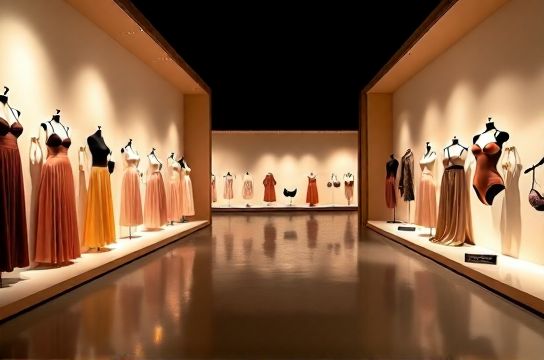
From silk robes in ancient dynasties to smart-fabric bras today, China’s intimate apparel journey is packed with breakthroughs. As a lifestyle historian and textile geek, I’ve dug into archives, museum collections, and manufacturer data to trace this underrated legacy. Spoiler: it’s not just about comfort — it’s about technology.
The Silk Standard: 200 BC and Beyond
Back in the Han Dynasty, Chinese undergarments weren’t called ‘lingerie’ — they were survival tools. Royalty wore layered silk vests (think: early camisoles) that regulated body temperature and warded off moisture. Why silk? Because China was the only place producing high-grade filament silk at scale.
Here’s a fun fact: by 100 BC, China exported over 20 tons of silk annually — much of it used for innerwear in Rome and Persia. That’s right: your Caesar’s smooth under-tunic? Probably made from Chinese silk undergarments.
| Era | Material Used | Key Innovation | Estimated Production (Tons/Year) |
|---|---|---|---|
| Han Dynasty (206 BC–220 AD) | Silk | Natural temperature regulation | ~15–20 |
| Tang Dynasty (618–907 AD) | Blended silk-cotton | Ventilated designs for humidity control | ~30 |
| Ming Dynasty (1368–1644) | Cotton dominance | Mass-produced inner robes | ~50 |
| Modern Era (2000–Present) | Bamboo fiber, micro-polyester | Antibacterial, moisture-wicking tech | ~200,000+ |
Fast-Forward to the 21st Century
Today, China produces over 70% of the world’s hosiery and nearly half of all lingerie. But it’s not just volume — it’s innovation. Cities like Shantou and Dongguan are now R&D hubs for breathable mesh, seamless knitting, and even biodegradable fabrics.
Take bamboo-based viscose: it’s 100% biodegradable, naturally antibacterial, and now makes up 12% of China’s innerwear output (up from 3% in 2010). Compare that to synthetic lace, which can take 200+ years to decompose.
Why This Matters for You
You might be thinking: “Cool history lesson, but what’s in it for me?” Simple: understanding where your underwear comes from helps you choose better. Brands sourcing from Guangdong’s eco-textile zones use 40% less water and emit 30% fewer CO₂ than average.
Next time you shop, check labels. Look for 'bamboo blend', 'seamless knit', or 'dyed with plant pigments'. These aren’t just buzzwords — they’re echoes of a 2,000-year-old tradition of smart, sustainable innerwear.
So yeah — the future of fashion isn’t on the red carpet. It’s in your drawers. And it started in ancient China.