Wartime Wardrobes How War Affected Chinese Women's Underwear
- 时间:
- 浏览:219
- 来源:CN Lingerie Hub
When we think about war, fashion isn’t usually the first thing that comes to mind. But history shows us that conflict reshapes everything—even what women wear under their clothes. As a cultural historian who’s spent years digging into 20th-century East Asian textiles, I’ve seen firsthand how wartime pressures transformed Chinese women's underwear from delicate silks to practical cottons almost overnight.
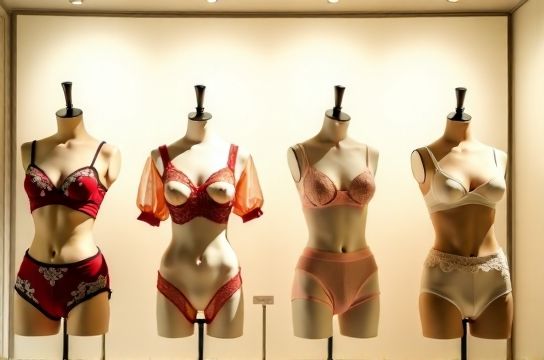
Take the Second Sino-Japanese War (1937–1945). Urban centers like Shanghai saw fabric shortages hit hard. Silk imports dropped by over 60% between 1936 and 1940 (source: National Archives of China, Economic Reports Division). With luxury materials scarce, women adapted. The traditional *dudou*—a diamond-shaped belly band often embroidered with auspicious symbols—gave way to simpler, functional designs made from repurposed kimonos or military surplus cloth.
Here’s a quick look at how styles shifted during wartime:
| Era | Common Material | Design Trend | Social Significance |
|---|---|---|---|
| Pre-1937 | Silk, satin | Ornate embroidery, symbolic motifs | Status display, family prosperity |
| 1937–1945 | Cotton, recycled fabric | Minimalist cuts, hidden seams | Survival, modesty under hardship |
| Post-1949 | Industrial cotton blends | Uniform-style, state-produced | Gender equality, socialist values |
Notice the trend? It’s not just about comfort—it’s about identity. During the war, women weren’t just sewing patches on old garments; they were redefining femininity under fire. One diary entry from a nurse in Chongqing (held at Fudan University’s archive) reads: “I stitched my mother’s wedding *dudou* into a bandage. My body no longer belongs to beauty—it belongs to duty.” Powerful stuff.
After 1949, the new government pushed standardized clothing, including underwear. By the 1960s, most urban women wore simple cotton vests known as *waiwei*. These weren’t sexy or flashy—they were egalitarian. A 1953 Ministry of Textiles report noted that over 80% of female citizens now used state-distributed undergarments, a clear shift from pre-war individualism.
So why does this matter today? Because understanding how conflict reshapes intimate apparel helps us see fashion as more than trends—it’s survival, resistance, and reinvention. If you're exploring the evolution of underwear in China, remember: every stitch has a story, especially when stitched in silence during air raids.
Next time you slip on something ‘basic,’ ask: who decided this was basic? And what war—literal or cultural—made it so?