Beauty Standards and Lingerie in Contemporary China
- 时间:
- 浏览:153
- 来源:CN Lingerie Hub
In today’s fast-evolving China, beauty standards are no longer carved in stone—they're being rewritten daily, especially in the intimate apparel aisle. Gone are the days when lingerie was purely functional or hidden under layers of modesty. Now, it's a bold statement of self-expression, body confidence, and cultural shift.
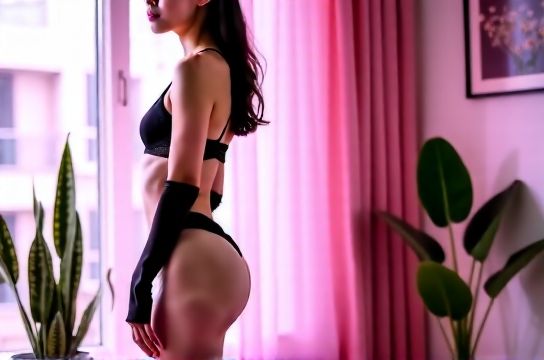
Chinese women, particularly Gen Z and millennials, are redefining what beauty means. According to a 2023 report by McKinsey China Consumer Report, over 68% of urban Chinese women aged 18–35 now prioritize comfort and personal style over traditional slim-ideal silhouettes. This seismic shift is reflected in the booming lingerie market—valued at $12.7 billion in 2023, projected to hit $18.4 billion by 2027 (Statista).
Brands like NEIWAI (内外) and Ubras are leading the charge. NEIWAI’s slogan—‘No Body is Abnormal’—resonates across social media, challenging long-held ideals of porcelain skin, petite frames, and ‘perfect’ proportions. Their 2022 campaign featured real women of diverse body types, ages, and skin tones, racking up over 50 million views on Weibo and Douyin.
Let’s break down how beauty norms and lingerie intersect in modern China:
The New Beauty Blueprint
Traditional Chinese beauty ideals emphasized paleness, delicacy, and restraint. Today? Think strength, authenticity, and soft power. A 2024 survey by Alibaba’s Tmall found that 74% of lingerie buyers prefer seamless, breathable fabrics in neutral tones—prioritizing wellness over wire and padding.
| Year | Market Size (USD Billion) | Key Trend |
|---|---|---|
| 2020 | 9.1 | Rise of comfort-focused brands |
| 2022 | 11.3 | Inclusivity in marketing |
| 2023 | 12.7 | Body positivity & sustainability |
| 2027 (proj.) | 18.4 | Tech-integrated intimate wear |
But it’s not just about size or fabric. It’s mindset. The word ‘beauty’ is being decoupled from conformity. On Xiaohongshu (China’s Instagram), hashtags like #MyBodyMyRules and #LingerieWithoutEditing have millions of posts. Real stretch marks, asymmetrical breasts, postpartum bodies—all celebrated.
Lingerie as Liberation
For decades, Western lingerie brands like Victoria’s Secret dominated with fantasy, feathers, and ‘Angels.’ But their model-centric, one-size-fits-all approach flopped in China. When Victoria’s Secret closed 17 stores in 2021, analysts pointed to cultural misalignment: too much glam, not enough relatability.
In contrast, homegrown brands speak the language of empowerment. Ubras launched its ‘No Push-Up Challenge,’ encouraging women to go braless if they choose—and sales jumped 30% that quarter. NEIWAI partnered with psychologists to host body image workshops, blending fashion with mental wellness.
This isn’t just commerce; it’s culture. As one Shanghai-based blogger put it: “We’re not buying bras—we’re buying permission to exist as we are.”
What’s Next?
The future is inclusive, tech-savvy, and unapologetically local. Smart bras with posture sensors, eco-friendly materials like bamboo fiber, and AI-driven fit recommendations are gaining traction. Pinduoduo reports a 200% YoY increase in searches for ‘sustainable lingerie’ in 2023.
Yet challenges remain. Tier 3 and 4 cities still lean conservative, and older generations may view bold styles as ‘immodest.’ But change is brewing—from campuses to livestreams, young Chinese women are saying: beauty isn’t borrowed. It’s built.