Urbanization and Private Life in Chinese Cities
- 时间:
- 浏览:278
- 来源:CN Lingerie Hub
If you’re trying to understand how urbanization is reshaping private life in Chinese cities, you’re not alone. As someone who’s been tracking urban development trends across Asia for over a decade, I’ve seen firsthand how rapid city growth is redefining what it means to live — and live privately — in places like Shanghai, Shenzhen, and Chengdu.
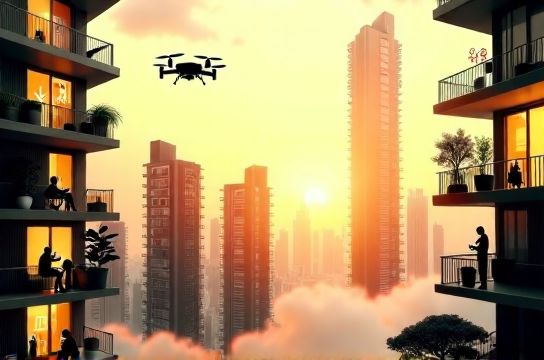
China’s urban population now exceeds 900 million, making up nearly 65% of the total population (World Bank, 2023). That’s an increase of over 300 million people in just 20 years. But here’s the real question: with so many people packed into high-rises and smart communities, where does personal space go?
Let’s break it down with some hard data.
The Space Crunch: Urban Density vs. Living Comfort
As cities expand vertically, average living space per person has dropped — especially in Tier-1 cities. Check out this snapshot:
| City | Avg. Apartment Size (sqm) | Population Density (per km²) | Median Home Price (USD/sqm) |
|---|---|---|---|
| Shanghai | 78 | 3,900 | 8,200 |
| Beijing | 85 | 1,300 | 7,600 |
| Shenzhen | 65 | 7,200 | 9,100 |
| Chengdu | 95 | 1,400 | 3,400 |
What jumps out? Shenzhen — despite being a tech powerhouse — offers the smallest living spaces at sky-high prices. Meanwhile, urbanization in Chengdu shows a more balanced approach, with larger homes and lower density.
Privacy Isn’t Just About Square Meters
It’s not only physical space shrinking. Digital surveillance, community apps, and mandatory resident registration systems mean even your “private” moments might be logged. In many new smart housing complexes, facial recognition gates track when you come and go. Some buildings even use AI to detect “suspicious behavior” — like loitering or receiving too many visitors.
One 2022 Tsinghua University study found that 68% of urban residents felt their personal privacy had decreased over the past five years — not because of neighbors, but because of technology embedded in their homes and neighborhoods.
How People Are Adapting
So are city dwellers giving up on privacy? Not quite. Many are getting creative:
- Micro-private zones: Using room dividers, soundproof pods, and balcony retreats to carve out personal space.
- Digital detox corners: Homes increasingly feature phone-free zones, often promoted by interior designers in Chinese urban lifestyle magazines.
- Moving outward: Suburbs of cities like Suzhou and Wuxi are seeing a boom as people trade commute time for breathing room.
The bottom line? Urbanization in Chinese cities isn’t slowing down — but neither is the demand for personal space. The future may lie in smarter design, stronger data privacy laws, and a cultural shift toward valuing mental well-being over pure convenience.
If you're planning to live in or study China’s urban centers, don’t just look at the skyline. Look at the living rooms — that’s where the real story unfolds.