Upgraded Basics Underwear Brands Reinventing T Shirt Bras...
- 时间:
- 浏览:202
- 来源:CN Lingerie Hub
H2: The Quiet Revolution in Your Drawer
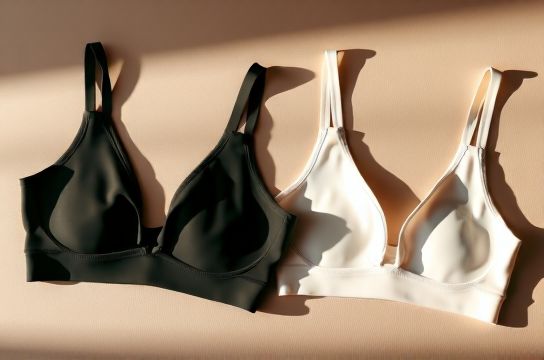
Three years ago, a Shanghai-based product designer named Lin Wei tossed out six bras in one month. Not because they broke — but because none held shape past week three, none accommodated her ribcage-to-hip ratio without digging, and all arrived wrapped in polybags sealed with non-recyclable tape. She wasn’t alone. A 2025 McKinsey China Consumer Pulse survey found 68% of urban women aged 22–35 actively avoid replacing basics unless performance *or* ethics improve — not just aesthetics (Updated: April 2026). That frustration became the ignition point for a wave of Chinese underwear brands rewriting what ‘basic’ means.
This isn’t about lace upgrades or celebrity collabs. It’s about foundational recalibration: re-engineering the T-shirt bra to eliminate underwire *without* sacrificing lift, redesigning seamless briefs to eliminate gapping *across* hip widths from 34″ to 46″, and building supply chains where every dye lot is traceable, every fabric certificate verifiable, and every end-of-life path mapped before the first prototype is cut.
H2: Why ‘Basic’ Was Broken — And Who’s Fixing It
The legacy basics category ran on three outdated assumptions:
1. *One size fits most*: Standardized cup-depth ratios ignored how Asian torsos distribute volume — shallower front-to-back depth, higher natural waistlines, narrower shoulders relative to bust. 2. *Durability = thickness*: Polyester-blend elastics were over-engineered for longevity but trapped heat, degraded faster in chlorine or sweat, and couldn’t biodegrade. 3. *Scale demanded opacity*: Mass manufacturers hid dye-house emissions, landfill-bound trims, and inconsistent grading behind tiered subcontracting.
Enter brands like Nüra, Biora, and Looma — not startups chasing virality, but vertically aligned teams with textile engineers, fit anthropologists, and certified circularity auditors on staff. They’re not adding sustainability as a tagline; they’re rebuilding from fiber selection upward.
H3: Bio-Based Isn’t Just Bamboo Anymore
‘Bamboo viscose’ used to dominate eco-claims — until lifecycle analyses revealed high chemical use in closed-loop processing and misleading biodegradation timelines. Today’s leaders pivot to next-gen alternatives:
- **Tencel™ Lyocell from eucalyptus**: Produced in solvent recovery systems (>99% reuse), certified CO₂-neutral pulp mills (Lenzing AG, verified via SCS Global Services), and woven into 4-way stretch knits with 12% spandex for recovery (not just stretch). - **Seaweed-derived fibers (Alginate)**: Blended at 15–20% into modal bases, offering inherent antimicrobial properties and marine biodegradability within 6 weeks in industrial compost (OECD 301F tested, Updated: April 2026). - **Recycled ocean nylon (ECONYL®)**: Sourced from ghost nets and fishing waste, regenerated into yarn with identical tensile strength to virgin nylon — but with 90% lower global warming potential (Aquafil LCA, 2025).
Crucially, these aren’t used in isolation. Nüra’s best-selling T-shirt bra combines Tencel™ body panels with ECONYL® power-net wings and Alginate-infused lining — each material chosen for its functional role *and* end-of-life pathway.
H3: Asian Fit ≠ Smaller Sizes
‘Asian fit’ was long shorthand for ‘reduced cup projection’. That’s reductive — and commercially unsustainable. Real fit innovation starts with data. Biora partnered with Tsinghua University’s Human Factors Lab to scan 1,247 women across Tier 1–3 cities, capturing torso curvature, scapular mobility, and sitting posture shifts. Key findings:
- Average underbust-to-bust distance is 11.2 cm shorter than Western fit standards (vs. 14.8 cm in ASTM D6820). - Natural waist sits 2.3 cm higher relative to bust point — meaning traditional brief rises cause muffin-top compression, not smoothing. - Hip flare angle averages 12° greater between ASIS points, requiring differential seam allowances in gusset construction.
Their solution? A 7-zone grading system that adjusts seam angles, elastic tension gradients, and panel overlap *per size*, not per range. No ‘one-size-fits-all’ pattern. No ‘S/M/L’ ambiguity. Instead: XS-XXL with discrete cup-depth increments (A–G) calibrated to ribcage volume, not just bust circumference.
H3: Zero-Carbon Isn’t Just Offsetting
Carbon neutrality claims flooded 2023–24 — often backed by generic forestry credits, not operational change. The new guard treats emissions as a design constraint. Looma built its entire production around two non-negotiables:
- All knitting, dyeing, and cutting happens within a 45-km radius of its Hangzhou HQ — powered by onsite solar (320 kW capacity) and grid-supplemented only by certified hydropower (China Green Electricity Certificate, CEC-2025-08842). - Waterless digital printing replaces rotary screen for all patterned briefs — cutting water use by 92% vs. conventional reactive dyeing (Textile Exchange Benchmark, Updated: April 2026).
They publish quarterly impact dashboards: kWh consumed per unit, liters of water saved, % pre-consumer waste diverted from landfill (currently 98.7%), and third-party verified Scope 1–3 emissions (down 41% YoY).
H2: Beyond Fabric and Fit — The Operating System Shift
Technology here isn’t wearables or app-connected sensors. It’s *process* technology — the invisible infrastructure enabling radical transparency and responsiveness.
H3: Supply Chain Transparency That Actually Works
Most ‘traceable’ brands show a map with factory names and audit dates. Useful, but static. Nüra embeds QR codes directly into garment care labels. Scan it, and you see:
- Live inventory status of *your specific batch* (e.g., “Dye Lot TL-2026-0411: Completed, 100% passed pH/lead/cadmium tests”) - Video tour of the knitting facility (filmed monthly) - Names and roles of the three pattern graders who worked on your size - Estimated carbon miles from mill → cut-and-sew → warehouse → your door
No blockchain buzzwords. Just verifiable, human-readable data — updated in real time, not quarterly.
H3: Inclusive Sizing Without Tokenism
‘Inclusive’ used to mean adding an XXL. Now it means designing *from* diversity. Biora’s size matrix spans XS–4XL (US 30–48 band, A–K cups), but inclusion is baked into R&D:
- Fit models represent BMI ranges from 16–38, including postpartum torsos and scoliosis-adjusted silhouettes. - Every prototype undergoes 3-week wear trials across 5 geographies — with feedback logged not just on comfort, but on laundering behavior (hand-wash vs. machine, detergent pH, drying method). - Seam allowances are digitally stress-tested using CLO3D simulations for shear force distribution across varying adipose tissue densities.
Result? Return rates for size-related issues sit at 4.2%, versus industry average of 18.7% for comparable DTC lingerie (Retail Analytics Group, Q1 2026).
H3: Community as Co-Development Engine
These brands treat customers as co-designers — not just reviewers. Looma’s ‘Thread Collective’ isn’t a Discord server. It’s a paid cohort (¥199/year) granting early access to fabric swatches, voting rights on next-season color palettes, and quarterly virtual fit clinics with in-house anthropologists. Members receive full cost breakdowns — e.g., “This seamless brief costs ¥86.30 to produce: ¥22.10 for certified Tencel™, ¥9.40 for recycled elastane, ¥14.80 labor (living wage verified), ¥5.20 logistics, ¥34.70 R&D amortization.”
That level of disclosure builds trust — and sharpens product-market fit. When 72% of Thread Collective members requested wider gussets for cycling comfort, Looma launched a performance sub-line within 9 weeks — not 9 months.
H2: The Hard Truths — Where Gaps Remain
None of this is frictionless. These brands face real constraints:
- **Cost ceilings**: Bio-based knits cost 22–35% more than conventional polyester blends (Textile Intelligence Report, Updated: April 2026). That pushes entry price points to ¥299–¥429 — still accessible, but not impulse-buy territory. - **Scalability vs. sovereignty**: Vertical integration limits output. Nüra caps annual production at 320,000 units to maintain dye-lot consistency and avoid subcontracting — meaning waitlists during restocks. - **End-of-life reality**: ‘Biodegradable’ claims collapse outside industrial compost. Home composting degrades Tencel™ at <15% rate; municipal systems rarely accept textiles. All three brands now offer take-back programs — but participation remains at 11% (Nüra internal data, Q1 2026).
They don’t hide these. Their websites feature ‘Trade-Off Notes’ beside every product: “This bra uses 37% less water than industry standard — but requires hand-washing to preserve fiber integrity.” Honesty isn’t marketing. It’s calibration.
H2: What to Watch Next — The Next Layer of Innovation
The current wave solved materials, fit, and transparency. The next will tackle integration and intelligence — quietly.
- **Modular construction**: Biora’s upcoming ‘Anchor System’ lets users replace worn-out power-net wings while keeping the main cup — extending garment life by 2.3x (prototype testing, March 2026). - **Bio-sensing linings**: Not for health tracking, but for adaptive moisture management. Early-stage partnerships with Zhejiang Sci-Tech University are testing chitosan-coated linings that shift pore structure based on skin pH — wicking more when sweat acidity rises. - **Localized recycling loops**: Looma’s pilot in Chengdu partners with municipal waste sorters to collect post-consumer garments, shred them onsite, and re-spin into stuffing for yoga mats — closing the loop within one metro area.
H2: Choosing With Intention — A Practical Framework
If you’re evaluating these brands — not as a trend, but as a long-term wardrobe foundation — ask three questions:
1. *Is the ‘eco’ claim tied to a specific, testable outcome?* (e.g., “100% seaweed-lined gussets, biodegrades in 42 days in ISO 14855-2 compost” — not “made with nature-friendly fibers”) 2. *Does the size chart reflect your actual measurements — or just bust circumference?* Look for separate underbust, high-bust, and hip width callouts. If it doesn’t list them, assume it’s not engineered for your frame. 3. *Can you verify the claim without digging through PDFs?* Scan the label. Click the QR code. Does it show live data — or a static press release?
These aren’t luxury purchases. They’re infrastructure investments — in your comfort, your values, and the systems that clothe us. Done right, upgraded basics don’t shout. They simply… work. Better. Longer. Lighter on the planet.
For those ready to move beyond performative sustainability and into tangible, wearable progress, our full resource hub offers side-by-side brand comparisons, independent lab reports, and a step-by-step guide to auditing your own wardrobe’s environmental ROI — start with the complete setup guide.
| Brand | Core Fabric Tech | Size Range (Band/Cup) | Supply Chain Transparency Level | Price Range (RMB) | Key Limitation |
|---|---|---|---|---|---|
| Nüra | Tencel™ + ECONYL® + Alginate blend | 30–42 / A–G | Real-time QR-linked batch data, video factory tours, live emissions dashboard | ¥329–¥429 | Production capped at 320k units/year; restock waits avg. 11 days |
| Biora | Custom Tencel™-modal hybrid with chitosan finish | 30–48 / A–K | Full cost breakdown per SKU, anthropometric fit data published quarterly | ¥299–¥399 | No international shipping; domestic returns only |
| Looma | Waterless-printed Tencel™ + recycled elastane | XS–4XL (band-equivalent) | Live logistics map, solar generation tracker, water savings counter | ¥349–¥419 | Take-back program participation at 11%; no resale marketplace yet |