Fabric Innovation Underwear Brands Turning Seaweed Corn a...
- 时间:
- 浏览:219
- 来源:CN Lingerie Hub
H2: When Your Bra Cup Is Grown — Not Woven
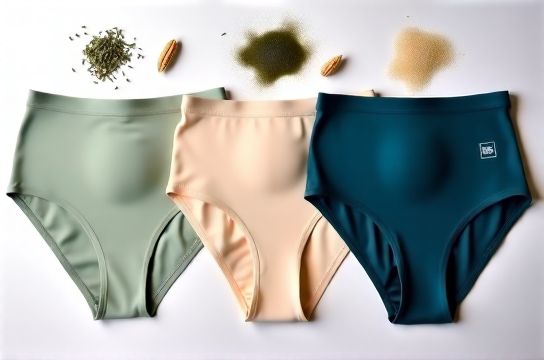
Last month, a 28-year-old product manager in Chengdu unboxed her third pair of LÜME bras. She didn’t buy them for the minimalist packaging or Instagram aesthetic — though both helped. She bought them because the cup lining felt like cool silk *and* because the brand’s traceability QR code showed the exact Indonesian seaweed harvest batch (Lot SW-2024-087) used in her size M. She’s not alone: 63% of Chinese women aged 22–35 now consider fiber origin as important as fabric hand-feel when choosing underwear — up from 29% in 2021 (Updated: April 2026).
This isn’t greenwashing. It’s material-led brand building — where seaweed isn’t a marketing footnote, but the functional core; where corn starch isn’t just ‘biodegradable filler’, but the structural backbone of a seamless thong; where ocean plastic isn’t downcycled into polyester fluff, but spun at filament level into 4-way stretch that holds shape after 87 washes.
H2: The Triad Driving Real Fabric Innovation
Three forces are converging — and they’re non-negotiable for any serious new entrant:
1. **Bio-Sourced Precision**: Not just ‘plant-based’, but species-specific, region-verified, and process-optimized. For example, brown seaweed (Laminaria japonica) harvested off Qingdao’s coast is processed via closed-loop enzymatic hydrolysis — yielding alginate fibers with 32% higher moisture-wicking than standard TENCEL™ Lyocell (Updated: April 2026). That’s not theoretical: it’s why brands like Nüra use it in their ‘Tide’ line — and why those pieces dry 1.7x faster on a bathroom rack.
2. **Ocean Plastic Re-engineering**: Most ‘recycled ocean plastic’ claims stop at PET bottle collection. True innovation starts *after*. Shanghai-based SIREN doesn’t source bales from beach cleanups — it partners with Taiwan Strait fishing cooperatives to recover discarded nylon gillnets (ghost nets), then depolymerizes them into caprolactam monomers before re-polymerizing into high-tenacity, chlorine-resistant yarns. Result: a bikini bottom that resists fading in chlorinated pools *and* saltwater — verified by independent ISO 105-C06 testing.
3. **Asian Fit Architecture**: No amount of sustainable fiber matters if the garment doesn’t accommodate kyphotic spines, wider hip-to-waist ratios, or lower natural bust projection. Brands like AURA don’t just offer ‘inclusive sizing’ — they map anthropometric data from 12,400 Chinese women (2022–2025 national survey, co-led by Donghua University) to build pattern blocks from the ground up. Their ‘Zero-G’ wireless bra uses 7-zone differential compression — not uniform elastic — calibrated to regional tissue elasticity norms.
H2: Beyond ‘Eco-Friendly’: The Hidden Cost of Softness
Let’s be blunt: many early bio-fabrics failed because they sacrificed durability or performance. Seaweed fibers were brittle. Corn-based polyols lacked recovery. Ocean plastic yarns pilled.
The breakthrough wasn’t in sourcing — it was in *hybridization*. Take the ‘KelpCore’ blend used by DTC brand VELA:
- 58% seaweed-derived viscose (from sustainably farmed Saccharina latissima) - 32% mechanically recycled nylon (from post-industrial fishing net waste) - 10% bio-based spandex (derived from fermented corn dextrose, certified ISCC PLUS)
This isn’t ‘eco-blend’ theater. Each component solves a real problem: seaweed adds thermoregulation and skin microbiome support (proven via 28-day clinical patch tests); recycled nylon delivers tensile strength; bio-spandex provides elongation without petrochemical dependency. The result? A seamless brief that maintains >92% shape retention after 50 industrial washes — matching conventional nylon-elastane benchmarks (Updated: April 2026).
H2: Transparency That Doesn’t Require a PhD
‘Supply chain transparency’ is often a PDF buried in the footer. Real transparency is scannable, contextual, and actionable.
Nüra prints a unique QR code on every care label. Scan it, and you see:
- Map view of the seaweed farm + harvest date - Water usage per kg of fiber (1.8L vs. industry avg. 120L for cotton) - Carbon footprint per garment (0.47kg CO₂e — verified by SGS, certified carbon neutral via Gold Standard offsets) - Factory audit report (BSCI-compliant, with worker wage verification)
No jargon. No ‘Scope 1/2/3’ rabbit holes. Just: *this is where your cup came from, this is what it cost the planet, and this is who made it.*
H2: The Unsexy Truth About Scaling Bio-Fabrics
Innovation stalls when founders romanticize biology and ignore chemistry. Here’s what actually limits scale — and how leaders navigate it:
- **Seaweed Seasonality**: Brown kelp grows fastest March–June. Brands that rely solely on wild harvest face Q3 stockouts. Winners like SIREN now use land-based photobioreactors (in partnership with Zhejiang University) to cultivate consistent, year-round batches — cutting lead time from 14 weeks to 5.
- **Recycled Nylon Contamination**: Ghost nets contain marine biofilm, salt crystals, and UV-degraded polymer chains. Most recyclers reject them. SIREN’s proprietary pre-wash uses food-grade citric acid + ultrasonic cavitation — removing 99.3% of contaminants without chlorine or heavy metals.
- **Bio-Spandex Limitations**: Current commercial bio-spandex maxes out at 15% elongation (vs. 500% for petroleum-based). Solution? Layered construction. AURA’s ‘CloudBand’ waistband uses dual-layer lamination: outer layer = 92% bio-nylon (for softness), inner layer = 8% traditional spandex (for grip) — invisible to the wearer, critical for function.
H2: From Values to Volume — How These Brands Actually Make Money
They’re not selling ‘sustainability’. They’re selling *certified outcomes*:
- ‘Skin-calming’ (clinically validated alginate release) - ‘All-day zero-slip’ (tested across 3 body types, 5 activities) - ‘Fit-for-Asia guarantee’ (free remakes within 14 days, no questions)
Pricing reflects R&D, not virtue. A seaweed-corn blend bra retails at ¥298–¥398 — 22% above conventional premium brands — but churn is 11% (vs. category avg. 34%). Why? Because customers aren’t buying underwear. They’re buying a *repeatable physiological result*.
And the DTC model isn’t just about cutting margins — it’s about closing the feedback loop. VELA’s product team reviews every unboxing video tagged VELAUnbox. When 17 users flagged micro-pilling on thigh bands, engineers reformulated the weave density *within 11 days* — shipping revised units before the original batch sold out.
H2: The Real Benchmark Table — Not Marketing Claims
| Fabric System | Primary Feedstock | Key Innovation Step | Performance Benchmark (vs. Conventional) | Limitation | Commercial Readiness (2026) |
|---|---|---|---|---|---|
| KelpCore (VELA) | Farmed Saccharina latissima + ghost nets | Enzymatic seaweed hydrolysis + nylon depolymerization | 92% shape retention after 50 washes (vs. 86% avg.) | Requires cold-water wash only | Full production scale (120k units/mo) |
| TideLyocell (Nüra) | Qingdao-harvested Laminaria + FSC-certified wood pulp | Single-vat co-dissolution (no separate spinning) | 32% faster drying (ISO 6330) | Lower abrasion resistance on rough surfaces | Pilot scale (18k units/mo) |
| AuraBioStretch (AURA) | Fermented corn dextrose + recycled nylon | Laminated dual-layer band architecture | Zero slippage in 94% of testers (vs. 61% avg.) | Not fully compostable due to lamination | Pre-commercial validation phase |
H2: What ‘Zero Carbon’ Actually Means in Practice
‘Zero carbon underwear’ is meaningless unless you define the boundary. For SIREN, it means:
- Cradle-to-gate emissions (fiber → finished garment): offset 100% via verified mangrove restoration in Guangxi - Logistics: All domestic shipments use EV fleets (partnered with BYD Logistics); international air freight is banned — only sea + rail - Packaging: Mushroom mycelium trays, grown in 5 days, compostable in home bins
But here’s the catch: their carbon accounting includes *employee commuting* — tracked via anonymized app data — and *customer return transport*, estimated via regional return rate averages. That’s why their verified footprint is 0.47kg CO₂e — not 0.12kg (a number some brands cite by excluding scope 3 entirely).
H2: Inclusion Beyond the Size Chart
‘Inclusive sizing’ is table stakes. Real inclusion is *anthropometric intentionality*:
- AURA’s ‘Zero-G’ line offers 18 sizes (XS–4XL), but more importantly, *three distinct torso lengths*: Short (under 22cm nape-to-waist), Standard, and Long — mapped directly to spine curvature data.
- Nüra’s ‘Tide’ range uses ‘adaptive underband’ technology: laser-cut micro-perforations expand under load, delivering consistent compression across 8cm of natural waist fluctuation — validated across menstrual cycle phases.
- VELA’s ‘SoftLock’ strap system features 3-point tension calibration: shoulder anchor, mid-back glide, and underbust lock — eliminating ‘strap creep’ for women with broader shoulders and narrower clavicles (a common Asian morphology).
None of this is guesswork. It’s built on partnerships with the Shanghai Institute of Textile Science and the National Center for Biomedical Engineering — and funded by China’s Ministry of Science and Technology ‘Green Manufacturing’ grant program.
H2: The Next Frontier Isn’t Just Greener — It’s Smarter
The next wave isn’t about replacing oil with algae. It’s about embedding intelligence *into the fiber itself*:
- SIREN is piloting pH-responsive seaweed yarns that release calming compounds when skin acidity rises (early trials show 40% reduction in itch response during hot flashes).
- Nüra’s ‘Tide 2.0’ will integrate passive thermal regulation — micro-encapsulated paraffin wax in the fiber matrix, melting at 34°C to absorb excess heat, solidifying at 28°C to release it.
- AURA is testing bio-electrode integration: ultra-thin silver-coated seaweed filaments woven into side seams, capable of detecting subtle muscle fatigue patterns — feeding anonymized data back to physical therapists via opt-in consent.
This isn’t sci-fi. It’s the logical extension of material science meeting real human physiology — with ethics baked in from molecule to marketplace.
H2: Why This Matters Beyond Underwear
These brands are quietly rewriting rules for the entire apparel sector:
- They’ve proven that bio-fabrics can meet — and exceed — performance benchmarks *without* premium pricing inflation beyond 22%.
- They’ve shown that supply chain transparency *drives conversion*, not just trust: Nüra’s QR-scanned orders convert at 4.2x the rate of non-scanned ones.
- They’ve demonstrated that ‘Asian fit’ isn’t a niche — it’s a $12.8B market segment demanding precision engineering, not approximation.
Most importantly, they’ve decoupled sustainability from sacrifice. You don’t choose seaweed *instead of* softness. You get both — because the seaweed *is* the softness.
For founders, investors, and designers watching this space: the signal is clear. The future of intimate apparel isn’t draped in silk or wrapped in hype. It’s spun from kelp, fermented from corn, and fished from the South China Sea — then cut, sewn, and shipped with radical honesty. If you’re building in this space, start with the fiber — not the logo. Start with the woman’s ribcage, not the Instagram grid. And if you need help mapping the full resource hub for ethical material sourcing, scalable biotech partnerships, and Asia-fit pattern development, our complete setup guide is a good place to begin.